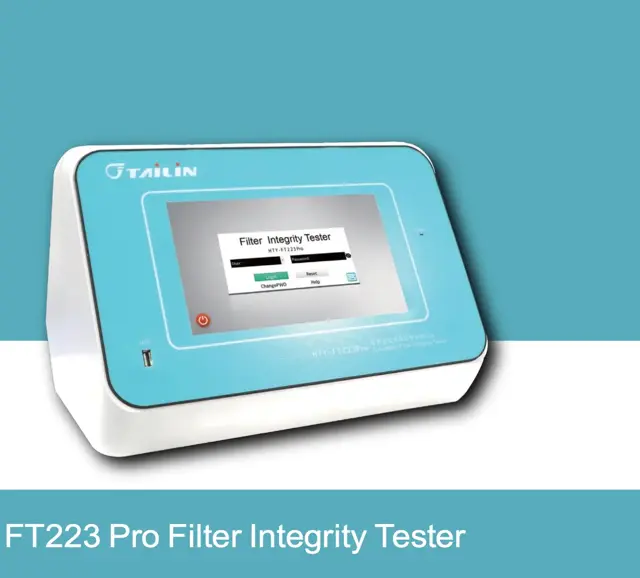
Maintaining sterile filtration is essential in pharmaceutical, biotechnology, healthcare, and food manufacturing industries. One of the most effective methods of verifying filter performance is bubble point testing, which ensures that membrane filters maintain their integrity before and after use. A Bubble point tester is a specialized instrument designed to perform this critical validation process accurately and efficiently. Modern systems, including a Filter Integrity Tester, offer automated testing, secure electronic records, and compliance with regulatory standards such as 21 CFR par 11 complient FIT. Whether used as a standalone BPT machine or integrated into an advanced sarto Filter Integrity Tester, bubble point testing plays a vital role in ensuring product quality, regulatory compliance, and contamination control.
What Is a Bubble Point Tester?
A Bubble point tester is a laboratory instrument used to determine the pressure at which air passes through a wetted membrane filter. This pressure, known as the bubble point, indicates whether the membrane filter is intact and functioning according to its specified pore size.
The test is non-destructive, meaning the filter can still be used after successful testing. This makes it an ideal method for validating sterilizing-grade membrane filters before and after filtration processes.
A modern Filter Integrity Tester often performs bubble point testing alongside other integrity tests such as diffusion, pressure hold, and water intrusion tests, providing a comprehensive evaluation of filter performance.
Why Bubble Point Testing Is Important
Sterile filtration is one of the final barriers protecting pharmaceutical products from microbial contamination. Even a small defect in a membrane filter can compromise product quality and patient safety.
Using a Bubble point tester helps laboratories:
- Verify membrane integrity
- Detect damaged or defective filters
- Confirm correct filter installation
- Maintain sterile manufacturing conditions
- Support validation protocols
- Prevent contamination
- Reduce batch failures
- Improve product consistency
Routine testing ensures that only properly functioning filters are used during production.
How Does a Bubble Point Tester Work?
A Bubble point tester operates by gradually increasing air pressure on one side of a wetted membrane filter. Initially, the liquid held within the membrane pores prevents air from passing through. As pressure increases, a point is reached where the air displaces the liquid and begins to form a continuous stream of bubbles.
This pressure is recorded as the bubble point value.
If the measured pressure falls within the manufacturer’s specified range, the filter passes the integrity test. If the pressure is lower than expected, it may indicate membrane damage or defects.
Modern BPT machine systems automate the entire testing process, ensuring greater precision and repeatability.
Understanding the Role of a Filter Integrity Tester
A Filter Integrity Tester is a sophisticated instrument capable of performing multiple integrity testing methods. While bubble point testing is one of its primary functions, it can also conduct:
- Diffusion testing
- Pressure hold testing
- Water intrusion testing
By combining these methods, a filter Tester provides comprehensive validation of membrane filter performance across different applications.
Automated systems also reduce operator error and improve testing consistency.
Advantages of a BPT Machine
A modern BPT machine offers significant improvements over manual testing methods.
Some key advantages include:
High Accuracy
Automated pressure control ensures highly accurate bubble point measurements with minimal operator influence.
Faster Testing
Testing cycles are completed quickly, improving laboratory productivity and reducing equipment downtime.
Improved Repeatability
Consistent test parameters provide reliable and reproducible results across multiple testing sessions.
Digital Documentation
Many systems automatically store test results electronically, eliminating manual paperwork.
Enhanced Quality Assurance
Routine automated testing helps maintain validated filtration processes and consistent product quality.
Benefits of a Sarto Filter Integrity Tester
A sarto Filter Integrity Tester is widely recognized for its advanced technology, reliable performance, and user-friendly operation. It supports multiple filter integrity testing methods while maintaining compliance with global pharmaceutical standards.
Benefits include:
- Automated testing procedures
- High measurement accuracy
- Easy touchscreen operation
- Secure electronic records
- Fast report generation
- Multiple filter compatibility
- Reliable performance
- Reduced operator intervention
A sarto Filter Integrity Tester is commonly used in pharmaceutical manufacturing, biotechnology laboratories, and quality control facilities where precise filtration validation is essential.
Importance of 21 CFR Part 11 Complient FIT
Regulated industries increasingly rely on electronic records rather than paper documentation. A 21 CFR par 11 complient FIT ensures that all electronic records generated during filter integrity testing meet FDA requirements for data integrity and traceability.
Typical compliance features include:
- Secure user authentication
- Password-protected access
- Electronic signatures
- Audit trails
- User role management
- Automatic date and time stamps
- Encrypted electronic records
- Tamper-resistant documentation
A 21 CFR par 11 complient FIT simplifies regulatory inspections while protecting sensitive testing data.
Applications of Bubble Point Testing
A Bubble point tester is used across many industries requiring sterile filtration.
Pharmaceutical Manufacturing
Ensures sterilizing-grade membrane filters remain effective during injectable drug production.
Biotechnology
Validates filters used in vaccine production, cell culture, and protein purification.
Medical Device Manufacturing
Confirms filtration systems maintain sterile manufacturing environments.
Food and Beverage Industry
Verifies membrane filters used during beverage clarification and food processing.
Research Laboratories
Supports filter validation during analytical and microbiological research.
Choosing the Right Filter Tester
Selecting the right filter Tester depends on laboratory requirements and regulatory expectations.
Consider the following factors:
- Compliance with 21 CFR par 11 complient FIT
- Multiple testing capabilities
- Bubble point accuracy
- Touchscreen interface
- Electronic data management
- Automatic report generation
- Calibration support
- Validation documentation
- Software compatibility
- Ease of maintenance
Choosing an advanced Filter Integrity Tester ensures long-term performance and regulatory confidence.
Best Practices for Bubble Point Testing
To achieve reliable results, laboratories should follow recommended testing procedures.
Best practices include:
- Use properly wetted membrane filters.
- Calibrate the BPT machine regularly.
- Follow manufacturer testing parameters.
- Inspect tubing and connectors before testing.
- Train operators thoroughly.
- Review electronic test records.
- Perform preventive maintenance.
- Maintain equipment validation documentation.
Following these practices helps ensure consistent testing accuracy and prolonged equipment life.
Future of Filter Integrity Testing
As pharmaceutical manufacturing becomes increasingly automated, Filter Integrity Tester systems continue to evolve. New technologies now include cloud connectivity, remote monitoring, predictive maintenance, automated reporting, and integration with laboratory information management systems (LIMS).
Future Bubble point tester solutions will provide even greater efficiency, enhanced traceability, and improved regulatory compliance while reducing manual intervention.
Conclusion
A Bubble point tester is an essential instrument for verifying the integrity of membrane filters used in sterile filtration processes. Whether operating as part of a comprehensive Filter Integrity Tester, a dedicated BPT machine, or an advanced sarto Filter Integrity Tester, it helps ensure filter performance, product quality, and contamination control. Modern systems equipped with 21 CFR par 11 complient FIT capabilities further strengthen quality assurance by providing secure electronic records, audit trails, and compliance-ready documentation. By investing in a reliable filter Tester and following best testing practices, pharmaceutical manufacturers, biotechnology companies, and research laboratories can improve operational efficiency, maintain regulatory compliance, and confidently produce safe, high-quality products.