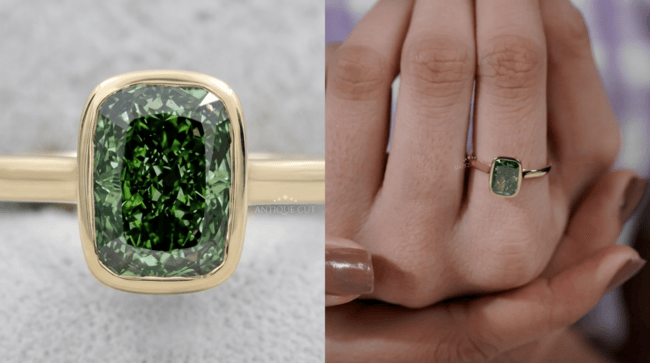
A rectangular green lab grown diamond ring in a smooth yellow gold bezel setting, shown as a close-up and worn on the finger.
Green diamonds have fascinated collectors and jewelry lovers for centuries. Their unusual color, limited availability, and natural beauty have made them one of the most discussed colored diamonds in the world. Today, a green lab grown diamond engagement ring offers the same attractive green appearance while providing greater availability and value for modern buyers.
As diamond technology has advanced, more people have discovered that lab-grown diamonds offer an excellent alternative to mined stones. Whether chosen for an engagement, anniversary, or personal jewelry collection, green diamonds continue to hold a special place in the jewelry industry.
In this article, we’ll explore the history of green diamonds, how they developed into today’s popular jewelry choice, and why they continue to gain attention across the world.
The Early History of Green Diamonds
Green diamonds have been known for hundreds of years, although they have always been extremely uncommon. Unlike white diamonds, naturally green diamonds develop their color after long exposure to natural radiation deep beneath the earth’s surface. This process may take millions of years, making naturally green diamonds among the rarest colored diamonds available.
Because of their scarcity, green diamonds often appeared in royal collections and museums rather than everyday jewelry. Collectors valued them not only for their appearance but also because so few existed.
Throughout history, owning a natural green diamond represented rarity and distinction. You can check out more green lab grown diamond engagement ring offers a softness that is hard to replicate with sharper cuts. This gentle aesthetic ensures that the ring doesn’t feel tied to a specific era, making it a lasting symbol of elegance.
Why Green Diamonds Are So Rare
Most diamonds form without noticeable color. For a diamond to become green naturally, several uncommon geological conditions must occur together.
These include:
- Natural radiation exposure over millions of years
- Stable underground conditions
- Preservation of the green surface color
- Successful mining without damaging the stone
Because every step is uncommon, natural green diamonds remain difficult to find even today.
This rarity has contributed to their high market value and worldwide interest.
The Rise of Lab-Grown Green Diamonds
Technology has transformed the diamond industry over the last several decades. Scientists now recreate the same crystal structure found in natural diamonds inside carefully controlled laboratory environments.
The result is a genuine diamond that shares the same physical, chemical, and optical properties as a mined diamond.
A green lab diamond engagement ring allows buyers to enjoy the appearance of a rare green diamond without the limited availability associated with natural stones.
Lab-grown diamonds have expanded jewelry options for customers who appreciate colored diamonds while working within different budgets.
How Green Lab-Grown Diamonds Get Their Color
Unlike naturally green diamonds, lab-grown green diamonds receive their color through carefully controlled growth methods and specialized treatments after formation.
Experts monitor every stage to achieve consistent color throughout the stone.
Depending on the desired appearance, green diamonds may display shades including:
- Light green
- Olive green
- Mint green
- Forest green
- Deep green
- Yellowish green
Each shade creates its own personality, allowing buyers to select a diamond that matches their style.
Growing Popularity Around the World
Colored diamonds have become increasingly popular during the past decade. Green diamonds stand out because they offer something different from traditional white diamonds.
Many couples now choose colored engagement rings to celebrate individuality instead of following long-established traditions.
A green diamond becomes a meaningful choice for those wanting jewelry that feels unique while maintaining the lasting qualities associated with diamonds.
Green Diamonds in Today’s Jewelry
Today’s designers incorporate green diamonds into many jewelry styles.
Popular choices include:
- Solitaire engagement rings
- Halo designs
- Three-stone rings
- Wedding bands
- Pendants
- Earrings
- Anniversary jewelry
Among these, the green diamond ring remains one of the most requested options because it combines everyday wearability with distinctive color.
Why Buyers Choose Lab-Grown Green Diamonds
Consumers today consider several factors before purchasing diamond jewelry.
Lab-grown diamonds appeal to many buyers because they offer:
Greater Availability
Natural green diamonds are extremely limited. Lab-grown options provide access to similar colors throughout the year.
Better Value
Because laboratory production is more controlled than mining, buyers often receive a larger or higher-quality diamond within the same budget.
Certified Quality
Many lab-grown diamonds receive grading reports that evaluate important characteristics such as cut, color, clarity, and carat weight.
This allows buyers to compare diamonds with confidence.
Comparing Natural and Lab-Grown Green Diamonds
| Feature | Natural Green Diamond | Lab-Grown Green Diamond |
|---|---|---|
| Origin | Formed underground | Created in a laboratory |
| Appearance | Green color develops naturally | Green color produced through controlled processes |
| Rarity | Extremely limited | More widely available |
| Budget | Usually much higher | More affordable |
| Physical Properties | Diamond | Diamond |
| Durability | Excellent | Excellent |
Although their origins differ, both are genuine diamonds with excellent durability for everyday jewelry.
Choosing the Right Green Diamond
Selecting the ideal green diamond depends on personal preference.
Consider the following:
Color
Choose a shade that matches your style, from soft green to deeper tones.
Cut
Popular diamond cuts include:
- Oval
- Cushion
- Emerald
- Round
- Pear
- Radiant
Each cut reflects light differently and influences the overall appearance.
Clarity
Higher clarity grades contain fewer internal characteristics, producing a cleaner appearance.
Carat Weight
Balance diamond size with quality to achieve the look that fits your budget.
Caring for Green Diamond Jewelry
Proper care helps maintain your diamond for many years.
Simple maintenance includes:
- Clean with warm water and mild soap.
- Use a soft brush around the setting.
- Store jewelry separately to prevent scratches.
- Remove rings during heavy physical work.
- Schedule occasional professional inspections.
These habits help preserve both the diamond and its setting.
Green Diamonds and Personal Style
Green diamonds pair beautifully with different precious metals.
Popular choices include:
- White gold
- Yellow gold
- Rose gold
- Platinum
Each metal creates a different appearance around the green diamond, allowing buyers to personalize their jewelry.
Some prefer minimalist designs, while others enjoy vintage-inspired settings or contemporary styles.
The Future of Green Diamonds
As technology continues to improve, lab-grown diamonds are expected to become even more refined in color consistency and quality.
Consumers are becoming increasingly familiar with lab-grown diamonds and appreciate having more choices when selecting engagement rings.
Jewelry designers also continue introducing fresh collections featuring colored diamonds, giving buyers even more opportunities to find a design that reflects their preferences.
If you’re looking to expand your options, Discover Collection green lab grown diamond engagement ring.
At Antiquecut, customers can explore thoughtfully crafted jewelry featuring beautiful lab-grown diamonds in designs suitable for engagements, anniversaries, and memorable celebrations.
Conclusion
Green diamonds have traveled an impressive journey from rare geological discoveries to becoming accessible choices through modern laboratory technology. While natural green diamonds remain exceptionally uncommon, lab-grown alternatives have opened new possibilities for buyers seeking remarkable color, genuine diamond quality, and greater value.
A green lab grown diamond engagement ring combines history, innovation, and lasting beauty in one meaningful piece of jewelry. Whether you prefer a classic solitaire or a detailed designer setting, green diamonds continue to attract attention across generations. As more people discover the advantages of lab-grown diamonds, green diamond jewelry is expected to remain a popular choice for those seeking something distinctive and meaningful.