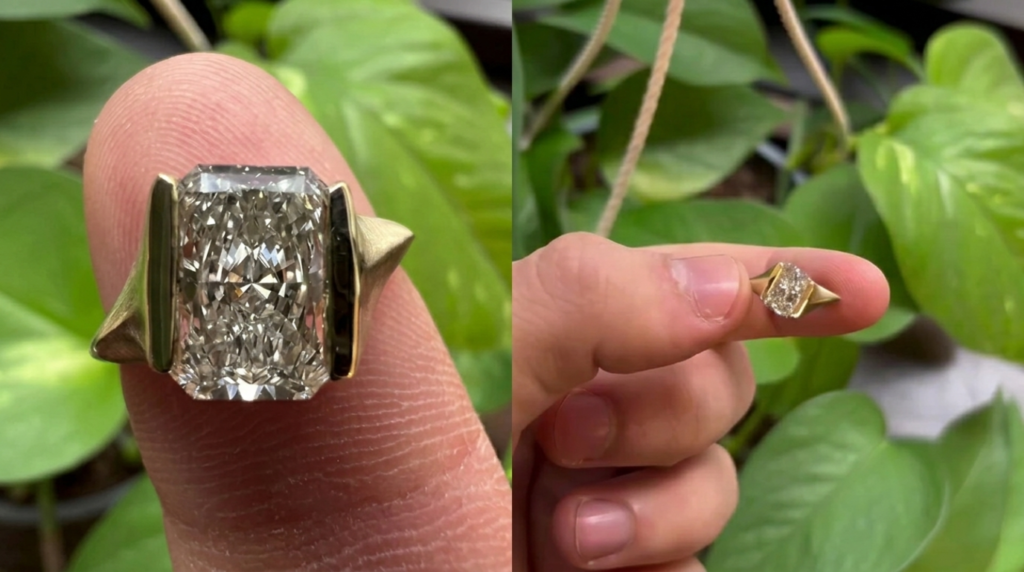
A radiant cut diamond statement ring featuring bold yellow gold side accents that create a distinctive and contemporary design.
Choosing a diamond is about much more than selecting a stone with the highest quality grades. The shape of a diamond influences its overall appearance, the way it reflects light, how large it looks, and how it complements different jewelry styles. Every shape has its own personality, making it important to understand the differences before making a purchase.
A radiant cut engagement ring has become a popular choice for people who want a shape that combines clean lines with brilliant light reflection. Whether you prefer classic or contemporary jewelry, understanding diamond shapes helps you select a ring that matches your personal taste and lifestyle.
Why Diamond Shape Matters
Diamond shape is one of the first details people notice. It affects the visual size of the diamond, the overall design of the ring, and how the stone pairs with different settings and precious metals.
Unlike diamond quality grades such as color and clarity, the shape creates the overall character of the jewelry. Some people enjoy soft curves, while others prefer defined corners and geometric designs. There is no single perfect shape because every buyer has different preferences.
A carefully selected shape also makes everyday wear more enjoyable since it reflects your personality and style. You can browse more radiant cut engagement ring to understand how various settings and cuts influence overall appearance.
Understanding Popular Diamond Shapes
Today’s diamond market offers many beautiful shapes, each designed to create a different appearance.
Round Diamond
The round brilliant diamond remains one of the most recognized choices. Its symmetrical design creates outstanding brilliance and works beautifully with nearly every ring style.
Many buyers appreciate its versatility because it pairs well with solitaire, halo, pavé, and vintage-inspired settings.
Oval Diamond
Oval diamonds create an elongated appearance that can make the finger appear longer. Their graceful outline offers a balanced combination of traditional and distinctive design.
Oval diamonds are suitable for buyers looking for something different from a round diamond while maintaining excellent brilliance.
Cushion Diamond
Cushion diamonds feature softly rounded corners with a square or rectangular outline. Their shape has remained popular for generations because of their pleasing proportions and balanced appearance.
They work well in both simple and decorative ring settings.
Emerald Diamond
Emerald diamonds feature long step-cut facets that create broad reflections instead of the lively appearance seen in brilliant-cut diamonds.
This shape highlights clarity and clean lines, making it a favorite among buyers who appreciate refined designs.
Pear Diamond
Pear-shaped diamonds combine the characteristics of round and marquise shapes. Their teardrop silhouette creates a distinctive appearance that looks beautiful in many engagement ring settings.
The pointed end adds individuality while maintaining a graceful profile.
Princess Diamond
Princess diamonds are square with pointed corners and brilliant faceting. They are appreciated for their clean structure and excellent light performance.
Their geometric appearance works well in both traditional and contemporary designs.
Why the Radiant Cut Continues to Gain Popularity
Among today’s most admired diamond shapes, the radiant cut has earned attention for combining rectangular or square proportions with brilliant-cut facets.
Unlike step-cut diamonds, radiant diamonds display vibrant reflections while maintaining clipped corners that improve durability during daily wear.
The shape offers several advantages:
- Excellent brilliance
- Strong corner protection
- Larger face-up appearance
- Suitable for many setting styles
- Available in square and rectangular proportions
These characteristics make it an attractive option for engagement rings designed for everyday use.
How Diamond Shape Affects Ring Style
The same diamond can create a completely different appearance depending on its shape.
Round diamonds deliver a classic look.
Oval and marquise diamonds emphasize finger length.
Emerald diamonds create structured reflections.
Radiant diamonds combine crisp outlines with lively brilliance, allowing them to fit many different ring styles.
Because of this versatility, designers frequently recommend radiant diamonds for buyers who want flexibility when choosing a setting.
Choosing the Right Shape for Your Lifestyle
Daily activities should also influence your diamond selection.
Individuals with active lifestyles often appreciate shapes that have protected corners. Radiant diamonds feature trimmed corners that reduce the chance of accidental damage compared with shapes that have sharp points.
This practical advantage makes them a dependable option for long-term wear.
The Importance of Diamond Proportions
Even within the same shape, proportions can dramatically change the final appearance.
For example, radiant diamonds are available in:
- Square proportions
- Slightly rectangular proportions
- Long rectangular proportions
Each creates a different visual effect.
Square shapes appear balanced and compact, while elongated versions create a more slender appearance on the finger.
Understanding these proportions helps buyers select a design that matches their personal preference.
Matching Diamond Shapes with Ring Settings
The setting plays an equally important role in the final design.
Solitaire settings highlight the diamond itself.
Halo settings create additional visual impact.
Three-stone settings add extra dimension.
Hidden halo settings introduce subtle detail without changing the primary appearance.
A radiant diamond adapts well to nearly every setting style because its balanced outline works with both minimal and decorative designs.
Diamond Shapes and Finger Appearance
Many buyers also consider how a diamond looks when worn.
Oval, pear, marquise, and elongated radiant diamonds can create the appearance of longer fingers.
Round and square shapes produce a balanced look.
The ideal choice depends entirely on personal preference rather than strict design rules.
Trying different shapes often helps buyers discover which style feels most comfortable.
Natural and Lab-Grown Diamonds
Diamond shape remains identical whether the stone is mined or created in a laboratory.
Many shoppers now consider lab grown radiant cut diamond engagement rings because they offer the same physical and optical characteristics while providing additional options in size and quality within different budgets.
Professional cutting standards remain equally important regardless of the diamond’s origin.
Finding the Right Radiant Diamond
When selecting a radiant diamond, buyers should examine more than the carat weight.
Important factors include:
- Length-to-width ratio
- Symmetry
- Polish
- Cut quality
- Color
- Clarity
- Overall face-up appearance
Reviewing these characteristics together helps ensure the diamond performs well from every viewing angle.
Working with a Trusted Jeweler
An experienced jeweler helps explain the differences between shapes and recommends options based on your preferences.
At Antiquecut, customers can explore thoughtfully designed collections featuring carefully selected diamonds and craftsmanship that focuses on quality, comfort, and lasting value.
A knowledgeable team also helps buyers compare different proportions and settings before making an important purchase.
Comparing Diamond Shapes Before You Decide
Comparing several shapes side by side is one of the best ways to identify your favorite design.
Look at each diamond under different lighting conditions and consider how it appears on your hand rather than relying only on photographs.
Pay attention to the balance between shape, size, and setting. A well-proportioned diamond often creates a stronger visual impression than simply choosing a larger stone.
Taking time to compare different options makes the buying experience more enjoyable and helps you feel confident in your decision.
Caring for Your Diamond Ring
Proper care helps preserve the appearance of your diamond ring for years.
Clean your jewelry regularly using warm water, mild soap, and a soft brush. Store each piece separately to reduce contact with other jewelry, and schedule professional inspections to ensure the setting remains secure.
Routine maintenance allows your diamond to continue looking its best through everyday wear.
Conclusion
Diamond shapes offer something different for every personal style, making them one of the most important decisions when selecting fine jewelry. From round and oval to emerald, cushion, pear, princess, and radiant, each shape creates its own visual appeal and wearing experience.
A radiant cut engagement ring continues to attract buyers because it combines brilliant light performance, practical durability, and a versatile design that complements many settings. By understanding how different diamond shapes compare, you can confidently choose a ring that reflects your taste and becomes a meaningful part of your jewelry collection.