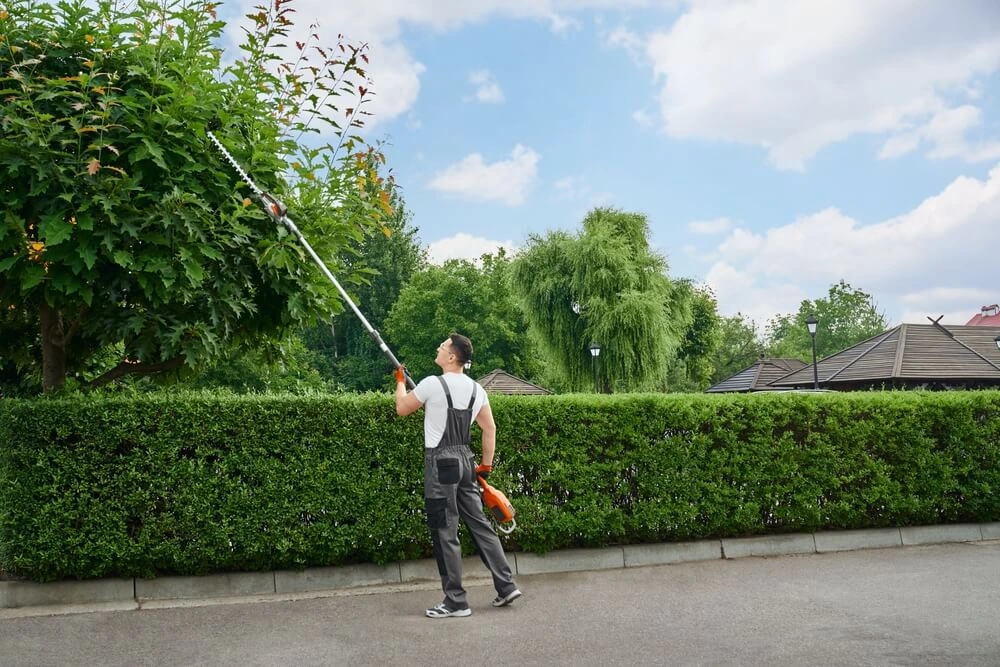
Trees add beauty and value to both the residential and commercial landscapes. Trees provide shade and protection from the elements. Properly maintained, trees can add curb appeal and value to the property. Trees can also be dangerous. They can pose a threat to life and property if they are damaged, diseased or structurally unstable.9
Being able to identify the signs for when you should call the experts for a tree removal houston can save your house, family and garden. If you are aware of the early indicators that a tree is having issues, then you can respond before a crisis occurs.
Dead or Dying Branches
Dead or dying branches are one of the earliest indications that a tree may require removal. Heavy branches which are not producing any foliage may pose a risk to personnel and property, particularly in windy or storm conditions.
As dead branches become more brittle they will be liable to break off, and these can be hazardous to pedestrians, cars, roofs and buildings. Sometimes pruning can cure the problem but if there‘s a lot of dead wood throughout the crown then the whole tree may be in poor health.
A certified arborist can assess the tree and decide whether removal is the safest option.
Significant Leaning
Trees have a natural growth orientation and thus may appear leaning when natural, an abrupt lean can be symptomatic of a major health concern. Trees that have become tilted following a storm, significant rainfall or erosion of the root should be regarded as unsafe.
Signs that a leaning tree requires attention include:
Emergent roots
The cracks in the soil at the bottom
Gain of leaning with time
Visible root damage
A highly tilted or dangerously leaning tree could possibly fall at any time so it is important to have it looked at promptly. Tree removal Houston specialists can determine if the dangerous tree is stable so that the safest course of action can be taken.
Large Cracks in the Trunk
Cracks or splits in the trunk are typical signs of weakness. Cracks are typically formed during storms or fire, lightning strikes, freeze effects, or may also be from internal decay.
Vertical cracks that extend far into the trunk can compromise the tree‘s stability. Large limbs can crack off from the main trunk, posing an immediate hazard.
Minor cracks may also meet requirements for natural healing, but significant damage needs to be removed as this may result in injuries.
Root Damage and Decay
A healthy root system is vital to a healthy tree. If the roots are damaged, the whole tree can become unstable.
Common causes of root damage include:
Construction projects
Soil compaction
Too much water, too much life.
Fungal diseases
Inadequate drainage; lack of proper drainage; 1.2.2.3.1.6.
Signs of root problems may include:
Mushrooms competing around the base
Exposed roots
Heaving of soil
Tree leaning
Sparse foliage.
Since root problems lie beneath the surface and are often concealed, they can be overlooked until the risk from the tree becomes very high. Tree care houston and checkups can catch these problems early on.
Hollow or Decaying Trunks
A hollow trunk indicates internal rot; while it is possible for some trees to thrive with a small amount of hollow tissue, rot throughout the interior can substantially weaken the tree.
Indicators of trunk decay include:
Soft/crumbly/weeping wood
Trunk cavities
Growth of the fungus
Insect invasion
Large sections of missing bark
If a large part of the trunk is compromised, the tree can become non stable and fall.
Pest Infestations
Some insects can cause a considerable amount of damage to trees. Wood-boring insects, termites, beetle and others can cause damage to the interior of the tree.
Common signs of infestation include:
Bark is punctuated with tiny holes
The sawdust on the base
Dead branches: When tripped off by wind, dead or live branches may fall topsy-turvy. Dead branches which are out of reach can be ignored, but any down to the height of the observer should be cleared away.
Yellowing or browning leaves
Peeling bark would actually be more difficult to draw than most projections as it would be very hard to convey the convex shape of the outside of the bark. The surface might be depicted as rough texture then you‘d be able to suggest it peeling by adding lines on the surface.
Intense infestations can also be transmitted very rapidly to nearby trees. Conclusive culling or eradication may be necessary, depending on professional inspection.
Storm Damage
The wind is very strong and the area receives a lot of rain (sometimes very heavy) over the course of a year. There are also very severe storms. These can be destructive to some of the trees, causing the to lose large branches and blowing off the root system.
A tree might be left standing after a storm but structural damage could be taking place. t might be necessary to look for indications of:,
Split trunks:
Branches dangling down
Visible roots
Fast leaning
Broken limbs
Assessments should be carried out quickly post severe weather to prevent accidents in the future. Many homeowners use tree care services houston to check for damage to trees after storms are occurred.
Trees Growing Too Close to Structures
Trees planted too near houses, garages, fences or electric lines can lead to a lot of headaches in the future. When roots grow, they can cause damage to foundations, sidewalks and underneath utilities; when branches grow they can damage roofs.
Potential issues include:
Cracked driveways
Damage to the foundation
Roof interference
Full gutters
Utility line hazards
Once pruning is out of control, the best course of action can be removal.
Excessive Leaf Loss
When healthy trees, the natural tendency is to drop the leaves in accordance with the seasons. An over-accumulation of leaves during the growing season could be a sign of disease, root damage, or stress.
Symptoms may include:
Sparse canopy
Yellow leaves:
Loss of early leaf drop
Irregular progress.
If the decline continues despite treatment, the removal of the tree may be the only alternative if adjacent vegetation and property are to be protected.
Fungal Growth Around the Base
Presence of fungi and mushrooms below the trunk of a tree may be a sign of internal decay. Fungi are saprophytes and will be growing on rotting wood underneath the trunk and may imply that the root system or lower trunk has failed.
Not all fungi are deadly, so although the fungi growing round the base of the tree large amounts should always be taken to the arborist for a professional assessment.
The Importance of Professional Evaluation
Deciding when to remove a tree can be based on knowledge and experience. There are some trees that can be saved by pruning, disease treatment, or maintenance. There are others that require removal due to possible hazards.
Regular inspections and professional tree care services houston help identify problems early and maintain the health of your landscape. For instance, an adept arborist has the skill to analyze the safety, determine if diseased and provide solutions.
Conclusion
Trees are a great way to add value to your property, however if trees are in a poor state or damaged they can quickly become hazardous. Any dead or diseased branches, trunks which are leaning or damaged roots, decay in the wood, pests or damage caused by storms require declaration.
If you observe any of these warning signs, hiring expert tree removal houston is your best bet at preventing damage and ensuring the well-being of your property as well as those on or near it. The sooner you take action, the less likely you‘ll be to see major damage or deterioration occur to your land.