The production activities within industrial facilities (manufacturing, processing, grinding, cutting, conveying etc.) all create high concentrations of dusts or aerosols in the air. Dusts and aerosols, if uncontrolled, are bad news for workplace health and safety, corporate efficiency and legislative compliance. Thus, modern industry increasingly turns to the latest dust collection systems.
The function of the dust collector filter cartridge. Of these systems, the filter cartridge is perhaps the most crucial. Dust collector filter cartridges are some of the most important elements when it comes to keeping the air fresh, maximizing efficiency, and preserving valuable equipment. Learning how filter cartridges work and why they are so vital can go a long way towards enhancing dust collection systems and workplaces.
Understanding Industrial Dust Collection Systems
Designed to collect dust at the origin and contain them within the workplace, dust collection systems utilize a combination of collection hoods, ducts, fans, filters, and collection receptacles.
Your dust collector filter cartridge is arguably the single most important part of the entire system because of its efficiency at filtering the dust particles. A very well engineered dust collector filter cartridge will do the best job at filtration so that clean air is exhausted back into the work space.
Dust collection systems are often used in dry craft industries in order to regulate dust during milling, metal working, textile industries, pharmaceuticals, food production, mining and chemical industry.
What is a dust collector filter cartridge?
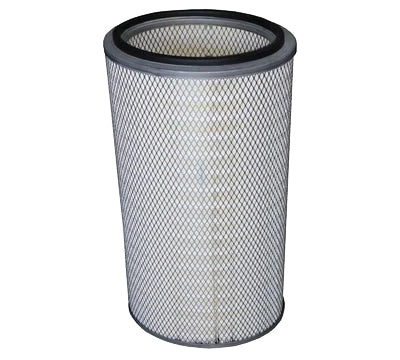
Dust collector filter cartridge is a filtration component in a tube shape and used to collect extremely fine dust particles from process produced air streams. Dust collector filter cartridge is usually a paper media pleated incorporated in a small diameter tube shape design rather than a dust collection bag.
The pleated design increases the surface area for filtering more dust while allowing air to flow through the filter easily. This helps enhance the efficiency of air filtration while decreasing the cost of having to replace filers frequently.
Contemporary cartridge filters are made using a variety of media cellulose, polyester, nanofiber, or a media designed for particular industrial use. The choice of filter media is influenced by particle size and characteristics, moisture conditions, etc.
Improved Filtration Efficiency
A major benefit of a dust collector filter cartridge is the collection of very fine dust. Because the filter media is pleated, there is increased surface area and thus a better filtration efficiency than many other types of filters.
Small respirable dust dust can stay airborne for long periods of time, and if inhaled, can cause significant health problems. This can be done successfully with high efficiency, advanced type of cartridge filter.
Improving filtration performance allows organisations to sustain cleaner workplaces; limit airborne pollutants; and meet occupational health and safety requirements.
Enhanced Airflow Performance
Keeping good airflow is crucial to any dust collection equipment. A restricted airflow can decrease collection efficiency and can add stress to the system components.
A properly designed dust collector filter cartridge optimizes the ability of the air flow to move through the filter media while removing dust. Having a larger filtration surface area preserved helps keep the pressure drops low so the system works more efficiently.
A continuous air flow will carry dust to the source and not allow dust to settle on the equipment, floors or production tables. This will improve the overall system performance and reliability.
Longer Service Life
In addition to reducing the maintenance burden, industrial plants also desire to lower operational costs. For such applications, cartridge filters tend to last longer.
Due to the increased filtration area of the pleated media, the dust load on the filter is dispersed more evenly across the surface, enabling longer filter life by reducing the chance of early clogging.
Another feature available on many modern systems is pulse-cleaning technology. This technology uses a pulse of air to clean the accumulated dust off the filter surface which results in longer life of the dust collector filter cartridge.
Reduced Maintenance and Downtime
Frequent servicing of conventional filter cartridges can interfere with production and add to labor costs. Cartridge filters minimize this problem by allowing more extended operation without filters replacement and cartridge cleaning.
A small and unobtrusive design. The maintenance technicians can have easy access and it also makes it very easy to replace filters and maintenance can be performed with less amount of time.
Another advantage of cartridge filtration is that they lower maintenance requirements thus providing lower cost operation for the long run.
Supporting Equipment Protection
Dust accumulation can have a detrimental effect on machines, motors, conveyors and delicate production machinery. Small particles may enter into mechanical parts, resulting in abrasion, overheating and early failure.
A functioning dust collector filter cartridge protects expensive equipment by removing dirt before it has a chance to settle on it. The cleaner the equipment, the more efficiently it will operate, experience less breakdowns and allow for less servicing.
Equipment Protection means minimizing repair costs and,at the same time, supporting the best possible return on investment( ROI) of industrial equipment.
The Relationship Between Cartridge Filters and Bag Filter Housing
Numerous filtration applications within industry benefit from the combination or selection of both the cartridge filters and the bag filter housing type, according to the processing conditions. The cartridge type filter will be suited to finer dust capture, whereas the bag type filtration can be established for heavier dust loads or more delicate process scenarios.
A correctly designed bag filter housing holds the filter elements and offers structural support. This containment ensures that the filtration system functions properly and safely. Certain plants combine cartridge collectors with bag filtration as part of a complete air pollution control system.
By knowing what these technologies are and how they differ, the facilities’ managers can then select the best filtration media for their particular applications.
Environmental and Regulatory Benefits
The tightening of environmental restrictions is still intensifying in many markets. Dust emissions may lead to regulatory sanctions if they are not actively controlled, since they may contribute to air pollution.
By maintaining a high efficiency dust collector filter cartridge, a plant can lower the particulate emissions being released into the environment and boost their environmental performance. Being able to have cleaner discharge air is also important in showing a plant‘s efforts to being a more responsible industry.
Furthermore, Dust collection systems ensures compliance with required workplace safety norms by installation and fit out of the system.
Conclusion
Industrial dust collection systems are an essential part of industrial safety, equipment protection and environmental regulations. At the core of the system is the dust collector filter cartridge, which offers the filtration efficiency needed to capture fine particles into the filter media.
Well ahead in efficiency, and having much better air flow, longevity and reduced operating costs, cartridge filters can provide the most cost-effective option for industrial dust control. Used in conjunction with other products such as the bag filter housing, these filtration systems can provide a very effective solution for todays factories.
Making an investment in the proper filtration components can help enhance your productivity, minimize operating costs, and make your work environment greener and safer for your employees.