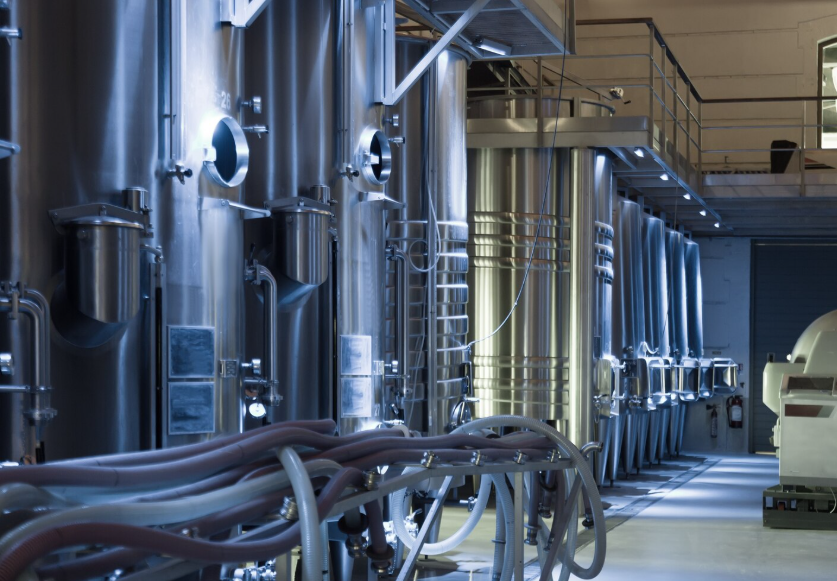
In today‘s industries, the need for efficient temperature regulation is more important than ever for ensuring quality output, safe conditions, or saving energy. Industries, ranging from production plants, chemical plants, food manufacture, pharmaceuticals, power plants and others, require effective heat transfer. The Heat Exchanger is an essential element for these industries, allowing the transfer of heat from one medium to another without mixing two mediums, helping to eliminate waste for the industry.
Industries, ranging from production plants, chemical plants, food manufacture, pharmaceuticals, power plants and others, require effective heat transfer. The Heat Exchanger is an essential element for these industries, allowing the transfer of heat from one medium to another without mixing two mediums, helping to eliminate waste for the industry.
Courtney & Nye. offers engineered heat management solutions designed to accommodate the changing needs of industry. Engineered to withstand tough industrial environments, sealed units reduce operating costs while enhancing your efficiencies. Air cooled heat exchangers are assessed for certain applications.
What is a heat exchanger?
A heat exchanger is a type of mechanical device used to transfer heat from one fluid to another without the two fluids mixing (and spreading contamination). Heat transfer occurs without the two fluids mixing so that heat can be extracted in a safe and controlled manner.
These systems have found numerous implementation in all industries where they are used for heating, cooling, condensing or evaporating fluid depending on process need. One of the important features for this system is the capability of nature energy recovering and reusing.
There are many designs of filter elements to cater for various pressures, temperature and process requirements, so the industries have the choice of the equipment to use.
How Heat Exchangers Work
The concept behind Heat Exchangers is essentially that of heat transfer by conduction through surfaces that separate two flowing fluids.
One fluid collects the energy, then transfers that energy to the second fluid, then the second fluid expels the energy as they pass through separate pathways within the equipment. Throughout the process, the two fluids are separated while heat transfer occurs through the walls of the exchanger.
- Flow patterns designed for turbulence also enhance contact with heat transfer surfaces.
- Counterflow setups tend to be favored and used often due to the thermal advantage they offer as the entire heat exchanger maintains a larger temperature variance.
This method provides an effective means of maintaining good temperature regulation whilst saving time.
Key Benefits of Heat Exchangers
- A major benefit of Heat Exchangers is that they do not let any heat go to waste in the process of industrial operation.
- Greater heat recovery means less fuel consumption and lower electricity costs.
- Proper reading was essential to ensure aversion of machinery-damage-by-overheating as well as to prevent the equipment from fast aging.
- Effective thermal control guarantees proper product quality by ensuring reliable operating conditions during production.
- The compact structure allows to be easy to installed and minimizes space requirement for installation in industrial plant.
- Most systems have relatively low maintenance, which helps to reduce operating costs over the lifetime of the system.
These advantages justify the purchase of heat exchangers by any company looking for increased efficiency and environmental compliance.
Courtney & Nye manufactures solutions designed to perform reliably even under harsh environments.
Common Industrial Applications
Heat Exchangers are used by numerous industries where proper heat control is essential.
- Chemical processing units use heat exchangers for controlling reaction temperature and for recovering process heat.
- The need to keep equipment running and to produce steady products means that manufacturing plants require cooling systems.
- Controlled heating and cooling is often essential in the production of food and beverage to ensure product quality.
- Power generation equipment also use heat exchangers to enhance cooling and generate the power more efficiently.
- Accurate temperature control is essential for complex manufacturing procedures on pharmaceutical products.
- Marine industries also require effective thermal management to operate reliably in tough environments.
Courtney & Nye can offer engineered solutions for those individual industrial processes.
Types of Heat Exchangers
There are many types of heat exchanger designs available to suit various processes requirements.
- A plate heat exchanger utilizes an arrangement of numerous thin plates to effectively provide an extensive heat transfer surface in a small package.
- These styles are preferred for high pressure and large process volumes.
- Brazed plate units operate efficiently with fixed units sealed construction and low maintenance.
- Systems based on compact fins have more exposed surface area for enhanced thermal performance in applications with space constraint.
- Choosing the correct design will rely on variations in operating temperature, pressure, fluid properties, available space for installation and maintenance requirements.
Understanding Air Cooled Heat Exchangers
Air cooled heat exchangers Cool air cooled heat exchangers, in contrast to water cooled, would use the surrounding air as the medium for cooling, this would be an ideal application where water conservation is critical or water sources are scarce.
Large fans blow air across finned surfaces which transfer heat from process fluids to the atmosphere.
This design uses less water and avoids the construction of massive cooling water infrastructure.
- Air-cooled systems are predominantly utilized within power plants, petrochemical plants, oil refineries, and remote industrial locations where dependable cooling is required and there is limited or no water available.
- Compatibility of air-cooled systems or fluid systems must be characterized according to process needs, ambient considerations and operation objectives.
Maintenance Best Practices
Proper service and maintenance are also critical as standard makes lengthy service life and optimal heat exchanger efficiency.
- Periodic inspections enable fouling, corrosion, scaling or leakage to be detected before any severe decline in output occurs.
- Cleaning heat transfer surfaces reopen the path by eliminating depositions that insulate the heating elements.
- Monitoring of temperature difference and pressure drops gives us information about equipment conditions.
- Filtration effectively prevents pollution and wear inside the system.
- Currently scheduled preventive maintenance contributes to stabilizing industrial production by ensuring spare times for continuous operation of plants and equipment.
Courtney & Nye advocates the use of proactive maintenance strategies to reduce unpredictability and to gain maximum value in the equipments.
Energy Efficiency and Sustainability
Energy saving has become the most important objective for industries, both from the profit and the environment‘s point of view.
- Using Heat Exchangers, we is also able to recover otherwise ‘lost’ heat.
- Previously recovered heat can often be re-utilised in a secondary process (thus avoiding the use of additional fuel, and associated emissions).
- Better temperature control decreases the pressure on the auxiliary equipment, through electrical power and maintenance costs.
- Compact design minimizes material use reduces material costs and easier to install.
- Adopting better thermal management systems allow companies to achieve profitable growth, fuel sustainability and foster responsible industrial development.
Future Trends in Heat Transfer Technology
The technology continues to evolve with improvements in digital monitoring, automation, and materials engineering.
- Smart sensors permit constant monitoring of performance, diagnostic use and predictive maintenance that detects emerging problems before the failure.
- Advanced materials have enhanced corrosion resistance and longer equipment durability.
- Automation platforms can compensate for the variations of a process by continuously adapting the operating conditions.
- The increasing focus on both energy efficiency and carbon reduction is likely to stimulate the demand for intelligent heat transfer in industries worldwide.
Courtney & Nye will continue to support the industry and these advances with reliableengineeringandleading edge thermal management technologies.
Conclusion
Heat Exchangers are still one of the most critical elements of present day industrial infrastructure, offering consistent temperature regulation, increased energy efficiency, and increased equipment protection. Their flexibility makes them suitable for an unlimited array of applications while simultaneously reducing operating costs and increasing productivity.
By selecting solutions such as air cooled heat exchangers, companies are able to create a tailored approach to thermal management in line with their specific regulatory and operational objectives. Courtney & Nye still produces premium engineered solutions to industrial challenges that ensure sustainable production and enduring productivity.