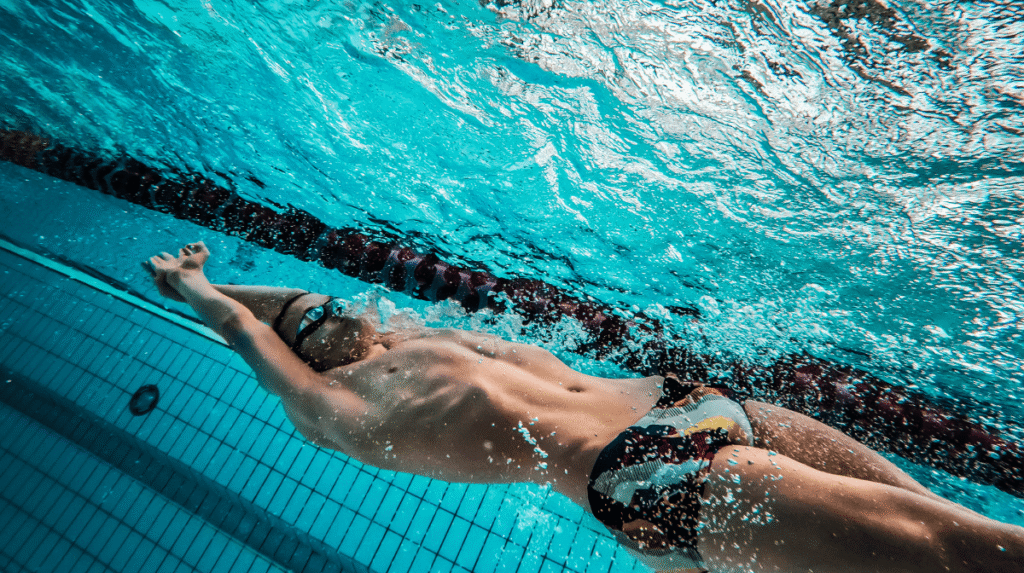
swimming workout plan
Swimming improves endurance, but it also helps build strength and lean muscle when workouts follow a structured routine. Water creates constant resistance, which makes muscles work throughout each movement. A well-designed swimming workout plan combines intervals, stroke variation, and recovery periods to improve overall conditioning. With the right approach, swimming supports muscle development without placing excessive stress on the joints.
Why Swimming Supports Muscle Growth?
Swimming engages several muscle groups simultaneously, increasing muscular effort during each session. Unlike some traditional cardio exercises, swimming uses water resistance to challenge the upper body, lower body, and core together. This makes a swimming workout plan useful for people who want full-body conditioning.
Different swimming strokes target muscles in different ways:
- Freestyle: Works the shoulders, back, arms, and core
- Breaststroke: Activates the chest, glutes, and inner thighs
- Butterfly: Builds shoulder and core strength
- Backstroke: Engages the upper back and abdominal muscles
Faster intervals and resistance tools can also increase muscle engagement during training.
Weekly Swimming Workout Plan
The following routine helps improve strength while supporting muscle recovery between sessions.
Day 1: Upper Body Training
Start with freestyle intervals for endurance and arm strength. Use swim paddles during shorter sets to increase resistance in the water. Pull buoy drills also help isolate the upper body and improve shoulder control.
Day 2: Sprint and Power Work
Short sprint intervals increase muscular effort and improve explosive movement. Alternate between freestyle sprints and kickboard drills. Rest periods between laps help maintain speed and intensity throughout the workout.
Day 3: Recovery and Technique
A lighter session supports recovery while improving stroke efficiency. Slow-paced laps and breathing drills help reduce muscle fatigue. Stretching exercises outside the pool can also improve mobility and flexibility.
Day 4: Lower Body Focus
Flutter kicks and underwater kicking drills strengthen the legs and core. Breaststroke kick sets also improve lower-body endurance. Fins can increase water resistance during kicking exercises.
Day 5: Full-Body Conditioning
Combine different strokes in interval circuits to train multiple muscle groups together. This part of the swimming workout plan improves endurance, coordination, and muscular control during longer sessions.
Common Mistakes That Reduce Results
Many swimmers train at the same pace during every session, which limits muscle development over time. A lack of recovery can also reduce strength gains because muscles need time to repair after intense workouts.
Other common mistakes include:
- Poor swimming technique
- Inconsistent workout schedules
- Low protein intake
- Skipping resistance-based drills
- Relying only on long-distance laps
Progress becomes more consistent when workouts include intensity changes and proper recovery.
Conclusion
A structured swimming workout plan can improve strength, endurance, and muscle development without placing heavy stress on the body. Consistent training, balanced recovery, and proper technique all support better long-term results. Swimming also allows people to train multiple muscle groups at once, making workouts efficient and practical. When sessions include resistance work and interval training, muscle growth becomes more achievable over time.