We have all seen those ads for cheap materials that seem too good to pass up. You are planning a new court, checking prices online, searching for volleyball sand for sale, and suddenly one option looks way cheaper than the rest. At first, it feels like a smart deal. Spend less now, save money later… right?
Well, not always.
When it comes to volleyball courts, the sand is not just “sand.” The wrong type can turn a fun court into a frustrating mess pretty fast. What looked like savings in the beginning can slowly become extra maintenance, repairs, and constant headaches. And honestly… nobody wants to rake, refill, and level a court every weekend.
Cheap Sand Usually Breaks Down Faster
A lot of lower-cost sand options are not made for sports courts at all. Some contain too much dust, tiny rocks, or uneven particles. At first glance, you may not notice it. The court looks fine for a few weeks.
Then things start changing.
The surface gets compacted after rain. Players begin slipping in certain spots. Hard patches form in areas with heavy foot traffic. Suddenly the court needs regular loosening and leveling just to stay playable.
That extra maintenance adds up over time. More labor. More water management. More replacement sand. Kind of annoying, honestly.
Drainage Problems Can Become a Nightmare
Good volleyball court sand drains water properly. Cheap sand often does not.
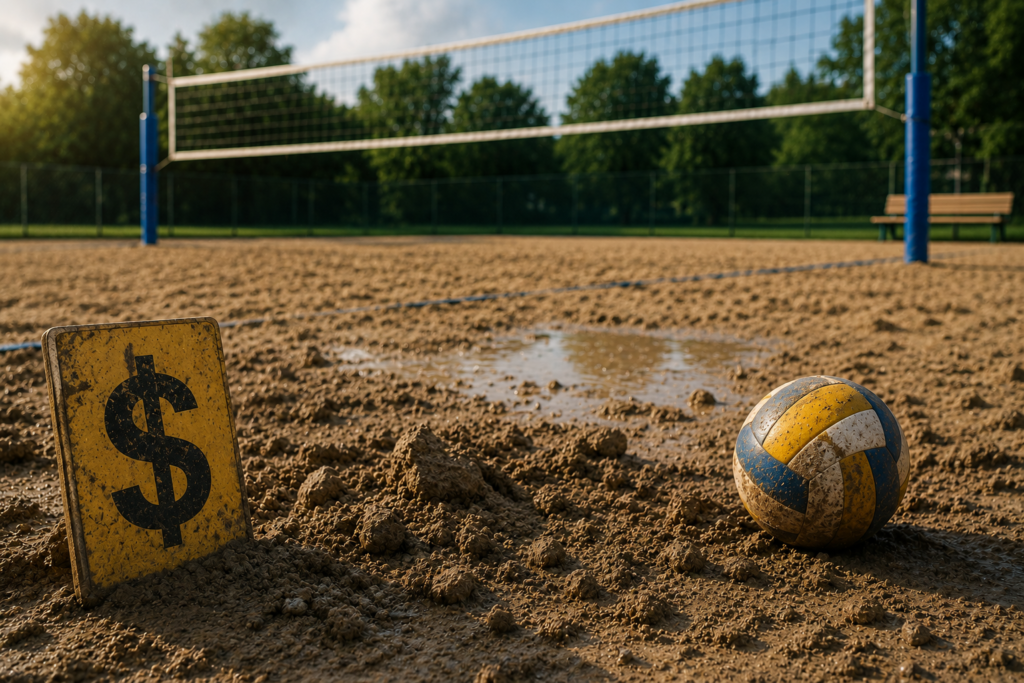
After a heavy rain, poor-quality sand can hold moisture for days. The surface becomes dense and muddy underneath while the top layer dries unevenly. If you have ever stepped onto a court and felt your foot sink awkwardly… yeah, that is usually a drainage issue.
And once drainage problems start, maintenance gets harder.
You may end up dealing with:
- Standing water after storms
- Compact and heavy sand areas
- Mold or unpleasant smells
- Frequent grooming and turning
- More downtime before games
A court that stays wet too long also wears out faster. Players notice it immediately.
Players Can Actually Feel the Difference
Here is something people forget… volleyball players interact with the sand constantly. They dive, jump, sprint, and land on it over and over.
Cheap sand tends to feel rougher and less consistent. Some sections may feel too soft while others become hard as concrete after a little moisture. That uneven texture affects movement and comfort.
And honestly, players complain about it fast.
We have heard stories where courts needed constant touch-ups because the sand kept shifting unevenly. Owners thought they saved money upfront, but they were buying new material within a year anyway. Not exactly a bargain.
More Repairs Usually Follow
Once poor sand starts causing issues, the court itself can suffer too.
Low-quality materials may wash away more easily during rain or windy conditions. This creates uneven court depth, exposed base layers, and low spots around the edges. Then comes extra work…
You may need to:
- Refill missing sand regularly
- Fix grading issues
- Repair borders and drainage zones
- Re-level the entire court
That maintenance schedule becomes expensive pretty quickly.
Funny enough, the “cheap” option sometimes ends up costing more than premium court sand in the long run.
Not All Sand Is Equal
This part surprises a lot of people.
Two sand products may look almost identical from a distance, but their performance can be completely different. Proper volleyball court sand is usually washed, screened, and selected for consistent grain size. It is designed to stay loose enough for play while still draining correctly.
Cheap alternatives often skip that processing.
So while searching for volleyball sand for sale, it helps to look beyond the price tag. Ask questions. What is the sand made for? Has it been washed? Does it compact easily? How does it handle rain?
Those details matter more than most people think.
Spending a Little More Can Save a Lot Later
Nobody likes overspending on materials. We get it. Budgets are real.
But there is a difference between affordable and low quality. A well-made volleyball sand product usually requires less maintenance, lasts longer, and keeps the court safer for players.
That means fewer repairs, less frustration, and more actual game time.
And honestly… peace of mind has value too.
A court should feel enjoyable, not like another thing on your weekend chore list.
Final Thoughts
Cheap volleyball sand may seem like a quick way to cut costs, but it often creates extra maintenance problems later. Poor drainage, uneven surfaces, compacted areas, and constant repairs can turn that “good deal” into an ongoing expense.
When searching for volleyball sand for sale, it is worth focusing on quality, consistency, and long-term performance instead of only choosing the lowest price. A better sand product usually means a better court experience… and a lot less maintenance stress down the road.
FAQs
1. What type of sand is best for volleyball courts?
Clean, washed, and properly screened sand works best for volleyball courts. It should drain well and stay soft enough for safe movement.
2. Does cheap volleyball sand compact faster?
Yes, many low-cost sand products compact more quickly, especially after rain or heavy use. This can create hard and uneven playing areas.
3. How often should volleyball court sand be maintained?
Most courts need regular raking and leveling. Lower-quality sand usually requires more frequent maintenance.
4. Can poor sand affect player safety?
Absolutely. Hard patches, uneven spots, and rough textures can increase the risk of slips, falls, and discomfort during games.
5. Is expensive volleyball sand always better?
Not always, but higher-quality sand is usually processed specifically for sports use. It tends to last longer and requires less maintenance over time.