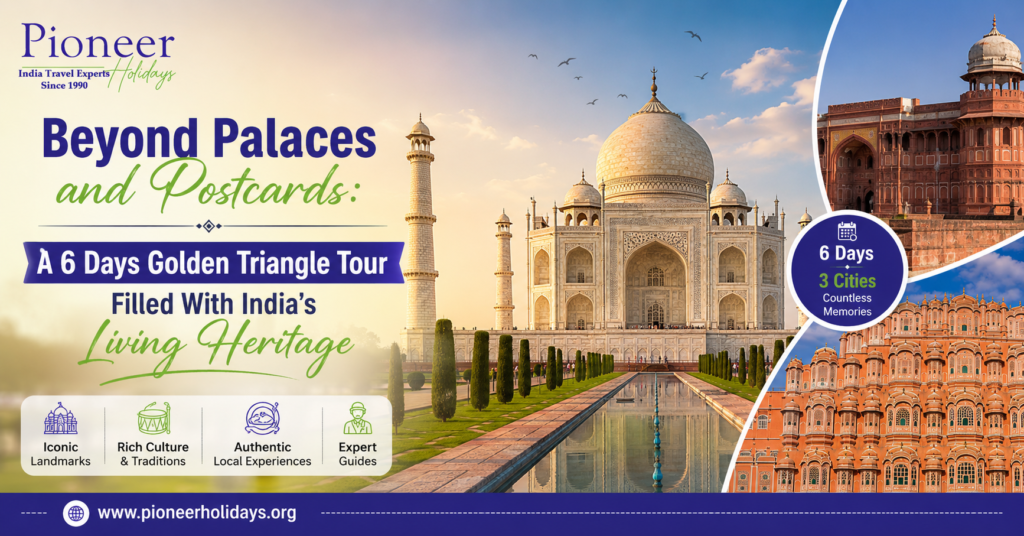
India is a country where every road tells a story. From busy old markets to royal forts and marble monuments, every city has its own color, taste, and culture. If you want to see the true beauty of North India in a short time, then a 6 days golden triangle tour is one of the best travel experiences you can choose.
This journey connects three famous cities — Delhi, Agra, and Jaipur. Together, these cities create the most popular travel route in India known as the Golden Triangle. In just six days, travelers can see Mughal architecture, royal palaces, colorful bazaars, ancient history, local food, and traditional Indian life.
Many international travelers choose this route because it gives a complete introduction to India. You can walk through centuries-old streets in Delhi, watch the sunrise over the Taj Mahal in Agra, and feel the royal atmosphere of Rajasthan in Jaipur.
Travel companies like pioneerholidays.org help visitors enjoy this journey comfortably with private transport, local guides, and carefully planned itineraries.
Why the Golden Triangle Is So Popular
The Golden Triangle is called “golden” because the three cities form a triangle shape on the map and each city offers priceless cultural experiences.
Delhi represents India’s political and historical heart. Agra shows the beauty of Mughal architecture. Jaipur brings travelers close to Rajasthan’s royal traditions.
A 6 days golden triangle tour is perfect because it gives enough time to explore major attractions without feeling rushed. Travelers can enjoy monuments, local food, shopping markets, and cultural experiences while also having time to relax.
Unlike very short tours, six days allow visitors to experience India beyond photographs. You can interact with local people, enjoy traditional meals, and understand the history behind every monument.
Day 1 – Arrival and Exploring Old & New Delhi
Delhi is usually the starting point of the journey. India’s capital city is a mix of old traditions and modern life. Ancient Mughal monuments stand beside busy roads, shopping malls, and government buildings.
Your tour often begins with pickup from the airport or hotel. After meeting your guide, sightseeing starts in Old Delhi.
Old Delhi Attractions
Red Fort
The Red Fort is one of the most important Mughal forts in India. Built with red sandstone, this huge structure once served as the home of Mughal emperors.
Jama Masjid
One of India’s largest mosques, Jama Masjid is famous for its grand architecture and peaceful atmosphere.
Chandni Chowk
This old market area is full of life. Narrow streets, spice shops, street food, and local markets make it one of Delhi’s most exciting places.
Visitors often enjoy riding a traditional rickshaw through the busy lanes.
New Delhi Attractions
After exploring Old Delhi, travelers move toward New Delhi.
India Gate
A war memorial surrounded by gardens and wide roads, India Gate is one of Delhi’s most visited landmarks.
Qutub Minar
This tall tower is a UNESCO World Heritage Site and one of the oldest Islamic monuments in India.
Humayun’s Tomb
This beautiful tomb inspired the design of the Taj Mahal and shows early Mughal architectural style.
At the end of the day, travelers relax at their hotel before continuing the journey.
Day 2 – Delhi to Agra
On the second day, travelers drive to Agra using a modern highway. The journey usually takes around 3 to 4 hours.
Agra is famous around the world because of the Taj Mahal, but the city also has many other historical sites.
Agra Fort
Before visiting the Taj Mahal, many travelers explore Agra Fort. This massive red sandstone fort was once the main residence of Mughal emperors.
Inside the fort, visitors can see royal halls, courtyards, and beautiful views of the Taj Mahal from a distance.
Mehtab Bagh
Located across the Yamuna River, Mehtab Bagh offers peaceful sunset views of the Taj Mahal. Photographers especially love this place during evening hours.
Local Marble Art
Agra is also known for marble handicrafts. Skilled local artists create detailed marble work inspired by the Taj Mahal’s design.
Travelers can visit workshops and learn about traditional craftsmanship passed through generations.
Companies like pioneerholidays.org often include local cultural experiences that help travelers connect more deeply with Indian traditions.
Day 3 – Sunrise at Taj Mahal and Drive to Jaipur
The third day is often the most memorable part of the tour.
Taj Mahal Sunrise Visit
Early morning is the best time to visit the Taj Mahal. As the sun slowly rises, the white marble changes color from soft pink to bright white.
Built by Mughal Emperor Shah Jahan in memory of his wife Mumtaz Mahal, the Taj Mahal is considered one of the greatest symbols of love in the world.
Visitors are often surprised not only by its beauty but also by the peaceful atmosphere around the monument during sunrise.
A 6 days golden triangle tour feels incomplete without this magical experience.
Drive Toward Jaipur
After breakfast, travelers begin the journey to Jaipur, the capital of Rajasthan.
On the way, many tours stop at Fatehpur Sikri.
Fatehpur Sikri
This abandoned Mughal city was once the capital of Emperor Akbar. Today, it remains one of the best-preserved historical sites in India.
Its red sandstone buildings, royal courtyards, and giant gateways make it a fascinating stop during the drive.
By evening, travelers arrive in Jaipur and check into their hotel.
Day 4 – Exploring the Royal City of Jaipur
Jaipur is also known as the Pink City because many buildings are painted in pink color.
This city offers a completely different atmosphere compared to Delhi and Agra. Jaipur is filled with royal palaces, colorful streets, traditional clothing, and local crafts.
Amber Fort
Amber Fort is one of Jaipur’s most famous attractions. Located on a hill, the fort combines Hindu and Mughal architecture.
Visitors can explore grand halls, mirror palaces, gardens, and old royal rooms.
The view from the fort overlooking the surrounding hills is breathtaking.
City Palace
The City Palace still serves as a royal residence for Jaipur’s royal family. Part of the palace is now a museum displaying royal costumes, weapons, and historical artifacts.
Hawa Mahal
Known as the Palace of Winds, Hawa Mahal is famous for its unique windows and pink sandstone design.
This monument was built so royal women could observe street festivals without being seen from outside.
Local Markets
Jaipur’s markets are full of handmade jewelry, textiles, leather goods, and traditional Rajasthani crafts.
Travelers often enjoy shopping in places like Johari Bazaar and Bapu Bazaar.
Day 5 – Jaipur Cultural Experiences
The fifth day gives travelers more time to enjoy Jaipur slowly.
Traditional Rajasthani Food
Rajasthani cuisine is rich in flavors and spices. Popular dishes include Dal Baati Churma, Gatte Ki Sabzi, and Laal Maas.
Many travelers also enjoy rooftop restaurants with views of old Jaipur.
Jal Mahal
Located in the middle of Man Sagar Lake, Jal Mahal looks beautiful especially during sunset.
Although visitors cannot enter the palace, the surrounding views are excellent for photography.
Albert Hall Museum
This museum showcases paintings, sculptures, textiles, and historical objects from Rajasthan.
Folk Dance and Music
Evening cultural programs are popular among tourists. Traditional Rajasthani dance performances and folk music create unforgettable memories.
A well-planned 6 days golden triangle tour gives travelers enough time not only to visit monuments but also to enjoy local culture and traditions.
Day 6 – Return to Delhi and Departure
On the final day, travelers return to Delhi.
Depending on flight timing, some visitors enjoy additional sightseeing or shopping before heading to the airport.
By the end of the journey, travelers usually feel they have experienced many sides of India — history, culture, architecture, food, traditions, and local life.
That is why the Golden Triangle remains India’s most famous travel circuit.
Best Time for Golden Triangle Tour
The best time to travel is between October and March.
During these months, the weather stays pleasant and comfortable for sightseeing.
Summer months can become very hot, especially in Rajasthan. Monsoon season brings rain but also greener landscapes and fewer crowds.
What Makes This Tour Special
There are many reasons why travelers love this route:
- Easy road connectivity between cities
- Rich cultural experiences
- World-famous monuments
- Local food and shopping
- Comfortable private tours
- Perfect balance of history and modern life
The journey also suits couples, families, solo travelers, and first-time visitors to India.
Travel Tips for First-Time Visitors
Wear Comfortable Clothes
Light cotton clothes and comfortable shoes are best for sightseeing.
Stay Hydrated
Carry bottled water during city tours.
Respect Local Culture
When visiting temples and mosques, dress modestly and follow local customs.
Keep Your Camera Ready
Every city offers beautiful photography opportunities.
Choose Trusted Tour Operators
Reliable companies like pioneerholidays.org help travelers enjoy stress-free experiences with professional guides and safe transportation.
Food Experiences During the Tour
Indian food is an important part of the journey.
Delhi
Try chaat, butter chicken, kebabs, and stuffed parathas.
Agra
Petha, a sweet made from ash gourd, is Agra’s famous local dessert.
Jaipur
Traditional Rajasthani thali gives travelers a complete taste of local cuisine.
Food lovers often say the Golden Triangle is as much about flavors as it is about monuments.
A Journey That Stays in Memory Forever
India is not just a destination; it is an emotion filled with colors, sounds, stories, and traditions.
A 6 days golden triangle tour gives travelers the chance to experience the country’s most iconic cities in one beautiful journey. From Delhi’s busy streets to the peaceful Taj Mahal and Jaipur’s royal charm, every moment feels unique.
Whether you are traveling for history, photography, culture, or adventure, this route offers something unforgettable.
With proper planning and trusted travel services from pioneerholidays.org, travelers can enjoy a smooth and memorable holiday across India’s most famous tourist circuit.
FAQs
How many cities are covered in the Golden Triangle Tour?
The Golden Triangle Tour covers three cities — Delhi, Agra, and Jaipur.
Is 6 days enough for the Golden Triangle Tour?
Yes, six days are ideal for exploring major attractions comfortably without rushing.
What is the best time for this tour?
October to March is considered the best season because the weather stays pleasant.
Is the Taj Mahal included in the tour?
Yes, the Taj Mahal is one of the main highlights of the tour.
Can families book this tour?
Yes, the Golden Triangle Tour is suitable for couples, families, solo travelers, and groups.
Is private transport available during the journey?
Most tour companies provide private AC vehicles for comfortable travel between cities.
Are local guides included?
Many tour packages include professional local guides in Delhi, Agra, and Jaipur.
What should I pack for the tour?
Carry comfortable clothes, walking shoes, sunscreen, sunglasses, and a camera.
Is Jaipur safe for tourists?
Yes, Jaipur is generally safe for tourists and is one of India’s most visited travel destinations.
Why should travelers choose pioneerholidays.org?
pioneerholidays.org offers professional travel planning, private tours, experienced guides, and comfortable transportation for travelers exploring India’s Golden Triangle.