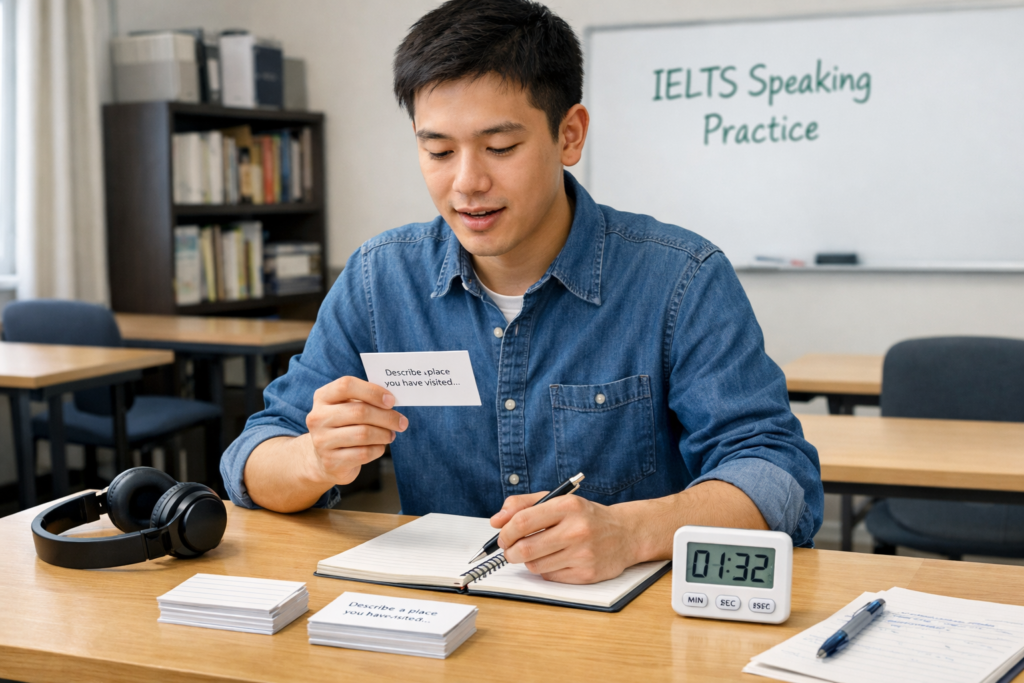
Preparing for the IELTS speaking test can feel difficult for many students. One section that often creates pressure is the cue card task. In this part of the exam, candidates need to speak on a topic for up to two minutes. Many students struggle because they run out of ideas, repeat words, or lose confidence while speaking. Practicing IELTS Speaking Cue Cards regularly can help improve speaking skills in a natural and organized way.
The cue card section is designed to test fluency, vocabulary, pronunciation, and the ability to speak clearly on a topic. Understanding how this section works can make preparation easier and more effective.
What Are IELTS Speaking Cue Cards?
In the speaking test, the examiner gives a topic card with a short description and a few points to discuss. Students usually get one minute to prepare before speaking. The topic may ask about a person, place, event, object, hobby, or experience.
For example, a cue card may ask you to describe:
- A memorable trip
- A useful book
- A person who inspired you
- A favorite season
- A skill you want to learn
These topics are simple, but many students find it hard to continue speaking for two minutes. This is why regular practice with IELTS Speaking Cue Cards is important.
Why Cue Card Practice Matters
The cue card section checks how well a person can organize thoughts while speaking naturally. Students who practice often become more comfortable with speaking for a longer time.
Regular practice helps in many ways:
- Improves fluency
- Reduces hesitation
- Builds confidence
- Expands vocabulary
- Helps with sentence structure
- Improves pronunciation
When students work on different IELTS Speaking Cue Cards, they become familiar with common topics and learn how to express ideas more clearly.
How to Answer Cue Cards Easily
Many students think they need very advanced English to score well. In reality, simple and clear communication is more important. A good answer should sound natural and easy to understand.
A simple structure can help:
Introduction
Start by introducing the topic in one or two sentences.
Example:
“I would like to talk about a trip that I enjoyed with my family last year.”
Main Details
Explain the important points from the cue card. Add small details, examples, and feelings.
Ending
Finish with a short concluding sentence.
Example:
“It was one of the most memorable experiences of my life.”
Using this structure while practicing IELTS Speaking Cue Cards can help students stay organized during the exam.
Common Mistakes Students Make
Many candidates lose marks because of avoidable mistakes. Understanding these mistakes can improve performance in the speaking test.
Speaking Too Fast
Some students speak very quickly because they are nervous. Fast speaking can affect pronunciation and clarity.
Memorized Answers
Using fully memorized answers may sound unnatural. Examiners can usually notice rehearsed responses.
Repeating Words
Repeating the same words again and again reduces vocabulary quality.
Long Pauses
Too many pauses can affect fluency scores. Regular practice with IELTS Speaking Cue Cards helps reduce hesitation.
Using Difficult Words Incorrectly
Simple words used correctly are better than difficult vocabulary used in the wrong way.
Tips to Improve Speaking Scores
Improving speaking skills takes time and regular practice. Small daily habits can make a big difference.
Practice Speaking Daily
Even speaking for ten to fifteen minutes every day can improve fluency.
Record Your Answers
Listening to recorded answers helps students notice pronunciation and grammar mistakes.
Learn Topic Vocabulary
Learning useful words for travel, education, technology, hobbies, and environment can help during the test.
Focus on Fluency
Do not stop speaking because of small grammar mistakes. Continue speaking naturally.
Use Real Experiences
Real-life examples make answers more natural and easier to explain.
Students who regularly practice IELTS Speaking Cue Cards often become more confident in expressing ideas.
Important Topics for Cue Card Practice
Some topics appear more commonly in speaking tests. Preparing these topics can help students feel more prepared.
People
- A helpful teacher
- A close friend
- A famous person
Places
- A beautiful city
- A crowded place
- A peaceful location
Experiences
- A difficult decision
- A special celebration
- A recent journey
Objects
- A useful gadget
- A favorite gift
- An important book
Practicing different categories of IELTS Speaking Cue Cards improves idea generation and speaking confidence.
How Vocabulary Helps in Cue Cards
Vocabulary plays an important role in speaking scores. Students do not need very complicated words, but they should try to use different expressions naturally.
For example, instead of repeating “good,” students can use:
- Interesting
- Enjoyable
- Useful
- Helpful
- Memorable
Using varied vocabulary during IELTS Speaking Cue Cards practice can make speaking sound more natural and effective.
Managing Nervousness During the Test
Many students know the answers but become nervous during the speaking exam. Staying calm is important for better performance.
A few simple methods can help:
- Take a deep breath before speaking
- Maintain a normal speaking speed
- Focus on communication, not perfection
- Smile and stay relaxed
- Practice mock speaking tests regularly
Confidence usually improves after regular practice with IELTS Speaking Cue Cards.
Importance of Time Management
Students often stop speaking too early in the cue card section. Learning how to manage speaking time is important.
A good method is:
- Introduction – 20 seconds
- Main points – 1 minute 20 seconds
- Ending – 20 seconds
This structure helps students continue speaking smoothly without long pauses.
Building Better Fluency Over Time
Fluency does not improve in one day. It develops through regular speaking practice. Students who practice different IELTS Speaking Cue Cards every week usually notice better confidence, smoother speaking, and improved vocabulary.
Simple daily speaking activities can also help:
- Speaking in front of a mirror
- Describing daily routines
- Talking about pictures
- Discussing favorite movies or books
- Practicing with friends
These activities make English speaking more natural and comfortable.