Introduction
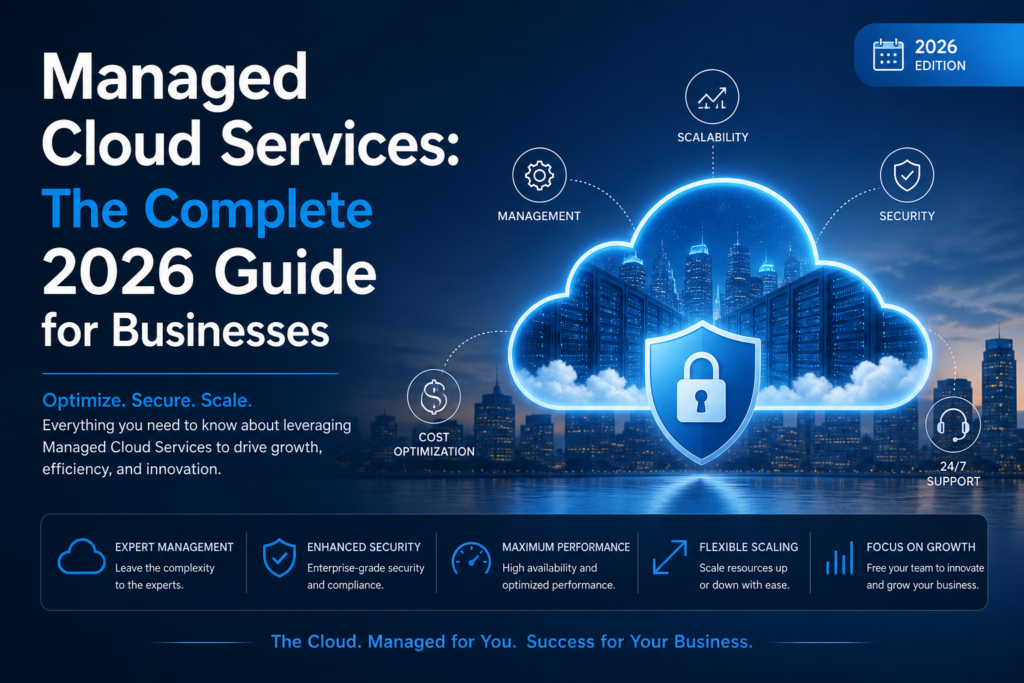
The way businesses manage their IT infrastructure has changed dramatically over the past few years. In 2026, organizations are no longer debating whether to move to the cloud; instead, they are focused on how to manage it efficiently. This shift has given rise to managed cloud services, a model where businesses outsource the management of their cloud environments to specialized providers. These providers take responsibility for monitoring, security, optimization, and day-to-day operations, allowing internal teams to concentrate on innovation and growth rather than technical maintenance.
Managed cloud services are particularly valuable for both fast-growing startups dealing with increasing infrastructure complexity and large enterprises struggling with multi-cloud environments and talent shortages. By leveraging external expertise, businesses can streamline operations, reduce risks, and improve performance without building large in-house teams.
What Are Managed Cloud Services?
Managed cloud services combine cloud computing with outsourced IT management. Instead of hiring and training internal teams to handle cloud operations, businesses rely on Managed Service Providers (MSPs) who specialize in managing cloud environments. These providers handle everything from infrastructure monitoring to security updates, ensuring that systems run smoothly at all times.
This approach can be compared to hiring a property management company. While the business still owns its applications, data, and systems, the provider takes care of the operational responsibilities such as maintenance, monitoring, and issue resolution. Unlike traditional IT, which relies on on-premises infrastructure, or do-it-yourself cloud setups where companies manage everything independently, managed cloud services offer a balanced approach where expert teams handle complex operations on behalf of the organization.
How Managed Cloud Services Work
The process of implementing managed cloud services typically begins with a detailed assessment of the organization’s existing infrastructure, security posture, and business objectives. Based on this evaluation, the provider develops a customized cloud strategy that aligns with the company’s goals. This may involve migrating workloads, redesigning applications, or setting up hybrid environments.
Once the strategy is finalized, the provider proceeds with provisioning resources and migrating workloads to the cloud. This stage is carefully managed to minimize disruptions to business operations. After deployment, the provider takes over ongoing management, using advanced monitoring tools and automation to ensure optimal performance, security, and cost efficiency.
Over time, managed service providers continuously analyze system performance and usage patterns. They provide regular reports and recommend improvements, helping businesses optimize their cloud environments and reduce unnecessary expenses. This ongoing optimization is one of the key advantages of managed cloud services.
Types of Managed Cloud Services
Managed cloud services are not a one-size-fits-all solution; they come in various forms depending on business needs. Some organizations require infrastructure management, where providers handle compute resources, storage, and networking. Others prioritize security services, which include threat detection, compliance management, and identity access control.
In addition, many businesses rely on managed database services to ensure their data systems are optimized, secure, and highly available. With the rise of containerized applications, managed Kubernetes services have also become increasingly important, helping organizations handle complex container orchestration. Backup and disaster recovery services play a critical role in protecting data and ensuring business continuity, while multi-cloud and hybrid cloud management enables organizations to operate seamlessly across different platforms.
Key Benefits for Businesses
One of the biggest advantages of managed cloud services is cost efficiency. By outsourcing cloud management, businesses can significantly reduce expenses related to hiring, training, and maintaining in-house teams. In many cases, organizations experience cost savings of up to 30–45 percent compared to managing infrastructure internally.
Another major benefit is continuous monitoring and support. Managed service providers operate around the clock, identifying and resolving issues before they impact business operations. This proactive approach helps prevent downtime and ensures a reliable user experience.
Security is also greatly enhanced through managed cloud services. Providers bring advanced tools, frameworks, and expertise to protect systems from cyber threats while ensuring compliance with industry regulations. Additionally, businesses benefit from scalability, as they can easily adjust resources based on demand without making large capital investments.
Access to specialized talent is another key advantage. Instead of struggling to hire skilled professionals, companies gain immediate access to certified experts across various cloud platforms. At the same time, predictable pricing models make it easier for businesses to manage budgets and avoid unexpected costs.
Trends Shaping Managed Cloud Services in 2026
The managed cloud landscape continues to evolve rapidly, driven by technological advancements and changing business needs. One of the most significant trends is the use of artificial intelligence to automate cloud operations. AI-powered systems can predict issues, optimize performance, and even resolve problems without human intervention.
Another important trend is the widespread adoption of multi-cloud strategies. Businesses are increasingly using multiple cloud providers to reduce dependency on a single vendor and improve flexibility. Security has also become a central focus, with providers offering advanced protection measures and positioning themselves as full-scale security partners.
Cost optimization is gaining importance as organizations seek better control over cloud spending. Managed service providers are incorporating FinOps practices to help businesses track and reduce expenses. At the same time, regulatory requirements are driving demand for sovereign and private cloud solutions, especially in regions with strict data protection laws.
Choosing the Right Managed Cloud Provider
Selecting the right managed service provider is a critical decision that can significantly impact business success. The first step is to clearly define your requirements, including workloads, compliance needs, and budget. This clarity helps in identifying providers that align with your specific goals.
It is equally important to evaluate the provider’s technical expertise. Businesses should look for certifications, real-world experience, and proven success in handling similar projects. Security and compliance capabilities should also be thoroughly assessed to ensure the provider meets industry standards.
Understanding the pricing model is another crucial factor. Companies should carefully review what is included in the service and watch out for hidden costs. Finally, communication and cultural fit should not be overlooked, as a strong partnership requires transparency, responsiveness, and alignment between both parties.
Common Challenges and Solutions
Despite its advantages, managed cloud services come with certain challenges. One of the most common concerns is vendor lock-in, where businesses become overly dependent on a single provider. This risk can be reduced by adopting multi-cloud strategies and ensuring clear contractual terms.
Security and data privacy concerns are also important considerations. Businesses must ensure that providers follow strict security practices and comply with relevant regulations. Transitioning to managed services can be complex, but a phased approach can help minimize disruption.
Another challenge is the ongoing shortage of skilled cloud professionals, even among service providers. To address this, businesses should choose providers with strong training programs and employee retention strategies to ensure consistent service quality.
Conclusion
Managed cloud services have become an essential part of modern business strategy. As cloud environments grow more complex, organizations are increasingly turning to specialized providers to handle operations efficiently. This approach not only reduces costs but also enhances security, scalability, and overall performance.
Looking ahead, the role of managed cloud services will continue to expand as new technologies and regulations shape the digital landscape. Businesses that adopt this model strategically can gain a significant competitive advantage, allowing them to focus on innovation while leaving infrastructure management in expert hands.