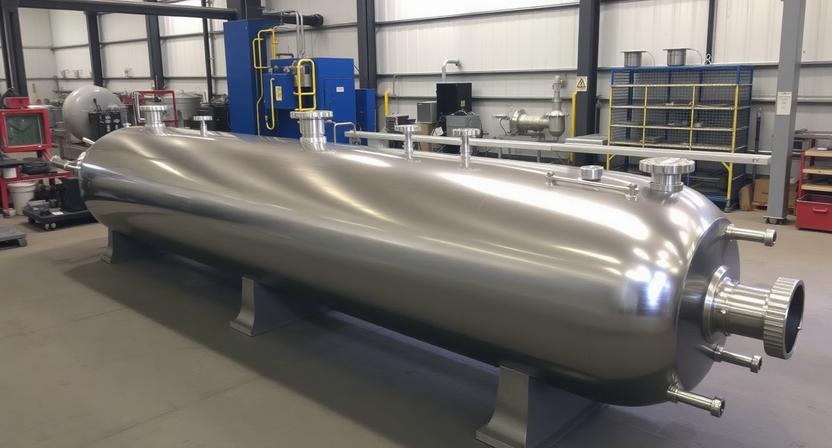
Few components in process engineering carry as much responsibility—or potential risk—as the pressure vessel. These robust containers hold gases and liquids at pressures vastly different from ambient conditions. They serve as the beating heart of operations across industries like oil, gas, and pharmaceuticals. Selecting the right industrial pressure vessel is far more than a simple procurement task. It is a critical engineering decision that directly dictates the safety, efficiency, and operational lifespan of your entire plant.
For plant managers and process engineers, the stakes are undeniably high. A poorly specified vessel can lead to catastrophic failures, severe regulatory fines, and agonizing downtime. On the flip side, a meticulously chosen unit guarantees seamless operations and uncompromising safety margins.
This guide cuts through the complexity of pressure vessel procurement. We will walk you through the essential considerations for selecting these critical components. You will learn how to navigate design parameters, evaluate material science, understand fabrication workflows, and apply strict maintenance standards to protect your investment.
Understanding Core Design Parameters

Before you approach a manufacturer for an industrial pressure vessel, you need a precise grasp of your process requirements. The selection process demands a multi-dimensional analysis of your specific operational needs.
Pressure and Temperature Demands
The defining characteristics of any vessel are its Maximum Allowable Working Pressure (MAWP) and its design temperature. You must calculate the absolute maximum pressure the vessel will encounter, including unexpected spikes during startup or shutdown sequences. The vessel’s wall thickness relies directly on this critical calculation.
Temperature also drastically alters material strength. High operating temperatures lower the allowable stress of metal, requiring thicker walls or specialized heat-resistant alloys. Conversely, cryogenic applications demand materials that maintain ductility and resist brittleness at sub-zero temperatures.
Fluid Characteristics and Behavior
The chemical makeup of the fluid inside your industrial pressure vessel strictly dictates your material options. Highly corrosive fluids containing acids, chlorides, or sulfur compounds will quickly destroy standard carbon steel.
If your process involves lethal or highly toxic fluids, the vessel requires much stricter fabrication tolerances. Manufacturers must perform extensive non-destructive testing to guarantee a zero-leak environment. Furthermore, fluid density and viscosity influence the structural design of internal components like nozzles, agitators, and baffles.
Navigating Material Science
Selecting the right material acts as the backbone of safety for any industrial pressure vessel. You must carefully balance upfront costs against long-term performance and chemical compatibility.
Carbon Steel
Carbon steel serves as the reliable workhorse of the fabrication industry. It offers high tensile strength, excellent weldability, and exceptional cost-effectiveness. However, it remains highly susceptible to corrosion. Engineers typically reserve carbon steel for general-purpose vessels holding water, compressed air, or non-corrosive hydrocarbons.
Stainless Steel (304/316)
When you need superior corrosion resistance, stainless steel becomes the standard choice. It provides fantastic defense against oxidation and aggressive chemical attacks. Its hygienic properties make it the default option for food, beverage, and pharmaceutical applications. While it costs more than carbon steel, its longevity in corrosive environments justifies the investment.
Nickel Alloys
Extreme environments demand materials where failure simply is not an option. Exotic nickel alloys like Inconel, Monel, and Hastelloy offer unparalleled resistance to blazing temperatures and highly aggressive acids. These materials carry a hefty price tag and require highly specialized fabrication techniques. You will typically find them in reactors handling hydrochloric acid or high-temperature heat exchangers.
Clad Materials
Cladding offers a brilliant engineering compromise. Fabricators bond a thin layer of an expensive, corrosion-resistant alloy onto a thick backing of cost-effective carbon steel. You get the immense structural strength of thick carbon steel combined with the surface protection of an exotic alloy. This method significantly reduces fabrication costs for massive, high-pressure vessels.
The Fabrication Workflow
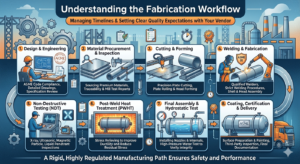
Understanding the fabrication sequence helps you manage timelines and set clear quality expectations with your vendor. A premium industrial pressure vessel follows a rigid, highly regulated manufacturing path.
Precision Engineering and Design
The process begins with rigorous mathematical modeling. Engineers utilize advanced software to simulate structural stresses, calculate exact wall thicknesses, and design nozzle reinforcements. Every calculation must align perfectly with codes like ASME Section VIII to ensure absolute structural integrity.
Expert Welding Procedures
Welding forms the structural core of any pressure vessel. Every welder touching the project must hold certifications under ASME Section IX for the exact procedures utilized. Fabricators often employ Submerged Arc Welding (SAW) for long seams on thick steel plates. This technique provides a high deposition rate and flawless weld quality.
Non-Destructive Testing (NDT)
Manufacturers must verify the vessel’s integrity without causing structural damage. They use several NDT methods to hunt down microscopic flaws:
- Radiography (RT): X-rays penetrate the weld to reveal internal porosity or hidden cracks.
- Ultrasonic Testing (UT): High-frequency sound waves bounce through the metal to detect internal inconsistencies.
- Dye Penetrant (PT): Specialized dyes highlight invisible surface cracks.
- Hydrostatic Testing: As the ultimate proof of strength, engineers fill the vessel with water and pressurize it up to 1.5 times its design pressure to guarantee it holds firm.
Industry Focus: Petrochemical Challenges
The petrochemical sector throws unique, aggressive challenges at process equipment. An industrial pressure vessel in this environment must manage volatile hydrocarbons at blistering temperatures and extreme pressures.
Conquering Hydrogen Service
Processes like hydrocracking force vessels to operate in high-pressure hydrogen environments. This creates a severe risk of “Hydrogen Embrittlement” or High-Temperature Hydrogen Attack (HTHA). Standard carbon steel will fail under these conditions. Engineers must specify Chromium-Molybdenum (Cr-Mo) steels that resist hydrogen penetration. These vessels also require precise Post Weld Heat Treatment (PWHT) to relieve residual manufacturing stresses.
Surviving Sour Service
Many crude oil extraction and refining processes deal with Hydrogen Sulfide (H2S). This highly toxic and corrosive environment is known as “Sour Service.” Materials in these applications must strictly adhere to NACE MR0175 standards. Fabricators must carefully control the hardness of both the base metal and the welds to prevent catastrophic Sulfide Stress Cracking (SSC).
Strict Manufacturer Selection Criteria
The global market is flooded with metal fabricators, but very few possess the expertise to build a safe industrial pressure vessel. Choosing the right manufacturing partner is just as crucial as selecting the right steel grade.
Demand Proper Certifications
Never compromise on official certifications. Look specifically for the ASME “U” stamp. This prestigious certification proves the manufacturer has passed rigorous audits to design and build pressure vessels to strict ASME standards. You should also look for ISO 9001 certifications for quality management and National Board “R” stamps for future repair capabilities.
Verify Physical Capacity
Ensure the shop has the raw physical capacity to handle your specific project footprint. Ask about their maximum crane lifting capacity to ensure they can maneuver a 50-ton reactor. Check their plate rolling capabilities to confirm they can cold-roll thick steel plates. Finally, verify they have the floor space required to fully assemble and hydro-test massive fractionation columns.
Review the Manufacturer’s Data Report (MDR)
A high-quality industrial pressure vessel always arrives with a comprehensive Manufacturer’s Data Report. Think of this document as the vessel’s official birth certificate. It must include detailed material test reports, comprehensive weld maps, NDT results, and heat treatment charts. Always ask to review a sample MDR during your vetting process to ensure their documentation meets your rigorous safety standards.
Prioritizing Maintenance and Safety Standards
The selection process does not end the moment the vessel arrives at your facility. The operational longevity of your industrial pressure vessel relies entirely on how you maintain it after installation.
Follow strict API 510 codes for routine in-service inspections. This involves scheduling periodic ultrasonic thickness checks to carefully monitor ongoing corrosion rates. You must also prioritize the maintenance of your Pressure Safety Valves (PSV). These valves serve as your absolute last line of defense against catastrophic over-pressurization. Test and calibrate them regularly so they open instantly at the correct pressure threshold.
Finally, protect your asset from the outside in. External corrosion—specifically Corrosion Under Insulation (CUI)—quietly destroys countless vessels every year. Ensure your external coating systems perfectly match your operating environment and always keep your insulation dry.
Treat your pressure vessel selection with the intense technical scrutiny it deserves. By mastering design parameters, materials, and fabrication standards, you will secure a robust asset that powers your plant safely for decades.
Also, Read: A Guide to Industrial Pressure Vessels in Process Plants