Iron is one of the most essential nutrients for maintaining energy, supporting oxygen flow in the body, and preventing fatigue. Yet, iron deficiency remains one of the most common nutritional concerns in India, especially among women and children.
The good news is that Indian kitchens are naturally rich in foods that can help improve iron levels. By including the right ingredients in your meals, you can maintain healthy hemoglobin levels and overall well-being.
Understanding iron rich Indian food and how to include it in your daily diet can make a significant difference in your health.
Why Iron Is Important for Your Body
Iron plays a key role in producing hemoglobin, a protein in red blood cells that carries oxygen throughout the body. When iron levels are low, the body struggles to function efficiently, leading to symptoms such as fatigue, weakness, and reduced immunity.
A diet rich in iron helps:
- Improve energy levels
- Support brain function
- Strengthen immunity
- Prevent anemia
This is why incorporating iron rich Indian food into everyday meals is essential for long-term health.
Types of Iron in Indian Foods
Before exploring food sources, it’s important to understand the two types of iron:
Heme Iron
Found in animal-based foods and easily absorbed by the body.
Non-Heme Iron
Found in plant-based foods such as grains, pulses, and vegetables. While slightly harder to absorb, it forms the majority of iron intake in Indian diets.
Most traditional iron rich Indian food falls under the non-heme category, making it important to pair these foods with vitamin C for better absorption.
Top Iron Rich Indian Foods to Include Daily
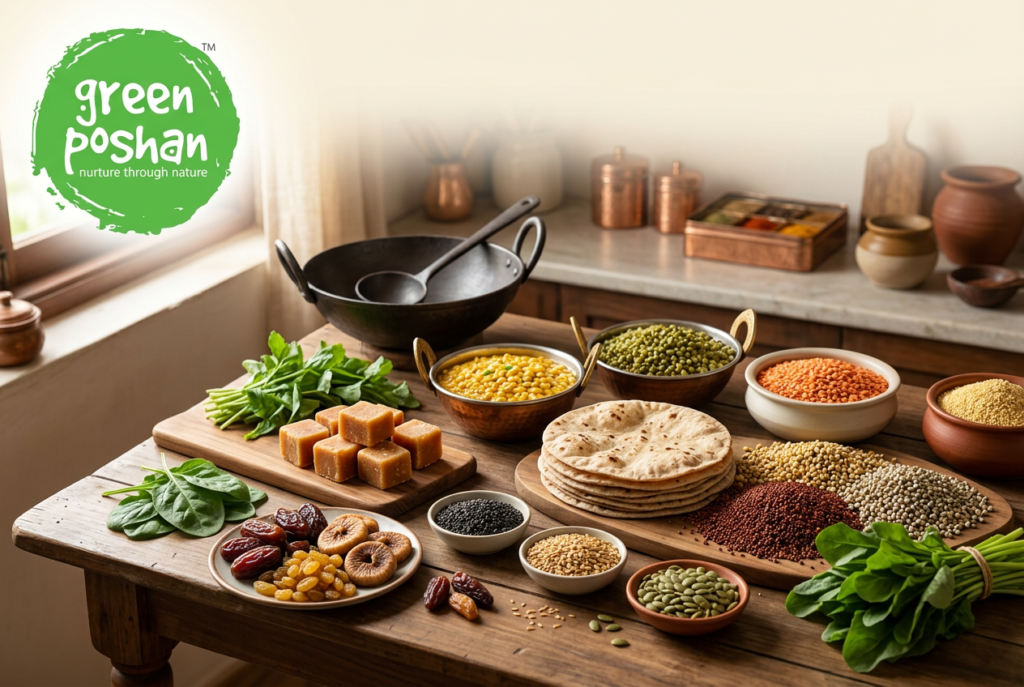
Indian cuisine offers a wide variety of natural iron sources that can be easily included in everyday meals.
1. Lentils and Pulses
Dal is a staple in Indian households and a great source of iron. Toor dal, moong dal, and masoor dal are excellent choices for boosting iron intake.
Choosing high-quality staples from trusted sources like Green Poshan ensures better nutritional value and purity.
2. Millets and Whole Grains
Millets such as ragi and bajra are rich in iron and fiber. They are traditional grains that are making a strong comeback in modern diets.
Switching from refined grains to millets is one of the easiest ways to increase iron intake naturally.
3. Green Leafy Vegetables
Spinach, fenugreek leaves, and mustard greens are among the most popular iron rich Indian food options.
These vegetables are not only rich in iron but also provide essential vitamins and minerals.
4. Jaggery
Jaggery is a traditional sweetener that contains small amounts of iron along with other minerals.
Replacing refined sugar with jaggery in moderation can contribute to better iron intake.
5. Seeds and Nuts
Seeds like sesame seeds, flax seeds, and pumpkin seeds are excellent sources of iron.
Adding these to your meals or snacks can significantly improve daily nutrient intake.
6. Dry Fruits
Dates, raisins, and figs are rich in iron and make for healthy snacks. They are especially useful for people looking to increase iron intake naturally.
How to Improve Iron Absorption
Consuming iron rich Indian food is important, but ensuring proper absorption is equally essential.
Here are some simple tips:
- Pair iron-rich foods with vitamin C sources like lemon, amla, or tomatoes
- Avoid tea or coffee immediately after meals
- Cook in iron utensils when possible
- Include a variety of foods for balanced nutrition
These small changes can significantly improve how your body absorbs iron from food.
Building an Iron-Rich Indian Diet
Creating a balanced diet doesn’t require drastic changes. It’s about making smarter choices with everyday ingredients.
A simple iron-rich meal plan could include:
- Breakfast: Millet-based dish with vegetables
- Lunch: Dal, roti, and green leafy vegetables
- Snacks: Nuts, seeds, or dry fruits
- Dinner: Light dal with vegetables
Choosing natural and minimally processed ingredients from reliable sources like Green Poshan helps ensure better nutrition in every meal.
For those looking to explore a wide range of natural and nutrient-rich staples, you can explore healthy Indian grocery options that support balanced eating habits.
Why Traditional Indian Foods Are the Best Solution
Modern diets often rely on processed foods that lack essential nutrients. In contrast, traditional Indian foods are naturally balanced and nutrient-dense.
The concept of iron rich Indian food is not new – it has been part of Indian culture for generations. The difference today is awareness.
By returning to traditional ingredients and cooking methods, it becomes easier to maintain good health without relying on supplements.
Platforms like Green Poshan are helping people reconnect with these traditional food choices by offering clean and naturally sourced products.
You can also shop natural and chemical-free groceries to build a healthier kitchen with everyday essentials.
Common Mistakes to Avoid
Even when people try to eat healthy, certain habits can reduce iron intake:
- Relying too much on processed foods
- Ignoring traditional grains and pulses
- Skipping meals or following unbalanced diets
- Not combining foods properly for absorption
Avoiding these mistakes ensures that your body gets the full benefit of iron rich Indian food.
Who Needs Iron-Rich Foods the Most?
While everyone needs iron, some groups require more attention:
- Women, especially during pregnancy
- Children in growth stages
- Individuals with low hemoglobin levels
- People with high physical activity
For these groups, a diet rich in iron is essential for maintaining energy and overall health.
Including high-quality ingredients from Green Poshan can help support these nutritional needs naturally.
Final Thoughts
Iron deficiency can impact energy, immunity, and overall health, but the solution often lies in simple dietary changes. Indian cuisine offers a wide variety of natural foods that can help maintain healthy iron levels.
By incorporating iron rich Indian food such as lentils, millets, leafy vegetables, and seeds into your daily meals, you can improve your nutrition without relying on processed alternatives.
Choosing clean and natural ingredients from trusted sources like Green Poshan further enhances the quality of your diet.
Start with small changes, stay consistent, and let traditional foods guide your journey toward better health.
Iron Rich Indian Food: Top Natural Sources to Boost Your Daily Iron Intake
Iron is one of the most essential nutrients for maintaining energy, supporting oxygen flow in the body, and preventing fatigue. Yet, iron deficiency remains one of the most common nutritional concerns in India, especially among women and children.
The good news is that Indian kitchens are naturally rich in foods that can help improve iron levels. By including the right ingredients in your meals, you can maintain healthy hemoglobin levels and overall well-being.
Understanding iron rich Indian food and how to include it in your daily diet can make a significant difference in your health.
Why Iron Is Important for Your Body
Iron plays a key role in producing hemoglobin, a protein in red blood cells that carries oxygen throughout the body. When iron levels are low, the body struggles to function efficiently, leading to symptoms such as fatigue, weakness, and reduced immunity.
A diet rich in iron helps:
- Improve energy levels
- Support brain function
- Strengthen immunity
- Prevent anemia
This is why incorporating iron rich Indian food into everyday meals is essential for long-term health.
Types of Iron in Indian Foods
Before exploring food sources, it’s important to understand the two types of iron:
Heme Iron
Found in animal-based foods and easily absorbed by the body.
Non-Heme Iron
Found in plant-based foods such as grains, pulses, seeds, and traditional staples. While slightly harder to absorb, it forms the majority of iron intake in Indian diets.
Most traditional iron rich Indian food falls under the non-heme category, making it important to pair these foods with vitamin C for better absorption.
Top Iron Rich Indian Foods to Include Daily
Indian cuisine offers a wide variety of natural iron sources that can be easily included in everyday meals.
1. Lentils and Pulses
Dal is a staple in Indian households and a great source of iron. Toor dal, moong dal, and masoor dal are excellent choices for boosting iron intake.
Choosing high-quality staples from trusted sources like Green Poshan ensures better nutritional value and purity.
2. Millets and Whole Grains
Millets such as ragi and bajra are rich in iron and fiber. They are traditional grains that are making a strong comeback in modern diets.
Switching from refined grains to millets is one of the easiest ways to increase iron intake naturally.
3. Jaggery
Jaggery is a traditional sweetener that contains small amounts of iron along with other minerals.
Replacing refined sugar with jaggery in moderation can contribute to better iron intake.
4. Seeds and Nuts
Seeds like sesame seeds, flax seeds, and pumpkin seeds are excellent sources of iron.
Adding these to your meals or snacks can significantly improve daily nutrient intake.
5. Dry Fruits
Dates, raisins, and figs are rich in iron and make for healthy snacks. They are especially useful for people looking to increase iron intake naturally.
How to Improve Iron Absorption
Consuming iron rich Indian food is important, but ensuring proper absorption is equally essential.
Here are some simple tips:
- Pair iron-rich foods with vitamin C sources like lemon or amla
- Avoid tea or coffee immediately after meals
- Cook in iron utensils when possible
- Include a variety of foods for balanced nutrition
These small changes can significantly improve how your body absorbs iron from food.
Building an Iron-Rich Indian Diet
Creating a balanced diet doesn’t require drastic changes. It’s about making smarter choices with everyday ingredients.
A simple iron-rich meal plan could include:
- Breakfast: Millet-based dish
- Lunch: Dal with roti
- Snacks: Nuts, seeds, or dry fruits
- Dinner: Light dal or grain-based meals
Choosing natural and minimally processed ingredients from reliable sources like Green Poshan helps ensure better nutrition in every meal.
For those looking to explore a wide range of natural and nutrient-rich staples, you can explore healthy Indian grocery options that support balanced eating habits.
Why Traditional Indian Foods Are the Best Solution
Modern diets often rely on processed foods that lack essential nutrients. In contrast, traditional Indian foods are naturally balanced and nutrient-dense.
The concept of iron rich Indian food is not new – it has been part of Indian culture for generations. The difference today is awareness.
By returning to traditional ingredients and cooking methods, it becomes easier to maintain good health without relying on supplements.
Platforms like Green Poshan are helping people reconnect with these traditional food choices by offering clean and naturally sourced products.
You can also shop natural and chemical-free groceries to build a healthier kitchen with everyday essentials.
Common Mistakes to Avoid
Even when people try to eat healthy, certain habits can reduce iron intake:
- Relying too much on processed foods
- Ignoring traditional grains and pulses
- Skipping meals or following unbalanced diets
- Not combining foods properly for absorption
Avoiding these mistakes ensures that your body gets the full benefit of iron rich Indian food.
Who Needs Iron-Rich Foods the Most?
While everyone needs iron, some groups require more attention:
- Women, especially during pregnancy
- Children in growth stages
- Individuals with low hemoglobin levels
- People with high physical activity
For these groups, a diet rich in iron is essential for maintaining energy and overall health.
Including high-quality ingredients from Green Poshan can help support these nutritional needs naturally.
Final Thoughts
Iron deficiency can impact energy, immunity, and overall health, but the solution often lies in simple dietary changes. Indian cuisine offers a wide variety of natural foods that can help maintain healthy iron levels.
By incorporating iron rich Indian food such as lentils, millets, seeds, and traditional staples into your daily meals, you can improve your nutrition without relying on processed alternatives.
Choosing clean and natural ingredients from trusted sources like Green Poshan further enhances the quality of your diet.
Start with small changes, stay consistent, and let traditional foods guide your journey toward better health.