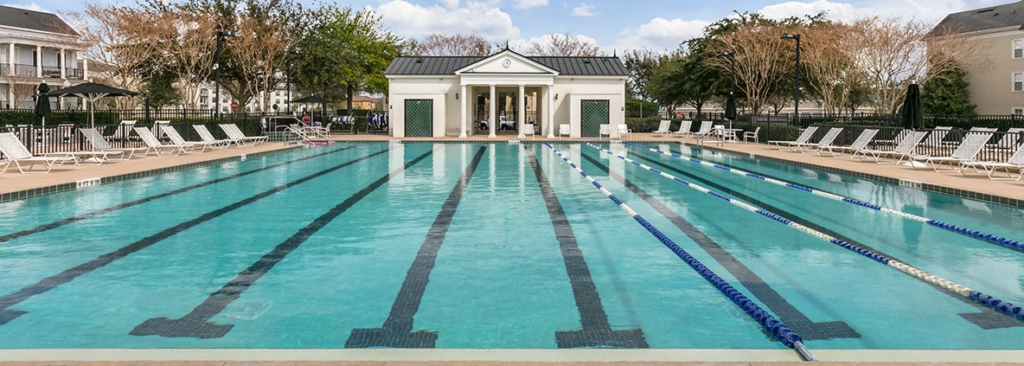
A pool that looks clean is not necessarily a pool that is being managed correctly. Water can test within acceptable chemical ranges, the deck can be dry and swept, and the facility can still be operating outside of Health Department compliance, without a valid permit, without a documented emergency plan, and without a single staff member who is qualified to make operational decisions on behalf of the property.
For property managers and HOA boards in Atlanta, the question worth asking is not whether the pool looks good on inspection day. It is whether the company responsible for it is actually equipped to deliver swimming pool management services at a commercial standard, day in and day out, across the full season.
The Difference Between Cleaning and Management
Pool cleaning is a maintenance function. Pool management is an operational function. The two are not the same, and they are not interchangeable when it comes to what commercial aquatic facilities require under Georgia Health Department regulations.
A cleaning-only provider handles water chemistry and physical maintenance on scheduled visits. A management company handles everything those visits do not cover: Health Department permit applications, pre-season facility inspections, equipment failure response, emergency action plan development, compliance documentation, staff supervision, and post-season facility reporting.
Many facilities operate under a cleaning contract with the assumption that management is included in the scope. It rarely is unless the contract explicitly states it, and that ambiguity tends to surface at the worst possible moment, such as when an inspector arrives, or a piece of equipment fails on a Saturday afternoon in July.
Questions That Reveal Whether Your Provider Is Qualified
The following questions cut through the surface level of a service relationship and identify whether your current provider is delivering genuine pool management services or maintenance work billed as something more comprehensive.
Who holds the CPO credential assigned to your facility?
A Certified Pool Operator must be associated with every commercial pool in Georgia. If your provider cannot name the CPO on file for your property, that is a compliance gap that places the permit and the facility’s operating status at risk.
Who handles your Health Department permit?
The permit is required before the facility opens each season. If you are handling the application yourself, or if your service provider is uncertain about the renewal process, the facility is operating without proper management support.
What happens when equipment fails during the season?
A management company either has in-house repair capacity or a clearly defined emergency response protocol. A cleaning service typically refers you to a third-party contractor and leaves you to coordinate the work, the timeline, and the cost on your own.
Does your facility have a documented Emergency Action Plan?
Commercial aquatic facilities are expected to maintain a written EAP that staff can execute immediately in an emergency. If your provider has not produced one or does not know whether one exists, the facility is not being managed to commercial standards.
Can you access a maintenance log for every service visit?
Electronic logs documenting chemical readings, service actions, and observations from each visit are a standard deliverable from any professional management program. If you are not receiving them, your provider is not maintaining the documentation your facility needs to demonstrate compliance.
What Proper Swimming Pool Management Services Include
Professional swimming pool management services are structured around accountability across every stage of the season. Before opening, that accountability includes a complete facility inspection, permit submission, chemical system setup, and equipment verification. During the season, it means assigned management staff with direct contact information, documented service visits with accessible records, rapid equipment repair response, and a clear communication process when problems arise.
After closing, it means a formal post-season inspection report that identifies what needs to be repaired, replaced, or budgeted before the following year. These are not add-on features. They are the operational baseline for managing a commercial aquatic facility responsibly.
What to Do If Your Current Provider Falls Short
If these questions reveal gaps in your current service arrangement, the path forward is concrete. Request a copy of your current permit, the most recent chemical maintenance logs, and the CPO certification associated with your account. Review the contract language to confirm what is and is not included in the scope of service. If documentation is missing or answers are unclear, the service being delivered does not meet the standard required for commercial aquatic management.