Why Is Web Scraping Important for Real-Time Market Intelligence?
Introduction
Business decisions once leaned heavily on instinct, occasionally brilliant, often questionable, and sometimes wildly off the mark. Today, however, decisions demand precision, speed, and context. Markets shift in minutes, not months, and staying updated feels less like an advantage and more like survival. A memory surfaces of manually tracking competitor pricing tabs open, coffee cold, patience thinner than expected. That chaos quietly explains the growing reliance on web scraping, which transforms scattered information into structured insights, almost like turning noise into something surprisingly useful.
1. What Is Real-Time Market Intelligence?
Real-time market intelligence refers to continuously updated insights that reflect current market conditions rather than outdated summaries. Instead of relying on yesterday’s reports, businesses operate on live streams of information that evolve by the second. This approach supports faster, sharper decisions across pricing, marketing, and strategy. Traditional reports now feel like relics, polished, organized, and slightly irrelevant. In contrast, dynamic intelligence provides clarity when timing matters most, helping organizations respond immediately instead of reacting long after opportunities quietly disappear.
2. The Role of Web Scraping in Data Collection
At its core, web scraping automates the process of collecting information from websites and converting it into usable formats. What once required hours of manual effort now happens in seconds—no repetitive clicking required (a relief for anyone who values sanity). These systems gather data at scale, ensuring accuracy and consistency across multiple sources. By leveraging web scraping, businesses streamline data collection without sacrificing depth. The result is a steady flow of structured insights, ready to support smarter and faster decisions.
3. Speed Matters: Why Real-Time Data Changes Everything
Speed is no longer optional; it defines success. Markets react instantly to trends, news, and consumer behavior, making delayed information almost useless. Access to real-time data enables businesses to adjust pricing, update strategies, and respond to demand without hesitation. Waiting even a few hours can feel like missing an entire opportunity cycle. It’s the difference between catching a wave and watching it pass by with mild frustration. In fast-moving industries, timing isn’t just important; it’s everything.
4. Competitive Intelligence Made Easier
Keeping an eye on competitors used to involve a mix of guesswork and persistence, refreshing pages, noting changes, and hoping nothing was missed. Now, automation handles this effortlessly, tracking pricing, product updates, and positioning in real time. It’s essentially competitive observation, but far more efficient and entirely legitimate. With accurate insights readily available, businesses can adapt strategies quickly and confidently. The result is less speculation and more informed action because guessing rarely wins in a data-driven environment.
5. Better Customer Insights and Personalization
Understanding customers has always been important, but expectations now evolve faster than ever. Preferences shift, trends emerge, and behaviors change—sometimes overnight. Access to real-time data allows businesses to track these changes and respond with personalized experiences. From tailored recommendations to targeted campaigns, data-driven insights create meaningful engagement. It’s no longer about broad assumptions but a precise understanding. Customers notice the difference too (even if they don’t always say it), and that subtle recognition often drives stronger loyalty.
6. Industry Use Cases of Web Scraping
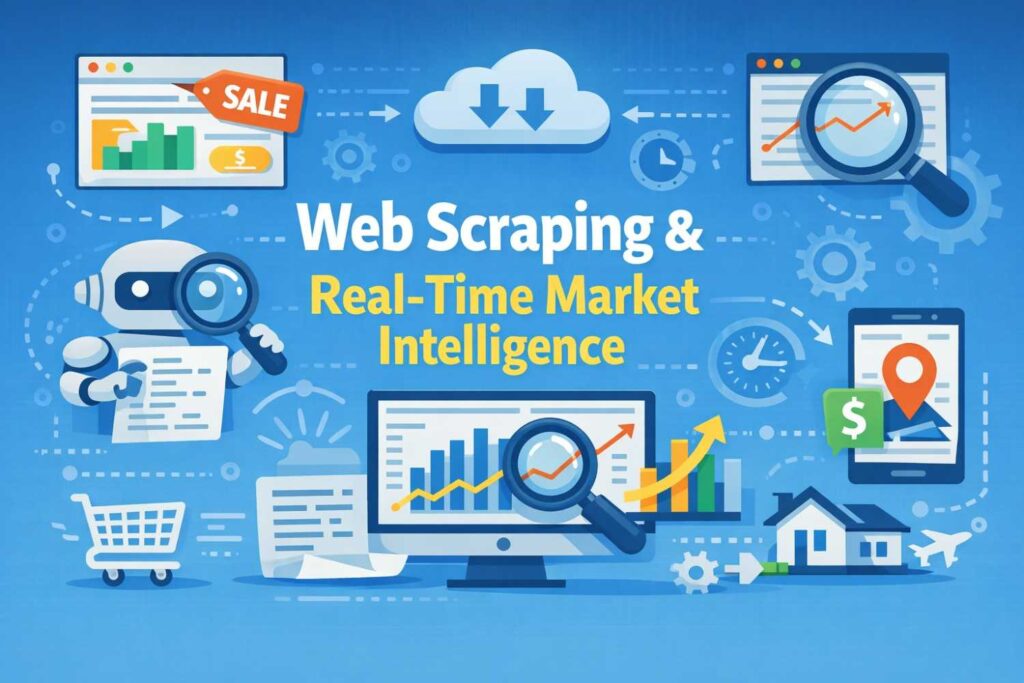
Across industries, web scraping quietly powers critical operations. E-commerce platforms monitor competitor pricing (because margins matter), while financial firms track market fluctuations with precision. Travel companies aggregate fares, helping users compare options instantly. Real estate platforms gather property data to reveal trends and opportunities. Each industry applies the same principle differently—collect, analyze, act. The versatility is almost amusing; one tool, countless applications. It proves that when data is accessible and timely, its value extends far beyond a single use case.
7. Challenges and Ethical Considerations
Despite its advantages, web scraping comes with responsibilities. Data privacy, compliance, and website policies require careful attention. Just because information is accessible doesn’t mean it can be used without limits (a subtle but important distinction). Ethical practices ensure sustainability and trust, both of which matter more than short-term gains. Businesses must balance efficiency with responsibility, ensuring that data collection aligns with legal frameworks. In the long run, thoughtful implementation always outperforms shortcuts—no matter how tempting those shortcuts might seem.
8. Choosing the Right Web Scraping Strategy
Selecting the right approach depends on scale, complexity, and business goals. Some organizations prefer ready-made tools, while others invest in customized solutions for greater flexibility. The key lies in accuracy, reliability, and scalability—because incomplete data can be more harmful than no data at all. Web scraping services offer tailored options that align with specific needs, ensuring consistent results. A well-planned strategy avoids unnecessary complications and delivers value efficiently, without turning the process into an over-engineered experiment.
9. The Future of Market Intelligence
Market intelligence continues to evolve alongside technology. Artificial intelligence and automation are shaping how data is collected, analyzed, and interpreted. Predictive insights are becoming more accessible, allowing businesses to anticipate trends rather than simply react. The growing reliance on real-time data reflects a broader shift toward immediacy and precision. Looking ahead, the gap between informed and uninformed decisions will only widen. Those who embrace intelligent systems will adapt—others may find themselves trying to catch up.
Conclusion
Modern markets reward speed, accuracy, and adaptability—qualities that manual processes rarely deliver. Automated data collection has reshaped how businesses understand and respond to their environment. What once required effort and guesswork now happens with clarity and precision. The shift toward intelligent systems is no longer optional; it’s inevitable. In a world moving this quickly, staying informed isn’t just an advantage—it’s a necessity. Because standing still, as it turns out, is simply another way of falling behind.
FAQs
1. What is web scraping used for in market intelligence?
Web scraping collects data from multiple online sources and transforms it into structured insights. Businesses use this information to monitor trends, track competitors, and make informed decisions quickly.
2. Is web scraping legal?
Web scraping is legal when conducted responsibly and in compliance with website terms, data protection laws, and ethical guidelines. Proper usage is essential to avoid legal issues.
3. How does real-time data improve decision-making?
Real-time data provides immediate insights, allowing businesses to respond quickly to changes. This leads to faster decisions, reduced risks, and improved competitiveness.
4. Which industries benefit most from web scraping?
Industries such as e-commerce, finance, travel, and real estate benefit significantly due to their reliance on dynamic data and market trends.
5. Can small businesses use web scraping effectively?
Yes, scalable solutions make web scraping accessible to small businesses, helping them compete with larger organizations through data-driven strategies.