Make Your Own Jewelry
So you want to make your own jewelry—but not the kind that looks like it was made at the kitchen table five minutes before dinner. The kind that makes someone pause. The kind that feels finished.
It’s funny… People assume professional jewelry is about expensive tools or rare stones. It’s not. Well, not exactly. It’s more about intention. The kind of care you can’t fake. And honestly? That’s good news. Because you can absolutely make your own jewelry that looks polished, thoughtful, and almost store-bought—without turning your spare room into a factory. Let’s talk about how.
Start Before You Start
Before you touch a bead or wire, pause. What are you actually making? Not “a necklace.” That’s too vague. Is it something bold? Quiet? Something you’d wear every day until it sorts of becomes part of you?
When you create your own jewelry, the difference between amateur and professional often happens in this invisible stage—the thinking. Professionals sketch. They lay pieces out and just stare at them. They change their minds. They move one bead three millimeters to the left, and suddenly… it works. That’s the quiet, almost invisible part of learning to Make Your Own Jewelry — the patience to adjust, rethink, and trust your eye until everything clicks.
I could list design principles here, but that’s not really what matters, is it? It’s about editing. Restraint. Sometimes the most professional choice is removing the extra charm you were excited about.
Use Better Materials Than You Think You Need
This one stings a little. If you want to make your own jewelry that looks high-end, materials matter more than tricks. Cheap clasps feel cheap. Lightweight chains tangle weirdly. Plastic beads have that too-perfect shine. The metal should feel cool at first, then warm against your skin. Stones should have tiny imperfections—little veins, soft color shifts. That’s what makes them feel real.
And no, you don’t need diamonds. But sterling silver instead of plated alloy? Yes. Real freshwater pearls instead of glossy imitations? Probably. It’s the kind of upgrade people don’t consciously notice… but they feel it.
Learn Tension, Most Beginners Ignore It
Bracelets that droop awkwardly. Necklaces that twist. Earrings that lean forward like they’re tired. That’s tension. When you build your own jewelry, pay attention to how pieces hang. String your beads, hold the piece up, and watch how gravity treats it. Does it curve naturally? Does it sit flat? Is there too much slack?
Professionals test constantly. They don’t just finish and hope. It’s subtle. But it changes everything.
Don’t Overdesign
This is where we all go wrong. You start simple. Then you add a charm. Then another. Then a tiny crystal “just for sparkle.” And suddenly the piece is trying too hard. Professional jewelry breathes.
Negative space—empty chain, plain metal, untouched areas—that’s not laziness. That’s confidence. If you’re trying to custom design jewelry that looks elevated, ask yourself, what happens if I remove one element? Sometimes the answer is magic.
Finish the Back Like the Front
Quick test. Flip your necklace over. Does the back look as consider as the front? Messy knots. Uneven crimps. Jump rings not fully closed. These are tiny things. But they separate hobby from craft.
When you make your own jewelry, take an extra two minutes to trim the wire cleanly. File rough edges. Close loops completely—you should hear that faint click when metal meets metal, softer than a heartbeat. Details like that? They build trust.
Develop a Signature Even If It’s Small
Professionals aren’t random. They repeat shapes. They gravitate toward certain stones. Maybe they always use oval links. Maybe there’s always one asymmetrical element. When you Create Your Own Jewelry, notice what you’re drawn to. Earthy tones? Sharp geometric lines? Tiny, almost invisible pieces?
Lean into it. Repetition builds identity. I read once about a designer who used the same clasp style for years. Clients never mentioned it, but they recognized it. I wonder if they knew why it felt familiar.
Tools Matter—But Skill Matters More
Yes, buy proper pliers. Round-nose. Chain-nose. Flush cutters. But here’s the thing no one says out loud: expensive tools don’t fix rushed hands. Slow down.
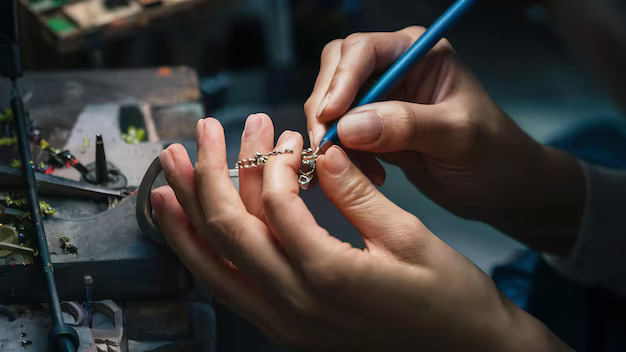
When you’re looping wire, don’t yank. Roll it gently. Watch the circle form. If it’s uneven, undo it. Try again. It’s strange how time feels slower when you focus on something small like that. And kind of calming, too.
Study Real Jewelry, Not Just DIY Tutorials
If you want to build your own Jewelry like a professional; look at professional work. Visit small boutiques. Scroll through artisan brands. Notice spacing. Notice symmetry—or intentional asymmetry. Notice the scale.
How big is that pendant compared to the chain? How thick are the earring hooks? It’s not about copying. It’s about training your eye. Because once you see proportion clearly, you can’t unsee it.
Comfort is Luxury
Here’s something beginners forget: professional jewelry feels good. No sharp edges. No pulling hair. No weight that drags your earlobe down by 3 p.m.
When your custom design jewelry, wear-test it. Around the house. While doing dishes. While typing. Does it shift? Annoy you? Catch on fabric? Fix that. Luxury isn’t always sparkle. Sometimes it’s just comfort.
Embrace Imperfection—But Not Carelessness
Handmade doesn’t mean sloppy. It means human. A slightly irregular hammered texture? Beautiful. A stone that’s not perfectly centered but clearly intentional? Interesting.
But crooked crimps and loose knots? That’s just unfinished. There’s a difference. You can feel it. When you make your own Jewelry, aim for intentional imperfection—the kind that looks chosen, not accidental.
Price It Even If You’re Not Selling
This might sound unrelated, but stay with me. After you finish a piece, ask yourself, “What would I charge for this?” Be honest. If the answer feels low, why? Materials? Finished? Design?
Thinking this way forces you to evaluate your own work like a professional would. It shifts your mindset from “craft project” to “designed object.” And that shift changes how you work next time.
Finally, Wear It Without Apologizing
This might be the most important part. Don’t say, “Oh, I just made this.” Say, “I made this.” There’s a difference. Confidence is part of craftsmanship. When you make your own jewelry, you’re not just assembling materials—you’re shaping something that didn’t exist before. That’s kind of powerful, if you think about it. And yes, your first few pieces might be uneven. A little experimental. Maybe even awkward. Good. That means your hands are learning.
Professional quality isn’t a secret club. It’s repetition. Editing. Paying attention. Choosing better materials. Removing one extra charm. Closing the loop properly. Doing it again. Anyway… that’s how you start to make your own jewelry that doesn’t just look handmade. It looks meant to be worn.