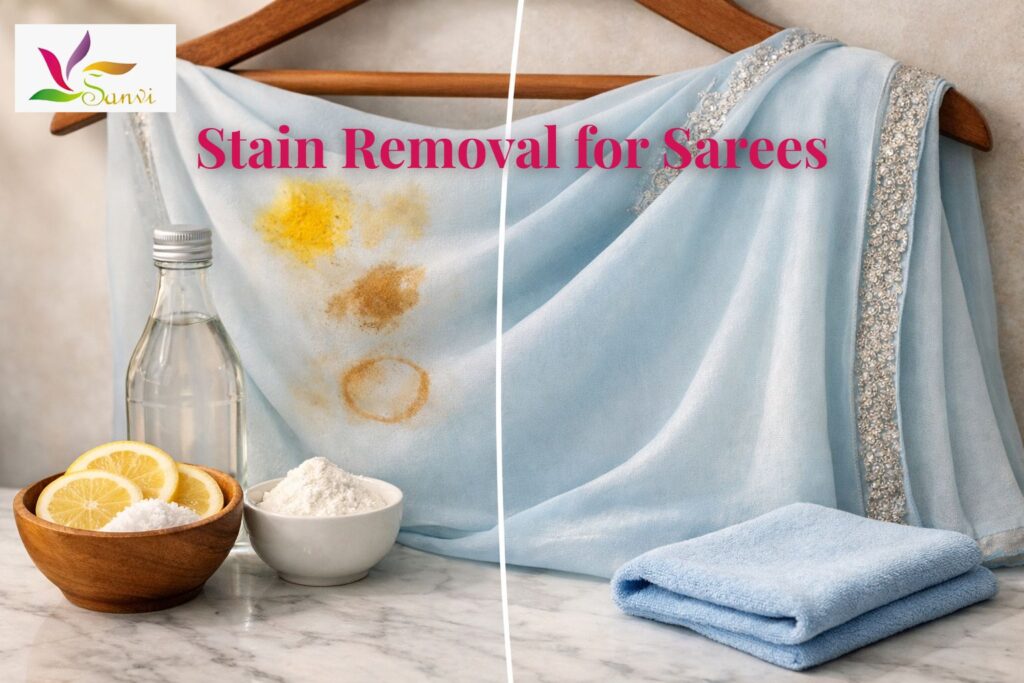
Home remedies like lemon and cornstarch tackle common saree stains effectively—see the before-and-after transformation.
Stain removal for sarees: Sarees, with their delicate fabrics like georgette, silk, and chiffon, deserve careful stain treatment to preserve their elegance. Acting fast prevents permanent damage, but always test solutions on a hidden spot first.
Stain removal for sarees: Mastering these keeps your sarees pristine for seasons. Patience beats panic—gentle methods preserve both fabric and memories.
RELATED BLOG:- Georgette Sarees
TO PURCHASE :-sanvicreation
Common Saree Stains
Sarees often face turmeric, oil, tea, makeup, and betel nut marks from daily wear or festivities. Turmeric from curries embeds deeply in georgette’s lightweight weave. Oil splatters hit during cooking, while tea and coffee leave tannin rings on silk. Makeup like lipstick smears on chiffon pallus, demanding gentle handling.Pre-Treatment Steps
Scrape off solids gently with a spoon edge—never rub. Blot liquids with a clean microfiber cloth to absorb without spreading. Avoid soaking unless the label permits; many synthetics like georgette hate prolonged water. Work in good light and lay flat on a towel to prevent drips.Effective Home Remedies
Turmeric Stains Mix equal parts glycerin, egg yolk, and warm water into a paste; apply for 30 minutes, then rinse with lukewarm soapy water. Works on georgette by breaking down pigments without harsh bleach. Lemon juice with salt under sunlight lifts fresh marks—rinse immediately to avoid fabric yellowing. Oil and Grease Sprinkle talcum powder or cornstarch to absorb excess; wait 15 minutes, brush off, then dab with dish soap like Dawn diluted in water. For stubborn grease on silk, use a microfiber cloth with white vinegar—effective yet fabric-safe. Tea and Coffee Boil water with one tablespoon baking soda; dab the solution on, let sit five minutes, rinse cold. Neutralizes acids without fading colors. White vinegar (1:1 with water) follows for tannin removal—rinse thoroughly to prevent stiffness. Makeup Stains Micellar water on a cotton pad gently lifts lipstick or foundation from chiffon. Rubbing alcohol (70%) diluted works for waterproof mascara, but spot-test georgette first as it can thin synthetics. Betel Nut (Paan) Soak in cold milk for 20 minutes to loosen red dyes, then scrub lightly with a soft toothbrush and detergent. Milk’s enzymes dissolve organics better than boiling water.What Doesn’t Work — Avoid These
Hot water sets protein stains like milk or egg, turning them yellow on silk. Bleach destroys georgette’s dye and weakens fibers—use color-safe oxygen bleach sparingly instead. Dryer sheets or WD-40 spread oils further; they trap residues needing professional dry cleaning. Harsh brushing frays delicate edges, especially on embroidered sarees. Store-bought removers with ammonia yellow silks—stick to pH-neutral options.Fabric-Specific Tips
Georgette Sarees This lightweight synthetic shines with baby shampoo solutions for most stains; air-dry flat to retain drape. Link to reasons like its easy-care nature for why it’s popular [ from prior context]. Avoid machine washing. Silk Sarees Dry clean only for antiques; at home, use silk-specific shampoo and cold water. Vinegar rinses restore shine post-stain. Chiffon and Crepe Delicate enough for glycerin pastes, but skip sunlight exposure to prevent weakening. Roll loosely for storage. Banarasi or Kanjeevaram Professional cleaning for zari threads; spot-treat with talc only for oils.Prevention Strategies
Store sarees in muslin bags with naphthalene balls or cedar blocks to deter moths. Wear a petticoat and half-slip to block makeup transfer. Pre-treat cooking sessions with an apron over your saree. Spot-clean immediately after events—waiting multiplies effort.When to Call Professionals
Yellowed silks, vintage weaves, or large stains need dry cleaners experienced in Indian fabrics. Expect steam pressing to revive folds. Costs run 200-500 INR per saree, worth it for heirlooms.Quick Comparison Table
| Stain Type | What Works | What Doesn’t |
|---|---|---|
| Turmeric | Glycerin paste, lemon+salt | Bleach, hot water |
| Oil/Grease | Dish soap, talcum | Dryer sheets, rubbing |
| Tea/Coffee | Baking soda boil, vinegar | Boiling plain water |
| Makeup | Micellar water, alcohol | Ammonia removers |
| Betel Nut | Milk soak, soft brush | Harsh scrubbing |