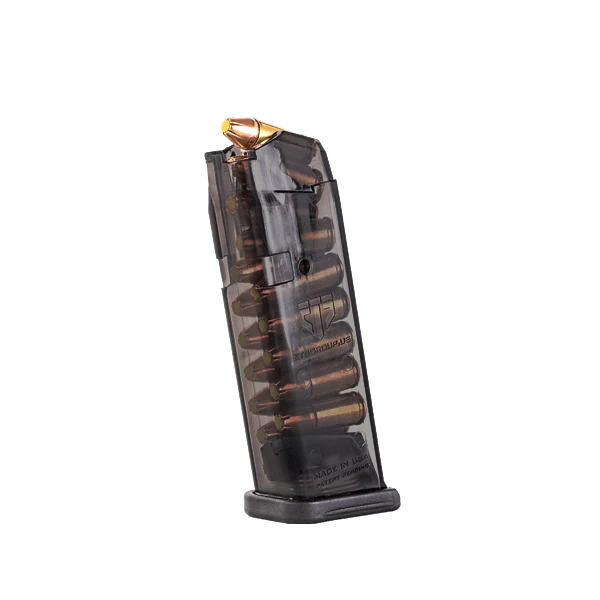
There’s a difference between gear that looks good in photos and gear that actually runs when you need it to. Anyone who’s spent real time on the range knows that fast. When it comes to extended mags for glock 19, performance isn’t some bonus feature. It’s the whole point.
Extra capacity sounds great. More rounds, fewer reloads, longer drills, maybe a little advantage in competition or training. But if that magazine turns into a jam factory the second it’s loaded to full capacity, it’s worse than useless. It becomes the weak link. And the weak link is what fails first.
So if you’re thinking about running extended magazines in your Glock 19, here’s what actually matters. Not hype. Not flashy marketing lines. The stuff that keeps the gun running.
Build Quality Matters More Than Capacity
The first thing people obsess over is round count. Seventeen. Twenty. Thirty. Sure, capacity has its place. But I’ve seen guys brag about stuffing insane numbers of rounds into their pistol, only to spend the next ten minutes clearing malfunctions.
Start with the body construction. Is it solid? Does it flex when fully loaded? Polymer can be fine, but it has to be reinforced properly. Metal can be tougher, but bad metal is worse than good polymer. You want a body that doesn’t bow out under pressure. If the feed lips spread, you’re in trouble.
Feed lips are everything. They control how the round presents into the chamber. If they’re out of spec by even a little bit, reliability goes downhill fast. And with extended mags, the added spring tension and stack height magnify small flaws.
You shouldn’t feel like you’re gambling every time you insert a full magazine.
Spring Strength and Tension Are Non‑Negotiable
Extended magazines live or die by the spring. That longer body means more rounds pushing down. The spring has to keep up. If it can’t maintain consistent upward pressure, the slide may outrun the magazine. That’s when you start seeing failures to feed.
A good extended magazine will feel stiff at first. Almost annoyingly stiff. That’s not a bad sign. It means there’s enough power to push rounds up under stress. Over time the spring settles, but it shouldn’t collapse into something mushy.
Load it to full capacity and hand-cycle it. Then shoot it. Don’t baby it. Run it fast. If it chokes when the mag is topped off but runs fine downloaded by two rounds, that’s a red flag.
Reliability shouldn’t require compromise.
Follower Design Is Easy to Overlook
Most people don’t even think about the follower. They should.
A poorly designed follower tilts under pressure. That tilt creates friction. Friction slows the stack. Slower stack means inconsistent feeding. It doesn’t take much.
Look for a follower that tracks smoothly inside the magazine body. No binding. No grinding feel when you press rounds down. And it should lock the slide back reliably on empty. If your slide sometimes stays forward after the last shot, that’s not a minor issue. That’s information.
Consistency in small parts equals consistency in performance.
Testing Under Real Conditions
It’s funny how many people “test” gear by loading it once in their living room and calling it good. That’s not testing. That’s wishful thinking.
You need to run it dirty. After a few hundred rounds. Drop it on the ground. Step on it accidentally. Shoot it in different positions. Strong hand, weak hand, awkward grip, whatever. If you train hard, your equipment should keep up.
Extended mags for glock 19 add weight below the grip. That extra weight changes balance slightly. It’s not dramatic, but you’ll feel it if you pay attention. Especially during rapid strings.
Some shooters love the added stability. Others find it throws off their rhythm. There’s no universal answer. You have to shoot it.
Fit and Compatibility With Your Setup
Not all extended magazines play nice with every configuration. That’s reality.
Check how it seats. Does it lock in cleanly with the slide forward? Or do you have to slap it like you’re mad at it? With a full magazine, it should still insert positively. If you have to fight it every time, under stress that gets worse.
Also consider your base plate. Extended mags stick out further, obviously. That changes concealment, if that matters to you. For competition or range use, that’s less of a concern. But for carry, the extra length can print or dig into you.
Holster compatibility can be another quiet issue. Some setups just weren’t designed with longer magazines in mind.
You don’t want surprises later.
Durability Over Time
Magazines are consumable items. They wear out. That’s normal. But extended versions tend to take more abuse because they’re used in higher round-count sessions or competitive environments.
Watch for cracks near the feed lips. Look at the base plate after repeated drops. Dirt and debris build up inside, especially if you train outdoors. A good design should allow easy disassembly for cleaning. If you need tools and a prayer to open it up, that’s annoying long term.
And don’t ignore round count. Springs eventually fatigue. If you’re serious about performance, replace springs before they become a problem. Preventative maintenance beats troubleshooting on the firing line.
Why Performance Beats Hype Every Time
There’s always some new accessory trend floating around. Bigger mags. Flashier extensions. Wild claims about unbeatable reliability.
Truth is, most reliability comes from boring factors. Tolerances. Spring pressure. Consistent manufacturing. It’s the same idea whether you’re choosing magazines or even comparing long range rifle scopes for a precision setup. Performance is built on fundamentals, not slogans.
People get distracted by appearance. Anodized finishes. Aggressive shapes. But the pistol doesn’t care how it looks. It cares whether the round feeds properly, every single time.
The more rounds you stack in a magazine, the more you’re asking from it. That demand has to be met with quality.
Balance Between Capacity and Control
Let’s be honest. A thirty-round stick mag in a compact pistol looks… interesting. It has its place, maybe. Range fun. Certain competitions. But it changes the way the gun handles.
A modest extension that adds a few extra rounds might actually be more practical. It keeps the center of gravity manageable. It doesn’t feel like you’ve bolted a baton under your grip.
Extended mags for glock 19 should enhance performance, not turn the gun into something awkward. If your reloads become clumsy or your draw changes because of the added length, that’s worth noticing.
More isn’t always better. Sometimes it’s just more.
Real-World Reliability Over Theoretical Advantage
On paper, higher capacity seems like an automatic win. In reality, if that extra capacity compromises feeding even slightly, you’ve lost the advantage.
A standard-capacity magazine that runs flawlessly beats a high-capacity option that hiccups once every few strings. Every time. Especially in defensive or competitive settings where consistency isn’t optional. It’s everything. A 32 round glock mag might look great in the bag and feel impressive on the line, but if it stutters under pressure, that extra capacity doesn’t mean much.
Pay attention to patterns. If a specific extended magazine consistently feeds certain ammunition but struggles with others, that’s telling you something. Not all ammo profiles stack the same way in longer mags.
Test what you plan to shoot. Not just cheap range rounds. Everything.
Conclusion: Choose What Runs, Not What Impresses
At the end of the day, magazines are simple machines doing a demanding job. They hold pressure. They guide ammunition. They take impact. And they have to do it over and over again without drama.
Extended mags for glock 19 can absolutely offer benefits. More training time between reloads. More flexibility in certain scenarios. A slightly different feel that some shooters prefer. But none of that matters if reliability slips.
Focus on build quality. Strong springs. Stable followers. Clean fit. Real testing. Run them hard before you trust them.