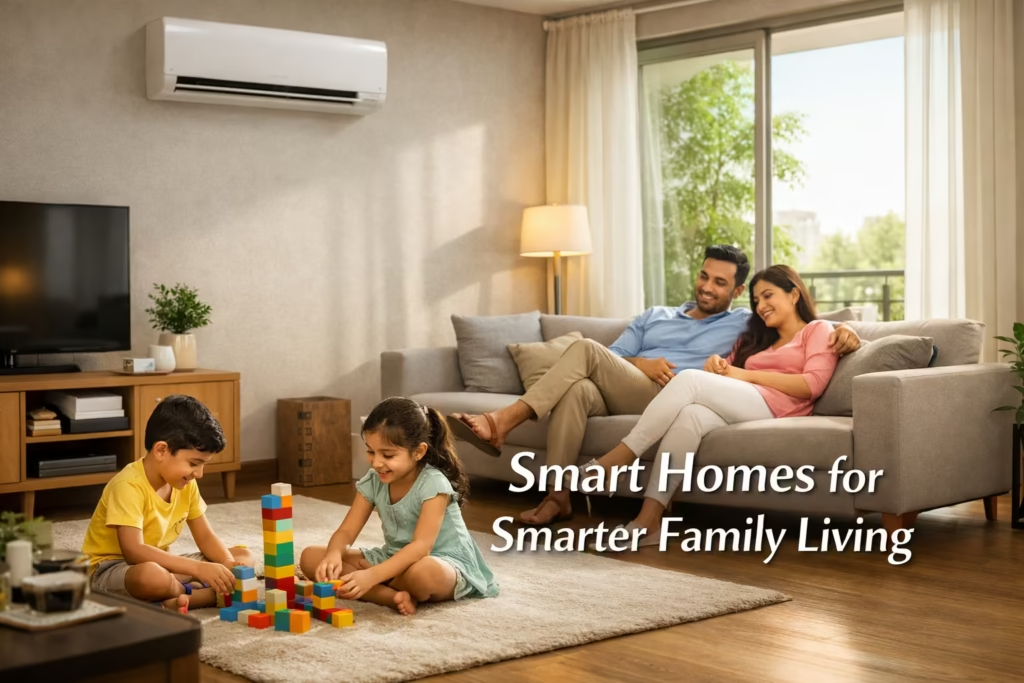
Smart home technology used to be a “nice to have.” Today it’s a practical requirement for families who want safer, healthier, and more efficient daily living. In Gurgaon — where traffic, air quality and long commutes shape family choices — technologies such as inverter air-conditioning, HEPA air filtration, energy-efficient appliances and integrated planning are making a measurable difference.
This article explains the tech that matters for families, why it matters, and how modern kid-centric projects are combining these systems with child-first planning to create truly family-focused homes.
1. Why technology now matters for family homes
Urban families don’t buy just a flat anymore; they buy a lifestyle. Two realities make home technology essential for today’s parents in Gurgaon:
- Health & air quality: Children are particularly vulnerable to indoor and outdoor air pollutants. Cleaner indoor air directly reduces respiratory risks. (WHO).
- Energy & running costs: Cooling and appliances are major household energy drains. Energy-efficient systems reduce monthly bills and carbon footprint. (BEE).
Because of these pressures, developers and buyers are treating built-in technology as a baseline comfort and safety feature, not as an optional extra.
2. Inverter ACs: better comfort, big energy wins
Inverter ACs adjust compressor speed to meet cooling demand continuously rather than toggling on/off. That delivers:
- more consistent temperatures (gentler on children and elders),
- faster recovery after door openings, and
- significantly better seasonal energy efficiency compared with older fixed-speed AC units. (BEE guidance on star ratings and ISEER explains how higher efficiency translates to lower electricity use).
For families in Gurgaon — where summers are long and AC use dominates electricity bills — inverter ACs are an immediate quality-of-life and cost benefit. Many modern projects pre-fit inverter units in living rooms and bedrooms to ensure consistent comfort for children and seniors.
3. HEPA and fresh-air systems: protecting young lungs
High-efficiency particulate air (HEPA) filtration and treated fresh-air systems address one of parents’ biggest worries: indoor air quality.
- HEPA filters can remove the vast majority of small airborne particles (the EPA defines HEPA performance at 99.97% for 0.3 μm). Studies link HEPA filtration to improved outcomes in children with asthma and reduced indoor particulate exposure.
- Global health authorities (WHO) highlight that poor air — indoor and outdoor — harms children’s respiratory and cognitive development, so reducing exposure matters.
For family-focused residential projects, installing HEPA-grade fresh-air systems at central intakes or offering in-unit filtration is a meaningful health safeguard — particularly in cities with episodic outdoor pollution like Gurgaon.
4. Modern kitchen appliances: energy, hygiene and time savings
Modern, energy-efficient kitchen appliances (induction/ceramic hobs, dishwashers, convection ovens, built-in RO systems) offer three family-oriented benefits:
- Lower running costs: Energy-efficient appliances use less electricity and water over time, which matters when multiple family members live at home. (Research on appliance energy use and consumer behaviour underscores this).
- Hygiene & safety: High-temperature dishwasher cycles improve sanitisation; induction cooktops reduce open-flame risks around kids.
- Time savings: Automated appliances free up parental time — a practical advantage for dual-income families.
Because of these advantages, projects that deliver fully loaded modular kitchens as standard add direct, everyday value for homebuyers.
5. Integrated planning: tech + design for child safety
Technology is most effective when integrated into design. Integrated planning brings these elements together:
- Traffic-free podiums and pedestrian-first pathways reduce road risk within the community.
- Distributed learning and activity hubs lower the need for daily travel to extracurricular classes.
- Centralised fresh-air systems, inverter ACs and energy efficient appliances reduce health and energy burdens inside each home.
That combination produces two results parents value most: safer daily routines and less time spent shuttling kids between activities.
6. Smart home adoption in India: the macro picture
India’s smart home market is growing rapidly; market analyses forecast strong CAGR and wide adoption of IoT, smart security, and energy management solutions in the next decade. This growth means technology is increasingly affordable and expected in new developments. (Industry market reports show strong year-on-year growth for smart home automation in India.)
For homebuyers in Gurgaon, this means projects that include smart home components (even basic ones like app-controlled HVAC, smart locks, and energy-monitoring) are more future-proof and resale-friendly.
7. What this looks like in a kid-centric project (real example)
Projects like Ashiana Aaroham Gurgaon integrate modern home technology with child-friendly planning — combining HEPA-filtered fresh-air systems, pre-fitted hot & cold inverter ACs, and fully loaded modular kitchens with a dedicated Learning Hub, traffic-free podiums, and extensive green open space. These are not theoretical benefits: they are specified in the project brochure and official project pages.
That kind of integration creates a daily environment where:
- children can play outdoors safely,
- indoor air is actively managed, and
- parents regain time otherwise lost to commuting for classes or managing household chores.
8. Practical buying checklist for tech-savvy parents
When evaluating a Gurgaon home for family living, check for these tech and design features:
- Inverter ACs pre-fitted (look for specified brands or ISEER/BEE guidance).
- HEPA or treated fresh-air systems (confirm filter class and maintenance plan).
- Energy-efficient kitchen appliances included in the offer (hob, chimney, dishwasher, RO).
- Traffic-free common areas and dedicated children’s zones — reduces supervision burden. (Project materials often list podium and Playtopia planning.)
- Provision for smart security / home automation (app control, smart locks, CCTV integration) — check product specs and third-party integrations.
9. Final perspective: technology as an enabler of childhood
Smart home tech is not an end in itself — it’s an enabler. For families in Gurgaon, the real value is how technology reduces daily friction (health risk, commuting time, bills) and creates space for more meaningful family time.
When technology is combined with child-first design — traffic-free areas, a learning hub, and expansive green spaces — the result is a neighbourhood that supports both childhood development and parental well-being.
Projects like Ashiana Aaroham Gurgaon show how technology and planning together can create homes where families don’t just live — they grow, play, learn, and thrive.