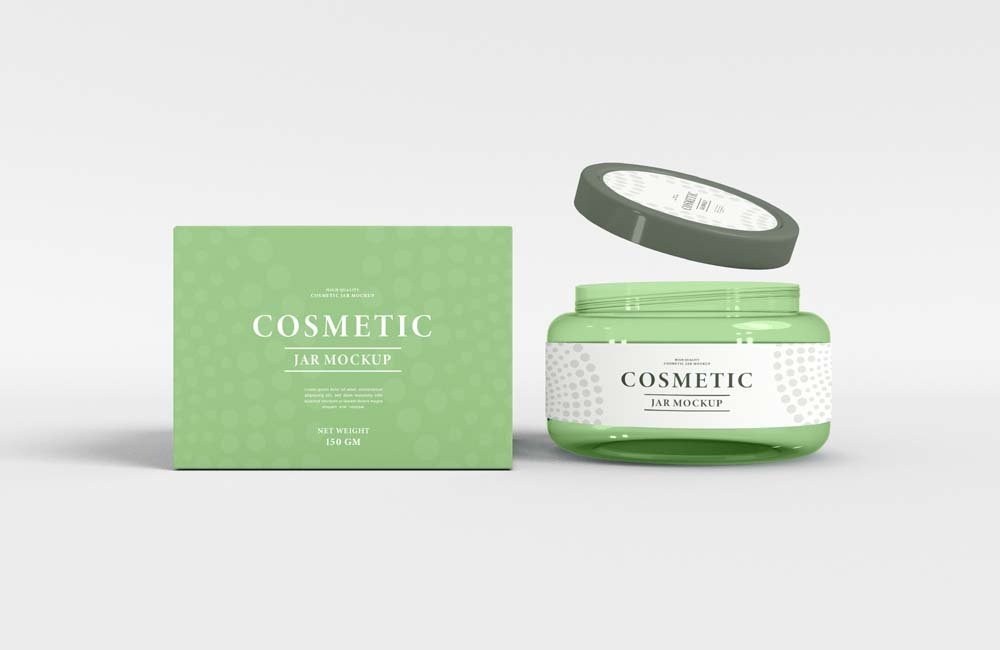
After nearly eight years in the fulfillment trenches watching pallets arrive from overseas, managing high-speed filling lines, and dealing with the fallout of “leaky” transit tests, I’ve learned one thing: selecting the right cosmetic jars is never just about finding a vessel. It is a complex engineering choice that sits right at the intersection of brand ego and logistics reality, where the wrong material or neck finish can dismantle even the most premium product launch.
In the skincare world, the jar is the gold standard for luxury. There is a tactile satisfaction in unscrewing a weighted lid to reveal a thick cream. But if you’re looking at this from a fulfillment and product integrity lens, the “pretty” choice can often be the one that kills your margins.
The Material War: Glass vs. Plastic vs. PCR
When selecting cosmetic jars for a new SKU, most brands start with aesthetics. I start with the “drop test.”
- Glass Cosmetic Jars: They offer the highest perceived value and chemical compatibility. If you have an active-rich formula with high concentrations of Vitamin C or retinol, glass is often non-negotiable to prevent leaching. However, from a fulfillment perspective, glass is a nightmare. It adds significant weight to your shipping costs (the “dim weight” trap) and requires excessive secondary packaging bubble wraps or custom corrugated inserts to survive a UPS conveyor belt.
- PET and PP Plastics: These are the workhorses of the industry. Polypropylene (PP) is excellent for its “living hinge” capability and chemical resistance, while PET gives you that glass-like clarity. They are lightweight and shatterproof, which makes your 3PL (Third-Party Logistics) provider’s life much easier.
- The PCR (Post-Consumer Recycled) Pivot: Everyone wants PCR right now. But here’s the industry secret: PCR isn’t always “clean.” It can have slight color variations or “pockmarks.” If your brand identity relies on “medical-grade perfection,” you might struggle with the raw, speckled look of recycled resins.
The Engineering of the Seal: Where Brands Fail
In my experience, the biggest mistake a brand can make isn’t choosing the wrong color, it’s ignoring the liner and the neck finish.
I’ve seen entire production runs (10,000+ units) rejected at the warehouse because the product seeped into the threading during transit. This happens because the “land area” of the cosmetic jar, the very top rim wasn’t perfectly flat, or the pressure-sensitive liner wasn’t compatible with the oil content of the cream.
Common Mistake: Relying solely on a “shives” (that little plastic disc that sits under the lid) for sealing. Shives are for the consumer experience; they are not a substitute for an induction seal or a high-quality foam liner if you are shipping via e-commerce. If your product is traveling through varying air pressures in cargo planes, that jar will breathe. If it breathes, it leaks.
Design for Fulfillment (DFF)
In the packaging industry, we talk about “Design for Fulfillment.” A cosmetic jars should be designed to be gripped by a robotic arm on a filling line and easily packed into a master carton.
- Straight Sides vs. Tapered: Tapered cosmetic jars look elegant, but they are prone to tipping on high-speed conveyors. This leads to “line downtime,” which increases your manufacturing costs.
- Stackability: If your jars don’t nest or stack securely, you’re paying to ship “air” in your outer cartons. Every millimeter of wasted space in a shipping box is a tax on your bottom line.
- The “Haptic” Factor: Opinion-based Statement: I firmly believe that the “click” or “thud” of a closing jar is more important for brand loyalty than the logo printed on it. If a cosmetic jar feels flimsy when it’s closed, the consumer subconsciously devalues the formula inside.
Sustainability is More Than Just a Label
We are currently seeing a massive shift toward refillable cosmetic jars. From a consultant’s view, this is a double-edged sword. While it’s great for the planet and creates a “subscription” mindset with customers, it adds a layer of complexity to your inventory management. You’re no longer managing one SKU; you’re managing the outer “chassis,” the inner pod, and the foil seal for the pod.
Pro Tip: If you’re moving to refillables, ensure your inner pod is made of a different material density than the outer jar to make it easier for the consumer to separate and recycle them.
Navigating the Supply Chain Crunch
The last few years have taught us that “just-in-time” manufacturing is dead. If you are sourcing custom-molded cosmetic jars from overseas, you are looking at 12–16 week lead times.
I always advise mid-sized brands to stick to “stock” silhouettes and customize them through decoration (silk screening, hot stamping, or UV coating). This allows you to pivot quickly if a specific SKU takes off on social media and you need to restock in 4 weeks instead of 4 months.
Conclusion
Choosing a jar is a balancing act between the chemist, the marketer, and the logistics manager. Don’t let the marketer win every time. A beautiful cosmetic jars that arrives shattered or leaking at a customer’s doorstep is a brand-killer.
Before you sign off on that custom mold, put your filled sample in a box, throw it down a flight of stairs, and leave it in a hot car for a weekend. If it survives that, it might just survive the beauty industry.