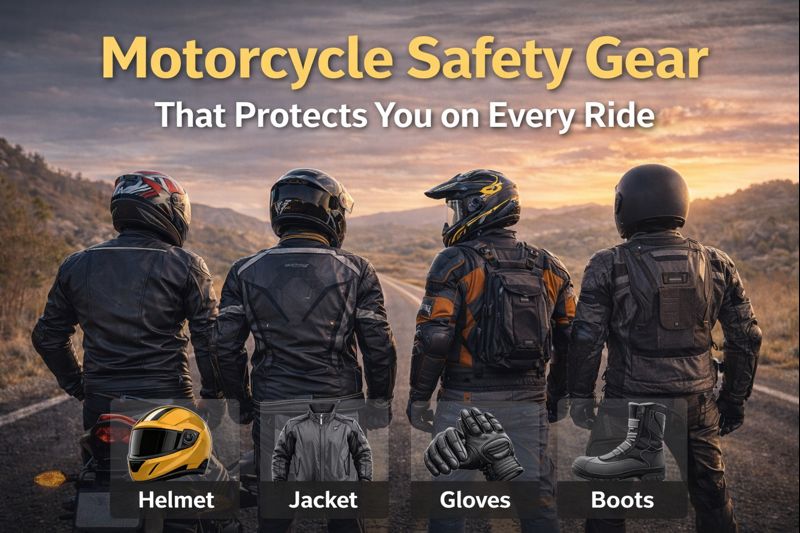
Motorcycle safety gear is engineered to reduce injury severity, enhance rider awareness, and provide consistent protection across varied riding environments. Unlike passenger vehicles, motorcycles offer minimal structural protection, making rider equipment the primary defense against impact forces, abrasion, and environmental hazards. Among all protective components, helmets represent the most critical safety investment due to their direct role in preventing traumatic brain injuries.
This article delivers a comprehensive, fact-driven examination of motorcycle safety gear, with a focused emphasis on Badass Helmets and Motorcycle Helmets as essential protective systems. It explains how helmet technology functions in real-world riding scenarios, outlines industry standards, and highlights expert-recommended practices for selecting and maintaining reliable head protection. The objective is to provide authoritative guidance for riders seeking dependable, long-term safety solutions.
The Role of Motorcycle Safety Gear in Injury Prevention
Motorcycle safety gear operates within a risk mitigation framework, where multiple protective elements work together to reduce injury probability and severity. This framework includes helmets, eye protection, gloves, jackets, boots, and impact armor. Each component addresses specific risk factors associated with speed, road conditions, and rider exposure.
According to general safety equipment principles outlined in educational resources such as Wikipedia’s overview of motorcycle helmets, head protection alone can significantly reduce the likelihood of fatal and severe head injuries. As a result, helmets are universally recognized as the cornerstone of motorcycle safety gear systems.
Motorcycle Helmets as the Primary Safety System
Motorcycle Helmets are designed to protect the skull and brain by managing impact energy and preventing direct trauma. Their effectiveness is based on a combination of structural engineering, material science, and ergonomic design.
Core Protective Functions
Motorcycle helmets perform three essential safety functions:
-
Impact Energy Absorption: EPS (expanded polystyrene) liners compress on impact, dispersing kinetic energy away from the skull.
-
Penetration Resistance: Outer shells prevent sharp objects from reaching the head.
-
Retention Stability: Chin straps and retention systems keep the helmet securely positioned during collisions.
These functions work simultaneously to reduce the risk of catastrophic head injuries during accidents.
Helmet Types and Their Protective Applications
Full-Face Helmets
Full-face helmets provide complete coverage of the head and face, including a reinforced chin bar. They are widely used in professional racing, touring, and high-speed riding due to their comprehensive protection and aerodynamic efficiency.
Modular Helmets
Modular helmets feature a hinged chin bar, offering flexibility for riders who require convenience during stops while maintaining near full-face protection when closed.
Open-Face and Half Helmets
These helmets prioritize airflow and visibility but offer reduced facial protection. They are commonly selected for low-speed urban riding and cruiser applications, where comfort and situational awareness are prioritized.
Badass Helmets: Protection with Aggressive Design Integrity
Badass Helmets represent a category of helmets designed to combine certified safety performance with bold, high-visibility aesthetics. Despite their aggressive styling, these helmets adhere to established safety requirements.
Structural and Safety Characteristics
Badass helmets typically incorporate:
-
Lightweight yet impact-resistant shell materials
-
High-density EPS liners for effective energy management
-
Secure retention systems meeting regulatory standards
Their designs emphasize rider visibility and reduced neck fatigue while maintaining compliance with mandatory safety certifications.
Real-World Use Cases
Badass helmets are commonly used in:
-
Urban commuting environments where visibility is critical
-
Cruiser and custom motorcycle riding
-
Daily riding scenarios requiring lightweight comfort without sacrificing protection
Materials and Construction Standards
Motorcycle helmets are constructed using materials selected for strength, weight efficiency, and durability:
-
Thermoplastic Shells: Cost-effective and durable, commonly used in entry-level helmets
-
Fiberglass Composite Shells: Improved energy absorption and reduced weight
-
Carbon Fiber Shells: High strength-to-weight ratio, favored in performance applications
Each material type is tested under standardized impact conditions to ensure consistent safety performance.
Safety Certifications and Industry Benchmarks
Helmet certifications establish minimum safety requirements and testing protocols. Common benchmarks include:
-
DOT (Department of Transportation) standards in the United States
-
ECE (Economic Commission for Europe) certification for international compliance
-
SNELL independent testing for high-performance and motorsport use
Certified helmets undergo impact, penetration, and retention testing to validate protective effectiveness.
Expert Insights and Best Practices
Safety professionals and rider training organizations consistently recommend the following practices:
-
Proper Fit Assessment: Helmets should fit snugly without pressure points to ensure stability during impact.
-
Regular Inspection: Shells, liners, and straps should be checked for wear or damage.
-
Timely Replacement: Helmets should be replaced every 5–7 years or immediately after a significant impact.
-
Riding Style Alignment: Helmet type should match speed, riding posture, and environment.
These practices are derived from accident analysis and long-term rider safety research.
Common Mistakes and Misconceptions
Misconception 1: All helmets offer the same protection
Protective performance varies significantly based on materials, construction, and certification.
Misconception 2: Visual damage is required to replace a helmet
Internal liner damage may occur without visible shell cracks, necessitating replacement after impact.
Misconception 3: Lightweight helmets are less safe
Advanced materials allow lightweight helmets to meet or exceed safety standards.
Misconception 4: Style compromises safety
Certified helmets maintain protective integrity regardless of visual design.
Frequently Asked Questions (FAQs)
1. Why are motorcycle helmets considered the most important safety gear?
They protect against traumatic brain injuries, which are the leading cause of motorcycle-related fatalities.
2. How does a helmet absorb impact energy?
The EPS liner compresses on impact, dispersing force across a wider area.
3. Are Badass Helmets certified for road use?
Yes. They meet required safety certifications while offering distinctive design features.
4. How should a motorcycle helmet fit?
It should fit snugly around the head without excessive movement or discomfort.
5. Can a helmet be reused after an accident?
No. Helmets should be replaced after any significant impact.
6. What helmet type is best for highway riding?
Full-face helmets provide the highest level of protection for sustained high-speed travel.
7. Do motorcycle helmets expire?
Yes. Material degradation occurs over time, typically within 5–7 years.
8. Are open-face helmets safe?
They provide limited protection and are best suited for low-speed riding.
9. Does helmet weight affect riding comfort?
Lighter helmets reduce neck strain, especially during long rides.
10. How should motorcycle helmets be maintained?
They should be cleaned with mild products and stored away from heat and UV exposure.
Conclusion
Motorcycle safety gear plays a decisive role in protecting riders on every journey, with helmets serving as the most critical protective component. Motorcycle Helmets provide essential impact protection through advanced materials, certified construction, and ergonomic design, while Badass Helmets demonstrate that distinctive aesthetics can coexist with verified safety performance. When selected and maintained according to professional standards, quality helmets significantly reduce injury risk and support safer, more confident riding across all conditions.