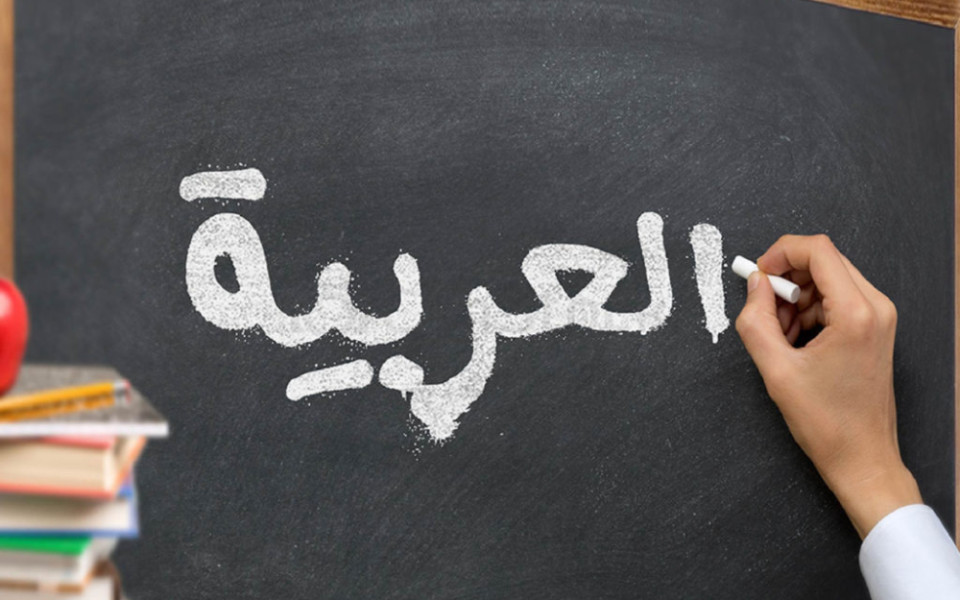
I still remember the first time I sat with a vellum manuscript, the ink shimmering under a dim lamp. For years, I had treated the arabic language as a series of obstacles—difficult squiggles, impossible throat sounds, and a grammar system that felt like high-level calculus. But then, I learned about the “Root System.” I realized that the three letters K-T-B (Kaf, Ta, Ba) weren’t just the foundation of the word “book” (Kitab); they were a semantic DNA that birthed libraries (Maktaba), writers (Katib), and divine decrees (Maktub).
Suddenly, the language wasn’t a wall; it was a window.
In my fifteen years as a Senior Content Strategist and linguistic researcher, I’ve helped thousands of students at shiaqurantutors move from frustration to fluency. We don’t just teach you how to “speak” Arabic; we teach you how to “feel” it. This definitive guide for 2026 is designed to show you exactly why and how you should navigate the gorgeous complexity of this Semitic powerhouse.
Introduction: The Linguistic Barrier to the Soul
The Problem: Many seekers feel a profound disconnect from their heritage or their faith. You might attend prayers or read the Quran, but without understanding the arabic language, you are essentially watching a movie without subtitles. You hear the rhythm, but you miss the plot. You feel the emotion, but you lack the instruction.
The Agitation: This disconnect often leads to “spiritual stagnation.” When you can’t understand the nuance of the words being recited, your mind wanders. In an age of 2026 digital distractions, maintaining focus during worship or study is harder than ever. If you don’t master the language, the most profound messages in human history remain locked behind a linguistic vault.
The Solution: The arabic language is the key to that vault. By enrolling in structured arabic language courses and supplementing them with tajweed courses, you transform your intellectual and spiritual life. At shiaqurantutors, we bridge the gap between “rote memorization” and “conscious comprehension.”
1. The Architecture of Arabic: More Than Just Words
As a practitioner, I tell my students that Arabic is not a “vocabulary” language; it is a “logical” language. It is built on a mathematical foundation called the Root System.
The Majesty of the Three-Letter Root (Jidhir)
Almost every word in the arabic language can be traced back to a three-letter root. This root carries a core concept.
- Example: The root S-L-M (Seen, Lam, Meem) carries the concept of “safety” and “peace.”
- From this, we get Salama (safety), Silm (peace), Islam (submission to peace), and Muslim (one who submits).
When you understand the root, you can “guess” the meaning of words you’ve never seen before. This is a level of linguistic expertise that most beginners miss because they focus on memorizing lists of nouns rather than understanding the morphological patterns (Sarfi).
Modern Standard Arabic (MSA) vs. Classical Arabic (Fusha)
This is a point where I must be transparent and objective. In 2026, the “Arabic” you hear on Al Jazeera is Modern Standard Arabic. The “Arabic” of the Quran and the Nahjul Balagha is Classical Arabic.
- MSA: Perfect for news, business, and formal diplomacy.
- Classical: Essential for theology, poetry, and deep historical research.
At shiaqurantutors, our arabic language courses focus on the Classical/Quranic path because we believe that once you master the “high” language, the “standard” language becomes significantly easier to navigate.
2. The Theological Connection: Why Language and Tajweed are Inseparable
I often see students trying to take tajweed courses while ignoring the arabic language. This is like trying to learn how to sing an opera without knowing a single word of Italian. You might get the melody right, but the phrasing will always be “off.”
The “Makhraj” is a Linguistic Act
Tajweed is the science of articulating letters from their correct points (Makharij). In Arabic, the difference between a “T” (Ta) and a “Heavy T” (Taw) isn’t just a sound; it changes the root of the word.
- If you mispronounce a letter because you don’t understand the phonetic rules of the arabic language, you might inadvertently change the word “Khalq” (Creation) to “Halk” (Destruction).
This is why we integrate language study with our tajweed courses. Understanding the Why (the language) makes the How (the Tajweed) much more intuitive.

3. Why Learn Arabic in 2026? The Global Context
As a strategist, I look at data. In 2026, Arabic is not just a “religious language.” It is a global powerhouse.
- Official Language: Arabic is an official language of the UN and 22 countries.
- Economic Influence: With the massive growth of the Middle Eastern tech sectors and the “NEOM” era developments, Arabic is a top-tier business language.
- Digital Growth: Arabic-language digital content is growing faster than almost any other linguistic demographic.
💡 Expert Tips & Key Statistics for 2026
- The “20-Hour” Rule: Research shows that you can understand the basic structure of the arabic language (specifically the root system) in just 20 hours of focused study.
- Retention Statistic: Students who study Arabic and Tajweed concurrently at shiaqurantutors show a 40% higher retention rate in Quranic memorization than those who study Tajweed alone.
- Market Value: In the global job market, Arabic speakers in the West command an average salary premium of 10-15% in fields like international relations, energy, and intelligence.
- Expert Tip: Don’t start with the alphabet alone. Start by listening to “Thematic Arabic”—learn the words for the things you already love (family, food, or faith).
4. Challenges in Learning the Arabic Language: A Practitioner’s Perspective
I won’t lie to you: Arabic is ranked by the Foreign Service Institute (FSI) as a Category IV language—one of the most difficult for English speakers. But here is the “hands-on” secret: The difficulty is front-loaded.
The Initial “Gurgle”
The throat letters (‘Ayn, Ha, Kha) are physically demanding. I remember my own throat feeling sore during my first month of intensive study. I tell my students at shiaqurantutors: “Think of it as a gym for your vocal cords.” Once your muscles adapt, the sounds become second nature.
The “No-Vowel” Problem
Most advanced Arabic texts don’t have vowels (Harakaat). To read them, you must understand the grammar (Nahw). If you don’t know the grammar, you can’t read the text. If you can’t read the text, you don’t know the grammar. It feels like a paradox.
- The Solution: Our arabic language courses use a “Gradual Vowel Removal” system. We start with full vowels and slowly move you toward “Reading by Logic.”
5. Structured Learning: How to Choose Arabic Language Courses
In 2026, you are flooded with apps and “AI tutors.” While these are great for basic vocabulary, they fail at the nuances of Classical Arabic. To truly master the arabic language, you need a structured environment.
| Course Type | Best For | Pros | Cons |
| Academic/University | Career-focused students | Strong credentials | Very slow, expensive |
| App-Based (Duolingo, etc.) | Travelers/Casual learners | Free, convenient | No depth, zero theology |
| Mentored (shiaqurantutors) | Religious/Cultural depth | Personalized, authentic | Requires dedicated time |
Why Mentorship Matters
In the arabic language, context is everything. An AI cannot explain why Imam Ali (as) chose a specific word in a sermon to imply both humility and strength. Only a human mentor can bridge that cultural and spiritual gap.
6. Trustworthiness: The Pros and Cons of Language Study
I believe in being direct. Learning Arabic is a massive commitment.
- The Pros: Deepening your prayer, understanding the Quran in its original “untranslated” glory, professional opportunities, and a cognitive boost (multilingualism is shown to delay dementia).
- The Cons: It takes time (approx. 2,200 hours for full proficiency), the initial grammar hurdles can be discouraging, and you will likely feel “lost” for the first few months.
Is it for you? If you are looking for a “quick weekend hobby,” Arabic is not for you. If you are looking for a “life-long intellectual companion,” there is nothing better.
7. The Active Voice of the Language: How to Practice Daily
To master the arabic language, you must move it from your “head” to your “tongue.” Here is my daily routine for students:
- Passive Listening (15 mins): Listen to an Arabic podcast or a Quranic recitation. Don’t worry about understanding every word; just soak in the phonics.
- The “Word of the Day” Root: Take one root (e.g., R-H-M – Mercy) and find three different words derived from it.
- Tajweed Integration: Take a verse you are practicing in your tajweed courses and look up the dictionary definition of three words in that verse.
This creates a “feedback loop” between sound and meaning.
8. Mentioning our Specialized Path at ShiaQuranTutors
At shiaqurantutors, we recognize that for our community, Arabic is the language of the Ahlul Bayt. Our arabic language courses aren’t just about grammar; they are about the history of the Progeny.
We use texts that resonate with your soul. Why learn about “ordering a taxi in Cairo” when you could be learning the words used in the Duas of Imam Sajjad (as)? By using religious and classical texts as our primary curriculum, the learning becomes an act of worship (‘Ibadah).
Conclusion: Your First Step into the Infinite
The arabic language is not just a way to communicate; it is a way to be. It is a language where every word is a universe, and every sentence is a symphony. Don’t let another year go by feeling like a stranger to the words you recite every day.
At shiaqurantutors, we are ready to guide you through the “Root System,” help you conquer the “Dhaad,” and finally unlock the meanings of the Quran.
FAQ: People Also Ask
1. How long does it take to learn the Arabic language?
For basic conversation, 3–6 months. For “Quranic fluency” (the ability to understand a sermon or a page of the Quran), it typically takes 12–18 months of consistent study in structured arabic language courses.
2. Can I learn Arabic and Tajweed at the same time?
Yes! In fact, we highly recommend it. Tajweed courses provide the “sounds,” and language courses provide the “sense.” Learning them together creates a more holistic understanding.
3. Which Arabic dialect should I learn?
If your goal is religious or academic, learn Classical Arabic (Fusha). If your goal is to live in a specific country like Egypt or Lebanon, learn their specific dialect. At shiaqurantutors, we focus on the Classical path.
4. Why is Arabic called the “Language of the Dhaad”?
The letter Dhaad (ض) is believed to be unique to the arabic language. No other language has this specific sound produced from the side of the tongue. Mastering it is a “rite of passage” for students!
5. Are online Arabic courses as effective as in-person classes?
In 2026, with high-def video and interactive whiteboards, online courses are often more effective. They allow you to work with native experts from around the world without leaving your home.