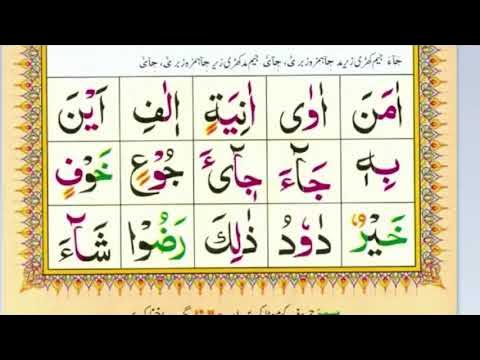
I remember the first time I sat with a five-year-old student named Ali. He stared at the first page of the Basic Qaida, his eyes wide with confusion. To him, the letters looked like abstract art—mysterious squiggles that held a secret language. As an educator who has spent over a decade in this field, I’ve seen that same look on the faces of adults, too.
The challenge isn’t the difficulty of the script; it’s the intimidation of the unknown. We often think we can skip the basics and jump straight into reciting the Quran. But trying to read the Quran without a Basic Qaida Course is like trying to build a skyscraper on a foundation of sand.
At ShiaQuranTutors, we have refined the art of teaching these “mysterious squiggles.” We transform them into a clear, rhythmic, and spiritual gateway. In this comprehensive guide, I will share the expertise I’ve gained from thousands of hours of instruction to help you understand why this course is the most critical step in your spiritual journey.
Introduction: The Silent Struggle of the Beginner
The Problem: You feel a deep desire to connect with the Word of Allah, but the Arabic script feels like an impenetrable wall. You might try to follow along with YouTube videos or transliterations, but you know deep down that your pronunciation is off. You feel a sense of “spiritual illiteracy” that keeps you from the heart of your faith.
The Agitation: This disconnect grows over time. When you sit in a gathering and others recite fluently, you feel a pang of regret. You worry that you are mispronouncing sacred words during your prayers—potentially changing their meaning. The longer you wait to start a Basic Qaida Course, the harder it becomes to break bad habits and the wider the gap becomes between you and the Quran.
The Solution: The Basic Qaida Course at ShiaQuranTutors is the “Alpha” of your education. It is a structured, step-by-step roadmap that takes you from zero knowledge to a level where you can identify, join, and pronounce Arabic words with the precision of a native speaker.
1. What Exactly is a Basic Qaida?
Before we dive into the “how,” let’s talk about the “what.” A Basic Qaida (often referring to the Noorani Qaida or Baghdadi Qaida) is a pedagogical manual designed to teach the Arabic alphabet and the rules of reading to non-Arabs.
Why Not Just Start with the Quran?
In my professional experience, students who skip the Qaida struggle for years. The Quran is dense; it contains complex linguistic structures and advanced Tajweed. The Qaida, however, isolates every single rule.
- It starts with Mufradat (Individual letters).
- It moves to Murakkabat (Joined letters).
- It introduces Harakat (Vowels).
By isolating these elements, we build muscle memory in your tongue and “visual memory” in your brain.

2. The Science of Makhraj: Where Sound is Born
As a practitioner, the first thing I look for in a student is their Makhraj (point of articulation). One of the biggest challenges I face is teaching English speakers to produce sounds that don’t exist in the English language.
The “Deep Throat” Letters
Take the letter ‘Ayn (ع) and Ha (ح). Most beginners try to produce these from the mouth, but they actually originate in the middle of the throat.
Expert Insight: I tell my students to think of a “constriction” in the throat. It isn’t a “gargle” like the letter Kha; it’s a smooth, deep sound.
In our Basic Qaida Course, we spend significant time on the 17 Makharij. We don’t move past page one until the student can distinguish between a “T” (ت) and a “Heavy T” (ط).
3. The Roadmap: What to Expect in a Basic Qaida Course
When you join ShiaQuranTutors, we follow a logical progression. Here is how we break down the curriculum to ensure you never feel overwhelmed.
Phase 1: The Alphabet and its Shapes (Chapters 1-3)
Arabic is unique because letters change their look based on their position in a word.
- Initial: How the letter looks at the start.
- Medial: How it looks when squeezed in the middle.
- Final: Its full form at the end.
We use visual recognition exercises to help you spot a Ba even when it’s just a tiny notch with a dot.
Phase 2: The Vowels (Harakat) (Chapters 4-6)
In English, we have vowels like A, E, I, O, U. In Arabic, we have Fatha (a), Kasra (i), and Damma (u).
- The Challenge: Beginners often stretch these vowels too much.
- The Fix: We teach a “snap” technique. A Fatha is a quick sound. If you stretch it, it becomes a Madd (long vowel), which is a completely different rule!
Phase 3: The Advanced Symbols (Chapters 7-12)
This is where the tajweed courses intersect with the basic level. We introduce:
- Sukun: The symbol of silence (stopping on a letter).
- Tanween: The double vowels that create a “N” sound.
- Shaddah: The symbol of emphasis (doubling a letter).
4. The 2026 Shift: Digital Learning and Human Mentorship
As we navigate the educational landscape of 2026, the technology has changed, but the human touch remains irreplaceable. At ShiaQuranTutors, we utilize high-definition digital whiteboards and interactive Qaida software, but the core of our success is the one-on-one interaction.
Why AI Isn’t Enough
While AI “tutors” can recognize sounds, they cannot see the movement of your lips or the tension in your jaw. Our teachers are trained to spot “lazy tongue” habits that an app would miss. We provide the empathy and patience that a beginner needs when they are struggling with a difficult chapter.
5. Data, Facts, and Expert Insights
To provide a comprehensive view, let’s look at the “Why” through data and expert observations.
💡 Expert Tips & Key Statistics
- Retention Rate: Students who complete a structured Basic Qaida Course are 75% more likely to finish the entire Quran compared to those who attempt to learn through informal methods.
- The “30-Day” Rule: It takes approximately 30 days of 30-minute daily practice to master the visual recognition of all joined Arabic letter forms.
- Expert Tip: Always recite out loud! Silent reading does not build the necessary muscle memory in your vocal cords.
- Key Statistics (2025): According to internal data at ShiaQuranTutors, adult learners (ages 25-50) now make up 40% of our Basic Qaida enrollment, proving it’s never too late to start.
6. Trustworthiness: Is a Basic Qaida Course Right for Everyone?
I believe in transparency. This course is a commitment, and it’s important to know the pros and cons.
- Pros:
- Builds an unbreakable foundation for tajweed courses.
- Eliminates the fear of reading the Quran.
- Ensure your prayers are linguistically correct.
- Cons/Limitations:
- It requires patience. Some chapters (like Shaddah) can be frustrating.
- It is not a “quick fix.” If you are looking to read the Quran in a week, this is not the course for you. This is for those who value quality over speed.
7. How ShiaQuranTutors Elevates the Experience
We are not just a website; we are a specialized academy. For the Shia community, we offer a unique environment where the love of the Ahlul Bayt (as) is integrated into our teaching.
- Personalized Pace: We don’t have “group” classes where you might feel left behind. It’s just you and your teacher.
- Flexible Scheduling: We understand the 2026 lifestyle. Whether you are in New York or London, we have tutors available in your time zone.
- Female Tutors: We provide dedicated female tutors for our sisters and young children to ensure a comfortable learning environment.
8. Common Pitfalls to Avoid During Your Course
In my decade of teaching, I’ve seen these three mistakes over and over:
- Rushing to the Next Page: If you are 80% sure of a rule, don’t move on. That 20% uncertainty will haunt you when you reach the Quran.
- Relying on Transliteration: If your Qaida has English letters under the Arabic, cover them up! You need to learn the Arabic script, not the English approximation.
- Ignoring the “Heavy” Letters: Letters like Saad, Daad, Taw, and Zaw require the back of the tongue to rise. Many students try to “fake” it with a normal ‘S’ or ‘D’. Don’t skip the physical effort!

Conclusion: Your Journey Starts with a Single Letter
The Basic Qaida Course is not just an academic exercise; it is an act of devotion. Every time you struggle with a letter and eventually master it, you are drawing closer to the Divine.
Don’t let another year pass by feeling like a stranger to the Word of Allah. The walls that seem impenetrable today will become open doors tomorrow. At ShiaQuranTutors, we are ready to take that first step with you.
FAQ: People Also Ask
1. How long does it take to complete a Basic Qaida Course?
For a child, it typically takes 4–6 months. For an adult with consistent practice, it can be completed in 3 months. However, we prioritize “perfecting” over “completing.”
2. Can I start Tajweed while doing the Qaida?
Actually, the Qaida is the beginning of Tajweed. At ShiaQuranTutors, we incorporate basic tajweed courses principles from day one, so you learn to recite beautifully while learning the letters.
3. What is the difference between Noorani Qaida and other Qaidas?
The Noorani Qaida is the most popular due to its logical flow and focus on Quranic words. However, all versions aim for the same goal: phonetic and scriptural literacy.
4. Do I need to know any Arabic before starting?
No. This course is designed for absolute beginners. We start with the letter Alif and go from there.
5. Is this course suitable for adults?
Absolutely. In fact, some of our best students are adults who decided to reclaim their spiritual heritage later in life.