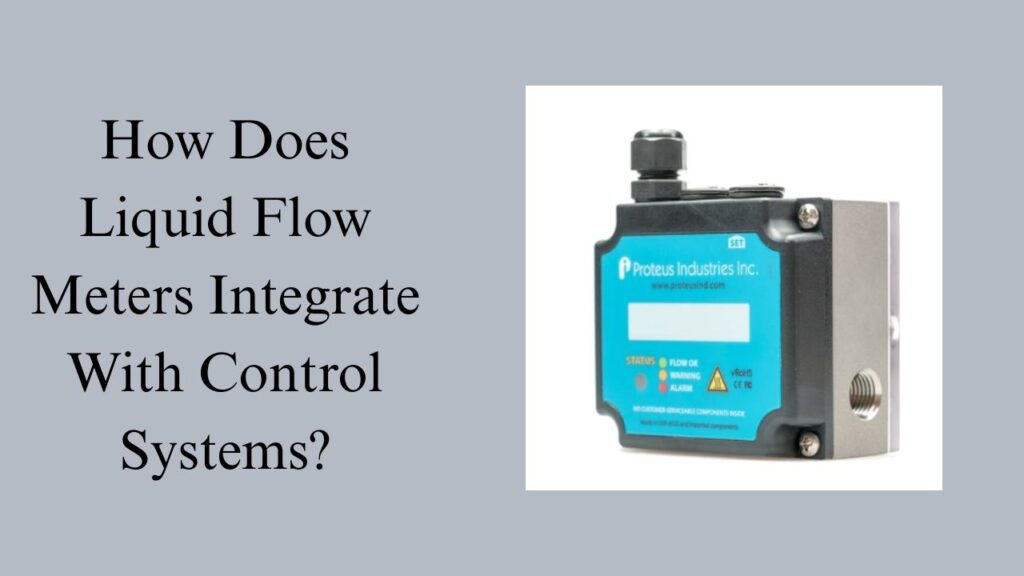
In modern industrial operations, the seamless integration of measurement instruments with control systems is fundamental to achieving optimal process efficiency and product quality. They serve as critical sensing components that provide real-time data on fluid flow through pipelines and process systems. When properly integrated with control systems, these devices transform raw measurement data into actionable intelligence, enabling automated decision-making and precise process control. Understanding how connect and communicate with broader automation infrastructure is essential for engineers, plant managers, and maintenance personnel seeking to maximize operational performance and reliability.
Understanding Liquid Flow Meters and Their Role
Liquid flow meters are sophisticated instruments designed to measure the volumetric or mass flow rate of liquids passing through a pipe or conduit. These devices employ various measurement principles, including electromagnetic, ultrasonic, turbine, positive displacement, and Coriolis technologies, each suited to specific application requirements and fluid characteristics.
In industrial automation, liquid flow meters serve as primary measurement devices that continuously monitor flow parameters, including instantaneous flow rate, total volume, temperature, and pressure. The data they generate forms the foundation for process control decisions, batch management, custody transfer, and regulatory compliance reporting. Modern flow meters incorporate advanced electronics and signal processing capabilities that enable them to deliver highly accurate measurements while facilitating seamless integration with plant-wide control architectures. Their ability to interface with distributed control systems (DCS), programmable logic controllers, and supervisory control and data acquisition platforms makes them indispensable components of automated industrial processes.
Integration Methods and Communication Protocols
The integration of liquid flow meters with control systems relies on standardized communication methods that ensure reliable data transmission and interoperability between different equipment manufacturers. Analog output signals remain widely used, with the 4-20mA current loop standard being the most prevalent. This method provides a simple, robust connection that is relatively immune to electrical noise and can transmit over considerable distances without signal degradation. The 4-20mA signal typically represents the measured flow rate as a proportional current value, with 4mA indicating zero flow and 20mA representing the maximum calibrated flow rate.
Digital communication protocols have increasingly become the preferred integration method due to their ability to transmit more comprehensive data and enable bidirectional communication. Modbus RTU and Modbus TCP protocols are extensively implemented in industrial settings, offering straightforward configuration and broad compatibility across equipment platforms. HART protocol provides a hybrid solution that superimposes digital communication onto the traditional 4-20mA analog signal, allowing simultaneous process control and device configuration without additional wiring.
Industrial Ethernet protocols such as Profibus, Profinet, EtherNet/IP, and Foundation Fieldbus offer advanced integration options that support high-speed data transmission, complex diagnostic information, and sophisticated device management. These protocols enable flow meters to communicate extensive measurement data, operational status, diagnostic alerts, and configuration parameters directly to control systems. Wireless integration technologies, including WirelessHART and ISA100, provide flexible installation options for applications where cabling is impractical or cost-prohibitive, though they require careful consideration of signal reliability and battery management.
Essential Components of System Integration
Successful integration of liquid flow meters requires several key hardware and software components working in concert. Signal converters and transmitters serve as the interface between the flow measurement sensor and the control system, converting raw sensor signals into standardized output formats. Modern smart transmitters incorporate microprocessors that perform linearization, compensation, and diagnostic functions locally before transmitting data.
PLCs serve as the primary control logic processors, receiving flow meter data, executing control algorithms, and generating output commands for actuators and valves. SCADA systems provide the human-machine interface layer where operators visualize process conditions, acknowledge alarms, and make operational adjustments. Data acquisition systems capture and store historical flow data for trend analysis, reporting, and optimization studies.
The physical interface hardware includes terminal blocks, junction boxes, power supplies, and network switches that provide the electrical and network infrastructure supporting communication between devices. Proper grounding, shielding, and surge protection are critical considerations to ensure signal integrity and protect sensitive electronics from electrical disturbances.
Benefits of Integrated Flow Measurement Systems
Integrating liquid flow meters with control systems delivers substantial operational advantages. Real-time monitoring capabilities enable operators to detect process deviations immediately and respond proactively before quality issues or equipment damage occur. Automated control algorithms can adjust valve positions, pump speeds, or batch ingredient additions based on flow measurements, maintaining optimal process conditions without manual intervention.
The continuous data logging inherent in integrated systems creates comprehensive historical records that support regulatory compliance, quality assurance documentation, and forensic investigation of process upsets. Advanced analytics applied to flow data can reveal inefficiencies, predict maintenance needs, and identify optimization opportunities that improve overall equipment effectiveness.
Safety is significantly enhanced through integration, as flow measurements can trigger automatic shutdown sequences when dangerous conditions such as overpressure, excessive flow rates, or leak detection occur. This automated protection reduces risk to personnel and equipment while ensuring regulatory compliance with safety standards.
Implementation Considerations and Best Practices
Successful integration begins with a thorough compatibility assessment, ensuring that the selected flow meter supports communication protocols and signal types compatible with the existing control infrastructure. Installation should follow the manufacturer’s specifications for straight pipe runs, orientation, grounding, and environmental protection to ensure measurement accuracy and long-term reliability.
Proper calibration and configuration are essential, with parameters including measurement range, units, damping, and alarm setpoints carefully established to match process requirements. Regular validation and recalibration maintain measurement accuracy over time. Documentation of integration details, including network addresses, scaling parameters, and wiring diagrams, facilitates troubleshooting and future modifications.
Conclusion
The integration with control systems represents a critical capability that transforms basic measurement into intelligent process control. By leveraging standardized communication protocols, appropriate interface hardware, and thoughtful implementation practices, organizations can achieve the real-time visibility, automated control, and data-driven optimization necessary for competitive industrial operations in today’s demanding manufacturing environment.