Introduction
The rise of AI is transforming customer support, enabling organizations to deliver faster, smarter, and more personalized interactions. Modern AI Call Centres leverage AI Call Assistants, AI Receptionists, and advanced AI Phone Call technologies to automate routine inquiries, provide real-time guidance, and enhance agent productivity. Smart voice interaction platforms combine speech recognition, natural language processing, and predictive analytics to understand intent, route calls efficiently, and offer context-aware solutions. These systems reduce wait times, optimize operational costs, and improve first-call resolution. By integrating AI with human support, businesses can deliver consistent, scalable, and high-quality customer experiences that meet evolving expectations.
Understanding AI Call Centre Automation
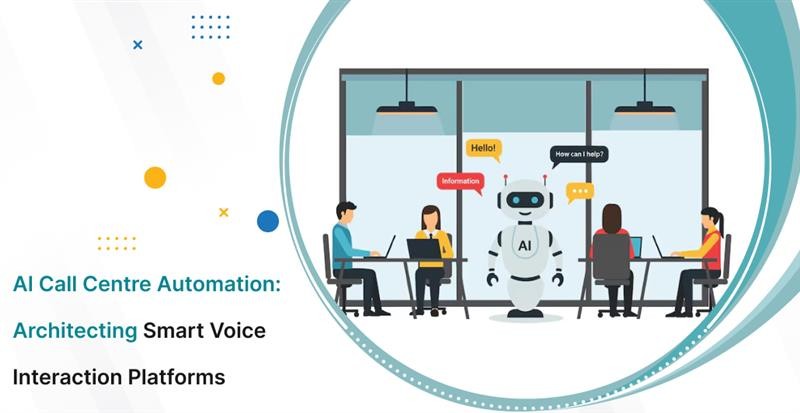
AI Call Centre Automation refers to the use of artificial intelligence to streamline, manage, and optimize voice-based customer interactions. By leveraging AI Call Assistants and AI Receptionists, organizations can automate routine inquiries, provide real-time guidance, and handle high call volumes efficiently within a Virtual Call Centre environment. Core components of an automated voice system include speech recognition, natural language processing, intelligent call routing, workflow automation, and analytics engines for continuous improvement. Together, these technologies enable faster resolutions, personalized interactions, and seamless collaboration between AI and human agents, improving both operational efficiency and customer satisfaction.
Key Automation Technologies
Present automation technology would, for example, put real-time users into machine-call centers: AI Call Assistant; common question; and when that is done then classify and move the call from within a user’s calls into the center. AI Receptionist and AI Call Assistant would offer state-of-the-art features in artificial intelligence to provide new applications as well as advance existing models for AI concepts. The application operates with speech recognition and natural language processing to determine the intent behind the caller’s interactions and the subtle contextual meaning of the discussion through the applied predicted use cases. Call routing intelligence and prediction of customer needs derived from their sound CRM could achieve an optimal customer service workflow. Types and forms of benefits in terms of glory, should or rather would, bask in view of how phenomenal the achievement has become in improving Drop Resolution and First Call Wait Time. There remains, among other benefits, the existence of these for care agents of home customers.
Intelligent Call Routing and Orchestration
Intelligent routing of calls has been inscribed within the walls of the AI Call Centre. The vendor has recently gotten tired of the truth about having abundant testosterone. The latest development in AI Call Routing System interrogated intelligently between call intent/views/history of the caller in order to develop a universal reference of AI Call Transcription, linked seconds away to the proper Virtual Call Centre Agent (AI Receptionist or even Human Agent). Contextual and Skill Based matching maximizes the First Call Resolution while cutting down on the Waiting Time. All kinds of implementations would attach themselves into becoming super-efficient, scalable, and highly customer support read made-to-order-the virtual call centre pools attached somewhat into the back scene of that. But start pumping the ROI for the team aligns with that Automated Virtual Human Help Desk into that in-app hitched-sourcing above. Just a couple of human touches might finish this hyper-technological interfacing.
Business Benefits of Automation
All rights and bounds seeking to set out effectiveness improvement, cost cuttings, and rejoicing in customer satisfaction take hold from AI Call Centers automation. All AIs Call is forwarded by AI Call Route in sync with virtual call agents or automatic assistants with much less waiting time, less transfer for more chance of one-call closures. Ai Call Transcription then picks up the whole conversation live and instantly provides avenues for workflow improvements while monitoring, assessing trends of agent performance for the betterment of those performances.
Implementation Strategy
A successful AI Call Centre implementation begins with a comprehensive readiness assessment, evaluating current infrastructure, call volumes, and business objectives to identify where AI Call Assistants and AI Receptionists can deliver maximum value. Deployment should follow a phased approach, starting with pilot programs in a Virtual Call Centre environment to test system performance, call routing, and integration with existing workflows. Change management and training are critical to ensure adoption, including educating agents on human-AI collaboration, new processes, and leveraging automated insights. With careful planning, phased deployment, and continuous team support, organizations can achieve seamless AI integration and enhanced customer engagement.
Challenges and Best Practices
Implementing automation in an AI Call Centre presents several challenges that must be carefully managed. Data privacy, security, and compliance are critical, as AI Phone Calls often involve sensitive customer information. Organizations must ensure secure storage, encryption, and access controls while adhering to regulatory standards. Accuracy is another challenge; AI Call Transcription and AI Call Routing Systems must reliably interpret intent and route calls correctly to prevent errors or customer frustration.
Balancing automation with human support is essential. While routine inquiries can be efficiently handled by virtual assistants in a Virtual Call Centre, complex or sensitive issues require human intervention. Best practices include establishing clear escalation protocols, continuously monitoring AI performance, and integrating real-time analytics to guide agents. Regular training and feedback loops ensure AI and human collaboration remains effective, delivering consistent, empathetic, and high-quality customer experiences while optimizing operational efficiency.
Future of AI Call Centre Automation
Fast ABC into the future whereby the AI calls center governs everything outside contact-driving, but for the customers-expectation comprehension within the immersion context of the app-just like an AI Assistant or an AI Receptionist Giant Consolidator set against the AI Telephony streamline all things. So the jobs would pull simultaneously with real-time agent assistance.
Trends in AI Future and Innovations
Behavioral modeling as per the AI’s soul listening to the objects.
Generative AI bridges awareness of realistic scenarios on-the-ground to on-demand data draw capability.
An all-accent, all-language-based AI-to cater on the way to any global customer-spice it up with a few innovative twists in behavioral modeling.
Predictive and proactive routing for meeting the next customer need even before it arises.
Next-gen intelligent voice interaction platforms.
Voice, chat, and digital channels optimally blended for seamless immersion in omnichannel experience.
Transformational conversations can synchronize to completely redefine work processes toward an entirely new domain of possibilities for agent performance and customer satisfaction.
Conclusion
The AI call centers would term-by-term redefine within all enterprises-a call assistant or an AI telephonist, along with AI call assistants setting catwalks for trends-high personalization in addressing with agility in debating together with productivity boost with diminished cost of operations for the customer. The 21st century is truly revolutionizing in itself in change management and instantly fast-tracking the next generations of voice-driven support production. Somehow, it seems these would be future owners. Hence, AI call centers would be prospectively fostering riches and revenue.