Grading systems in schools, colleges, and universities often go beyond simple averages. Many courses assign different weights to assignments, quizzes, midterms, and final exams, making grade calculation more complex. This is where a weighted grade calculator becomes an essential academic tool. It helps students and educators accurately calculate final grades by considering the importance of each component.
This article explains what a weighted grade calculator is, how it works, and why it is useful for academic planning.
What Is a Weighted Grade Calculator?
A weighted grade calculator is an online tool that calculates a final grade based on the weighted value of each assignment or assessment. Unlike simple grade calculators that treat all scores equally, weighted calculators factor in the percentage weight assigned to each category.
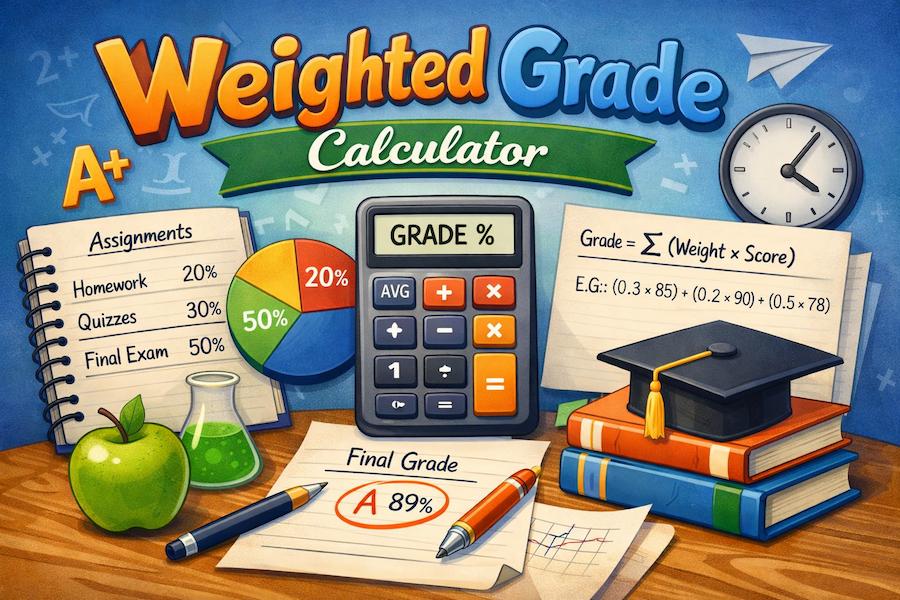
For example, homework might be worth 20 percent of the final grade, quizzes 30 percent, and exams 50 percent. A weighted grade calculator automatically applies these weights to produce an accurate final result.
Why Weighted Grades Are Important
Weighted grading systems reflect the true importance of different academic activities. Final exams or major projects usually have more impact on overall performance than small quizzes or participation marks. Without a weighted system, final grades would not accurately represent a student’s performance.
A weighted grade calculator ensures fairness and clarity by applying each component’s assigned value correctly.
How a Weighted Grade Calculator Works
Most weighted grade calculators follow a simple process. Users enter each assignment or category score along with its corresponding weight. The calculator multiplies each score by its weight, adds the results together, and displays the final weighted grade.
This process eliminates the need for manual formulas and reduces the chance of calculation errors, especially when multiple grading components are involved.
Common Uses of Weighted Grade Calculators
Weighted grade calculators are used across all education levels. Students use them to estimate final grades before exams. Teachers use them to verify results and maintain consistency. Parents use them to better understand academic performance.
They are particularly helpful in college and university courses, where grading structures are more complex and heavily weighted.
Benefits of Using a Weighted Grade Calculator
Using a weighted grade calculator offers several advantages. It saves time by providing instant results. It improves accuracy by eliminating human error. It provides transparency, allowing students to see how each assessment affects their final grade. It also supports academic planning by helping students identify areas where improvement can make the biggest difference.
Weighted Grade Calculator vs Simple Grade Calculator
A simple grade calculator treats all scores equally, which may not reflect real academic policies. A weighted grade calculator, on the other hand, mirrors official grading systems by applying specific percentages to each category.
For courses that use weighted grading, a weighted calculator is the only reliable way to calculate final results accurately.
Understanding Weighted Grading Percentages
Each course defines its own weighting system. Common examples include assignments worth 30 percent, exams worth 40 percent, and projects worth 30 percent. Some courses may include participation, labs, or attendance as additional weighted components.
A weighted grade calculator allows flexibility, enabling users to match their course’s exact grading structure.
Accuracy and Limitations
While weighted grade calculators are highly accurate when used correctly, users must ensure they enter the correct weights and scores. Incorrect inputs can lead to misleading results. Additionally, these calculators provide estimates and should not replace official academic records.
For important academic decisions, it is always best to confirm grades with instructors or institutional guidelines.
Who Should Use a Weighted Grade Calculator?
Weighted grade calculators are useful for students, teachers, academic advisors, and parents. They are especially valuable for students preparing for finals, managing GPA goals, or tracking progress throughout the semester.
Because weighted grading is widely used in higher education, these calculators have become essential tools for academic success.
When to Use a Weighted Grade Calculator
A weighted grade calculator is ideal when planning study strategies, estimating final grades, preparing for academic evaluations, or reviewing course performance. It helps users make informed decisions by showing how each assessment impacts the final outcome.
Final Thoughts
A weighted grade calculator is a powerful academic tool that simplifies complex grading systems. By accurately applying weights to each assessment, it provides clear and reliable grade calculations. While it should not replace official grading systems, it serves as a valuable support tool for students and educators alike.
As education continues to rely on structured and weighted assessments, weighted grade calculators will remain an important resource for understanding and managing academic performance.