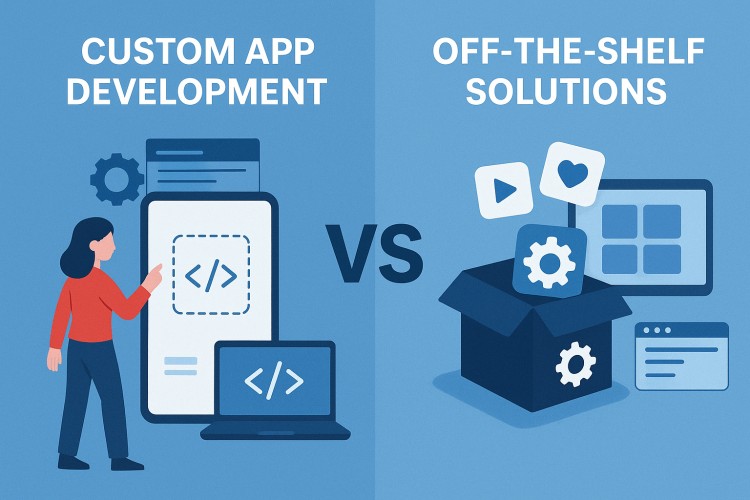
In today’s fast-paced digital world, businesses are increasingly reliant on software solutions to drive everything from internal operations to customer interactions. As organizations seek to streamline processes, enhance user experience, and boost efficiency, a critical decision emerges: Should you invest in custom app development, or go with off-the-shelf software?
The answer depends on various factors such as budget, scalability, timeline, and the strategic goals of your business. While off-the-shelf solutions can offer immediate and cost-effective benefits, custom app development allows for tailored functionality, integration, and long-term scalability.
In this article, we will take a deep dive into custom app development, its benefits, and when it makes the most sense to choose it over off-the-shelf software. Along the way, we’ll examine the growing role of custom solutions in modern business and how they can unlock unparalleled value when executed correctly.
What is Custom Application Development?
Custom application development refers to the process of designing, building, and deploying software that is uniquely tailored to meet the specific needs of a business. Unlike off-the-shelf software, which offers a generic solution, custom apps are created to match a company’s unique processes, workflows, and industry requirements.
A custom-built application can either be developed from scratch or be a highly customized version of an existing platform. The goal is to provide a solution that perfectly aligns with business operations, improving efficiency, scalability, and user satisfaction.
When seeking a trusted partner for custom app development, working with a reliable company can make all the difference. RichestSoft – Top Custom App Development Company is one such example of a company that specializes in crafting tailored solutions that cater to a business’s exact needs, ensuring optimal performance and innovation. Their expertise ensures that the final product not only meets but exceeds client expectations, helping businesses scale and adapt to evolving challenges.
The Types of Custom Applications
Custom apps come in a variety of forms, each designed to address specific business needs. Common examples include:
- Enterprise Resource Planning (ERP) Systems: Tailored software that integrates all aspects of a business, including finance, HR, manufacturing, and supply chain management.
- Customer Relationship Management (CRM) Platforms: Custom CRM systems allow businesses to manage and analyze customer interactions and data in a way that fits their specific processes and goals.
- eCommerce and Payment Portals: A custom-built online store can be optimized for unique product offerings, customer behaviors, and integration with payment systems.
- Field Service and Mobile Workforce Solutions: Apps designed to support mobile employees, offering real-time updates, job management, and reporting tools.
- Industry-Specific Solutions: These include healthcare applications, legal compliance systems, or logistics software, all of which need to meet strict regulations and unique operational requirements.
Why Choose Custom App Development?
There are numerous benefits to opting for custom application development over pre-packaged software, especially when it comes to enhancing business performance, increasing efficiency, and positioning for long-term growth. Here are the key advantages:
1. Tailored to Your Specific Needs
One of the main advantages of custom app development is that the software is built to fit your organization’s exact requirements. You don’t have to adjust your processes to accommodate an off-the-shelf solution. Whether it’s customizing workflows, building unique features, or supporting niche business requirements, a custom-built app ensures that the final product perfectly aligns with your operational needs.
2. Competitive Differentiation
In a competitive marketplace, being able to offer something unique can be a powerful differentiator. Custom apps allow you to incorporate features and functionalities that set you apart from competitors, something that off-the-shelf software, by nature, cannot do. By integrating distinctive processes and unique customer-facing features, businesses can provide a richer, more personalized experience to their users.
3. Scalability for Future Growth
As businesses grow, their software needs evolve. Custom app development ensures that your application can scale alongside your business. Unlike off-the-shelf software, which may require a costly upgrade or migration when you outgrow it, custom-built solutions are designed with scalability in mind. This means your app can accommodate increasing users, data, and transactions without compromising performance.
4. Greater Control Over Data, Security, and Compliance
Data privacy and security are critical concerns for many businesses, particularly those in regulated industries like healthcare, finance, and legal. Custom app development gives you complete control over how data is handled, stored, and protected. With custom-built solutions, businesses can implement robust, industry-specific security protocols that meet compliance standards and mitigate risks of cyber threats.
5. Seamless Integration with Existing Systems
Most businesses rely on multiple software tools to manage different aspects of operations. Custom apps can be designed to integrate smoothly with your existing infrastructure, such as legacy systems, third-party APIs, and other enterprise solutions. This level of integration is often difficult or expensive to achieve with off-the-shelf solutions.
6. Long-Term Investment Value
Though custom application development generally requires a higher upfront investment, the long-term value is significant. Unlike off-the-shelf software, which often comes with ongoing licensing fees and limited customization options, a custom-built app allows you to invest in a product that will grow with your business. This can result in cost savings over time, especially as your needs evolve.
What Are Off-the-Shelf Solutions?
Off-the-shelf (OTS) software is a ready-made solution that is mass-produced for a wide audience. These tools are designed to cater to the needs of a broad group of businesses, offering generic functionalities that may or may not perfectly align with your unique requirements.
Popular Examples of Off-the-Shelf Software:
- Microsoft Office Suite: A set of tools for productivity, document creation, and data management.
- Salesforce CRM: A widely-used customer relationship management platform.
- Shopify: A popular eCommerce platform that allows businesses to set up online stores.
- QuickBooks: An accounting solution designed for small and medium-sized businesses.
The Pros and Cons of Off-the-Shelf Software
Advantages of Off-the-Shelf Software
- Lower Initial Cost: One of the key advantages of OTS software is its affordability. These tools are generally less expensive upfront compared to custom development.
- Immediate Availability: Off-the-shelf software can be implemented immediately, which is a significant advantage when businesses need a solution quickly.
- Pre-tested and Well-Documented: OTS products have undergone extensive testing and are supported by detailed documentation, which can help streamline the setup and support process.
- Large User Communities: OTS software typically has large user communities, which can be a great source of troubleshooting, tips, and third-party integrations.
Disadvantages of Off-the-Shelf Software
- Limited Customization: Off-the-shelf solutions offer minimal room for customization. If your business has unique needs or workflows, you may find that these tools don’t fully align with your processes.
- Scalability Issues: As your business grows, off-the-shelf software may not be able to scale efficiently to meet your increasing demands.
- Integration Challenges: Integrating OTS software with existing systems can be time-consuming and expensive, especially if the software is not designed to work with other tools.
- Ongoing Costs: Many OTS tools require subscription fees or licensing costs, which can add up over time.
When to Choose Custom Application Development
Custom app development is the right choice for businesses that have complex, evolving needs or specific industry requirements. Here are some situations where custom development makes sense:
- Complex or Proprietary Processes: If your business operates with unique workflows or processes, a custom app ensures that the solution is designed around your requirements.
- Integration Needs: If your software needs to integrate with legacy systems, third-party APIs, or other platforms, custom development provides the flexibility to build seamless integrations.
- Data Privacy and Security: If your business handles sensitive data, or if regulatory compliance is a concern, custom apps can be built with the necessary security protocols in place.
- Long-Term Vision: If you’re planning for long-term growth and digital transformation, custom development offers greater scalability and adaptability over time.
- Industry-Specific Needs: For industries like healthcare, finance, or logistics, custom solutions can be tailored to meet industry-specific challenges and regulations.
When to Choose Off-the-Shelf Software
Off-the-shelf software is better suited for businesses that:
- Have Standardized Processes: If your business doesn’t have complex needs or doesn’t require unique workflows, OTS solutions can offer a quick and affordable solution.
- Have Limited Budgets or Tight Timelines: When resources are constrained, off-the-shelf tools provide a cost-effective and quick deployment option.
- Are in the Early Stages: For startups and small businesses that don’t need extensive customization, off-the-shelf software can provide basic functionality with low initial costs.
The Hybrid Approach: Blending Both Worlds
In some cases, businesses can benefit from a hybrid approach, combining both custom app development and off-the-shelf software. For example:
- Using off-the-shelf CRM software while customizing plugins or automating specific workflows.
- Integrating a SaaS solution with a custom-built module for reporting or data analysis.
- Customizing the user interface of an ERP system to enhance usability without rebuilding the entire platform.
This hybrid approach can help businesses get the best of both worlds—quick deployment and cost savings from OTS tools, with the added benefits of customization and integration from a custom app.
Real-World Examples of Custom App Development Success
Here are a few real-world examples where custom app development has driven significant success and transformation for businesses across various industries.
- Healthcare: A healthcare provider developed a custom patient portal integrated with their existing Electronic Medical Records (EMR) system, resulting in improved appointment management and patient engagement.
- Logistics: A logistics company built a custom tracking app that optimized routes and minimized scheduling errors, leading to significant cost savings and operational efficiency.
- Retail: A retail chain enhanced customer engagement by developing a custom mobile loyalty app that integrated in-store and online transactions, increasing repeat customers and brand loyalty.
Conclusion
Choosing between custom app development and off-the-shelf software ultimately depends on your business’s specific needs, goals, and resources. While off-the-shelf solutions are cost-effective and quick to deploy, they may fall short in terms of customization, scalability, and long-term growth.
Custom application development offers greater control, flexibility, and scalability, making it the ideal choice for businesses with unique needs, complex processes, or long-term goals. By investing in a tailored solution, you can unlock significant value that will help drive growth and innovation for years to come.
If you’re considering custom app development, working with an experienced development partner is key. A trusted team can guide you through the process, ensuring that the solution you build is both effective and scalable, aligning perfectly with your business objectives.