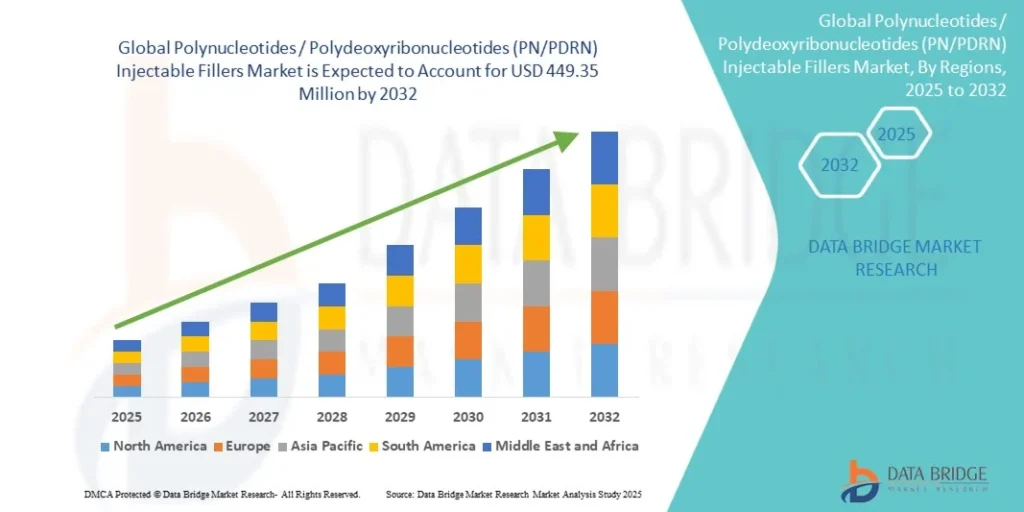
The Polynucleotides / Polydeoxyribonucleotides (PN/PDRN) Injectable Fillers market was valued at USD 210.31 Million in 2024 and is expected to reach USD 449.35 Million by 2032, growing at a CAGR of 9.96% (2024-2032). Get insights on trends, segmentation, and key players with Data Bridge Market Research Reports.
Introduction
In recent years, the world of aesthetic medicine has seen a remarkable shift toward treatments that focus not just on enhancing appearance, but also on stimulating true skin regeneration. Among these next-generation innovations, Polynucleotide (PN) and Polydeoxyribonucleotide (PDRN) injectable fillers have gained immense popularity for their ability to repair, rejuvenate, and restore the skin from within. These biologically active substances are redefining how we approach anti-aging treatments, offering a natural, science-backed solution that goes beyond surface-level improvement
Definition
Polynucleotides (PN) or Polydeoxyribonucleotides (PDRN) injectable fillers are regenerative biostimulatory treatments derived from purified DNA fragments, usually sourced from salmon or trout. Unlike traditional fillers that add volume, PN/PDRN work by stimulating cell repair, collagen synthesis, and tissue regeneration, improving skin elasticity, hydration, and overall quality. They promote natural healing processes at the cellular level, making them popular for rejuvenation, scar repair, and anti-aging treatments..
What Are Polynucleotides (PN) and PDRN?
Polynucleotides (PN) are long chains of nucleotides – the basic building blocks of DNA. When purified and used in aesthetic treatments, these biopolymers act as powerful skin regenerators, enhancing cellular turnover, improving elasticity, and repairing damaged tissue.
Polydeoxyribonucleotide (PDRN), a subtype of PN, is derived from purified DNA fragments, typically sourced from salmon or trout sperm. This material is biocompatible and safe for human use, as its molecular structure closely resembles human DNA.
The primary difference between PN and PDRN lies in the length and molecular weight of the nucleotides. PN refers to the broader category encompassing all DNA-based polymers, while PDRN is a specific, shorter-chain derivative known for its healing, anti-inflammatory, and regenerative properties.
How PN and PDRN Work
At the core of PN/PDRN treatments is biorevitalization – the process of stimulating the skin’s own regenerative capacity. Once injected into the dermis, these DNA fragments begin to:
- Promote fibroblast activity – Fibroblasts are the skin cells responsible for producing collagen and elastin. Polynucleotides activate them, leading to firmer, plumper skin.
- Enhance microcirculation – Improved blood flow ensures better oxygen and nutrient delivery to skin cells.
- Increase hydration – PN molecules attract and bind water, restoring moisture balance and improving skin texture.
- Stimulate tissue repair – PDRN is known to activate the adenosine A2A receptor, which accelerates wound healing and reduces inflammation.
- Protect against oxidative stress – PN acts as a scavenger of free radicals, reducing damage caused by UV exposure and pollution.
The result is a visible improvement in skin tone, elasticity, and radiance, along with reduction in fine lines, scars, and dullness.
Key Benefits of Polynucleotide and PDRN Fillers
Unlike traditional dermal fillers (such as hyaluronic acid-based injectables), which primarily work by adding volume, PN/PDRN fillers rebuild the skin’s foundation and revitalize it from within.
Here are some of the most notable benefits:
Deep Skin Regeneration:
PN and PDRN stimulate the synthesis of collagen and elastin fibers, rejuvenating the dermis and improving the skin’s overall structure.
Enhanced Hydration:
Due to their high water-binding capacity, polynucleotides provide lasting hydration, making the skin look plump and dewy.
Improved Elasticity and Firmness:
Over time, repeated treatments help restore skin elasticity and firmness, particularly in sagging or tired-looking areas.
Reduced Fine Lines and Wrinkles:
By stimulating fibroblast activity and collagen remodeling, PN/PDRN fillers smooth out fine lines and soften wrinkles naturally.
Scar and Pigmentation Improvement:
Their regenerative properties help heal acne scars, surgical marks, and pigmentation irregularities by improving tissue turnover.
Anti-Inflammatory and Healing Effects:
PDRN promotes faster recovery and soothes inflamed skin, making it ideal for patients with sensitive or reactive skin types.
Safe and Biocompatible:
Derived from natural DNA sources and purified to high standards, PN/PDRN are safe, well-tolerated, and compatible with human tissue.
Common Treatment Areas
PN and PDRN injectable fillers are incredibly versatile and can be used across various parts of the face and body:
- Face: To improve fine lines, dullness, and elasticity loss.
- Under-eye area: To reduce dark circles, puffiness, and fine wrinkles.
- Neck and décolletage: For tightening and revitalizing sagging or crepey skin.
- Hands: To restore youthful texture and hydration.
- Scalp: To enhance scalp health and support hair regeneration in some protocols.
Treatment Procedure: What to Expect
A typical PN or PDRN treatment is a minimally invasive injectable procedure performed by a licensed aesthetic practitioner.
Step 1: Consultation
The practitioner evaluates your skin condition, discusses goals, and recommends an appropriate PN/PDRN formulation and treatment plan.
Step 2: Preparation
The skin is cleansed, and a topical anesthetic may be applied to ensure comfort during injection.
Step 3: Injection
Using fine needles or microinjections, the product is administered into the dermis using mesotherapy techniques. Treatment usually takes 20–40 minutes.
Step 4: Recovery
Mild redness or swelling may occur immediately after the procedure but usually subsides within a few hours. There’s minimal downtime, and most patients can resume normal activities right away.
Step 5: Results
Initial improvements in hydration and glow can be noticed within a few days, while full regenerative results become evident after 3–4 weeks as collagen remodeling takes effect.
For best results, a series of 3–4 sessions spaced 2–4 weeks apart is typically recommended, followed by maintenance treatments every 6–12 months.
Safety and Side Effects
Polynucleotide and PDRN fillers have an excellent safety profile. They are biocompatible, biodegradable, and rarely cause allergic reactions. Common, mild side effects include:
- Temporary redness or bruising
- Slight swelling or tenderness at injection sites
- Very rare local hypersensitivity reactions
When performed by a qualified aesthetic professional, PN/PDRN treatments are safe and well-tolerated across most skin types.
Who Is a Good Candidate?
PN and PDRN injectable treatments are ideal for:
- Individuals in their late 20s and above seeking preventive anti-aging solutions
- Patients with dull, tired, or dehydrated skin
- Those with fine lines, mild laxity, or early signs of aging
- People recovering from acne scars or environmental damage
- Anyone who prefers a natural, regenerative approach over volumizing fillers
However, individuals who are pregnant, breastfeeding, or have active skin infections should postpone treatment.
Future Trends of Polynucleotides / Polydeoxyribonucleotides (PN/PDRN) Injectable Fillers Market
Rising Demand for Regenerative Aesthetics:
The global aesthetic industry is shifting from temporary cosmetic enhancements to treatments that promote biological regeneration. PN and PDRN injectables perfectly align with this trend, as they repair skin at the cellular level rather than simply masking aging signs.
Integration with Combination Therapies:
Future treatment protocols are expected to combine PN/PDRN fillers with energy-based devices, microneedling, or hyaluronic acid fillers to achieve synergistic results – enhancing both regeneration and structural support.
Expanding Clinical Research and Product Innovation:
Ongoing studies are driving the development of next-generation PN formulations with improved stability, higher purity, and targeted delivery systems. This innovation is expected to expand their applications beyond facial aesthetics into scar healing, wound repair, and scalp rejuvenation.
Increasing Global Market Adoption:
With growing awareness among practitioners and patients, the PN/PDRN injectable filler market is forecasted to see strong growth in Asia-Pacific, Europe, and North America. Demand is rising in both medical aesthetic clinics and dermatology practices, fueled by excellent safety profiles and natural results.
Personalized and Preventive Skincare Approaches:
Future PN/PDRN treatments will likely emphasize personalized protocols based on skin type, age, and lifestyle. Preventive use in younger demographics is also anticipated, supporting long-term skin health and delaying visible aging.
Growth Rate of Polynucleotides / Polydeoxyribonucleotides (PN/PDRN) Injectable Fillers Market
According to Data Bridge Market Research, the polynucleotides / polydeoxyribonucleotides (PN/PDRN) injectable fillers market was estimated to be worth USD 210.31 million in 2024 and is projected to grow at a compound annual growth rate (CAGR) of 9.96% to reach USD 449.35 million by 2032.
Conclusion
Polynucleotide (PN) and Polydeoxyribonucleotide (PDRN) injectable fillers represent a revolutionary approach to skin rejuvenation. By stimulating natural cellular repair mechanisms, these DNA-based injectables restore youthful radiance, elasticity, and vitality in a subtle yet profound way.