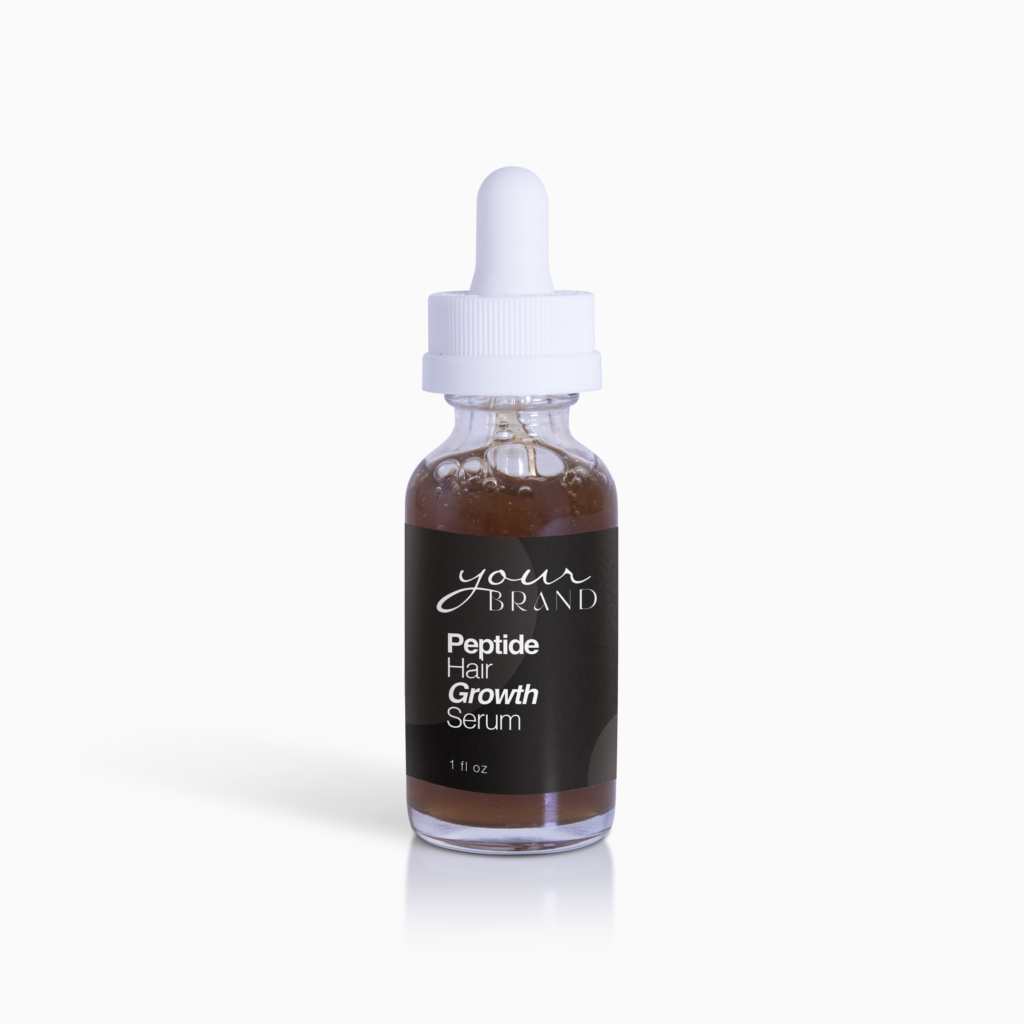
Healthy hair is often associated with confidence, appearance, and overall well-being. However, hair thinning, excessive shedding, and slow hair growth are common concerns that affect people of different ages.
Genetics, hormonal changes, stress, nutritional deficiencies, scalp conditions, and ageing can all influence hair health. As scientific research continues to explore new approaches to hair care, peptides have attracted attention for their potential role in supporting the biological processes involved in hair growth.
Hair growth peptides are increasingly discussed in the beauty, wellness, and research industries because of their possible effects on scalp health, hair follicles, and the hair growth cycle. Understanding how these compounds work, what current research suggests, and what limitations exist can help individuals make informed decisions about hair care.
What Are Peptides and How Do They Work?
Peptides are short chains of amino acids, the building blocks of proteins. They participate in numerous biological processes, including cellular communication, tissue maintenance, and the regulation of different bodily functions. Some peptides act as signalling molecules, helping cells respond to specific biological instructions.
In hair care research, certain peptides are being investigated for their potential to influence processes associated with follicle function and scalp health. Researchers are interested in how these compounds may interact with cellular pathways involved in the hair growth cycle.
Hair follicles are complex structures responsible for producing hair strands. Their activity depends on several factors, including genetics, hormones, blood supply, and the condition of the surrounding scalp. Because peptides may influence particular cellular signals, they have become an area of interest in the development of new hair care products and experimental treatments.
However, not all peptides work in the same way. Their effects depend on their molecular structure, formulation, delivery method, and the biological process being studied. Evidence supporting one peptide cannot automatically be applied to every peptide marketed for hair health.
Understanding the Hair Growth Cycle
To understand the potential role of peptides, it is important to know how hair grows. Each hair follicle follows a natural cycle consisting of three main phases.
Anagen phase: This is the active growth stage. Hair follicles produce new hair fibres, and this phase can last several years depending on genetics and other biological factors.
Catagen phase: During this short transitional stage, hair growth slows, and the follicle begins to shrink. This phase typically lasts a few weeks.
Telogen phase: This is the resting stage, when the hair remains in the follicle before eventually shedding. A new growth cycle may then begin.
Changes in this cycle can contribute to noticeable thinning or increased shedding. For example, stress, illness, hormonal changes, or nutritional deficiencies may cause more hairs than usual to enter the resting phase.
Researchers studying peptides are interested in whether certain compounds can influence signalling pathways associated with follicle activity. Nevertheless, the ability to change the hair growth cycle in laboratory settings does not necessarily mean a product will produce noticeable improvements in people.
Potential Benefits of Hair Growth Peptides
The potential benefits of hair growth peptides depend on the specific compound and the quality of evidence supporting its use. Several areas have attracted scientific interest.
Supporting Scalp Health
A healthy scalp provides the environment in which hair follicles function. Scalp irritation, inflammation, and certain skin conditions may contribute to hair problems or make existing concerns more noticeable.
Some cosmetic peptide formulations are investigated for their potential role in supporting skin condition and improving the appearance of the scalp. A well-formulated topical product may also contain moisturising and conditioning ingredients that help maintain scalp comfort.
However, cosmetic benefits should not be confused with proven treatment for hair loss. A product that improves the feel of the scalp does not necessarily stimulate new hair growth.
Exploring Hair Follicle Function
Hair follicles rely on coordinated biological signals to maintain normal growth and regeneration. Some peptides are being studied for their potential interactions with pathways involved in cellular activity and tissue maintenance.
These investigations may help researchers understand new approaches to supporting follicle function. However, evidence for meaningful hair regrowth in humans remains limited for many peptide-based products. More controlled clinical research is needed before their effectiveness can be established.
Improving the Appearance of Hair
Certain topical hair care products use peptides alongside conditioners, moisturisers, and other cosmetic ingredients. These formulations may help improve hair texture, manageability, and the appearance of fuller strands.
It is important to distinguish between cosmetic improvements and changes in follicle activity. Hair may look thicker because of conditioning ingredients or reduced breakage, even when the number of growing hairs has not increased.
Different Types of Peptides Used in Hair Care
Peptides used in cosmetic and experimental hair research can vary considerably. Some are designed for topical skincare applications, while others are studied for their interactions with particular cellular pathways.
Signal peptides are investigated for their ability to communicate with cells and influence biological processes. In cosmetic formulations, some are included to support the appearance and condition of skin.
Copper peptides are compounds containing copper that have attracted interest in skin and tissue research. Their potential applications depend on the formulation and the specific outcome being investigated. Evidence that they improve skin appearance should not be interpreted as proof that they regrow hair.
Experimental bioactive peptides are studied for possible effects on cellular signalling and follicle-related processes. These compounds may be at early research stages, and their safety, effectiveness, and appropriate delivery methods can remain uncertain.
Consumers should carefully review product ingredients and avoid assuming that every peptide advertised for hair growth has been clinically tested or approved for treating hair loss.
Factors That Influence Hair Growth
Peptides are only one part of the broader discussion about hair health. Everyday habits and underlying medical conditions can also influence hair quality and shedding.
A balanced diet containing sufficient protein, iron, zinc, and other essential nutrients helps support normal hair production. However, supplements are most useful when they address an actual deficiency rather than being taken unnecessarily.
Sleep, stress management, and general health also matter. Prolonged stress or significant illness may contribute to temporary hair shedding, while certain medications and hormonal conditions can affect the growth cycle.
Gentle hair care can help reduce preventable breakage. Avoiding excessive heat styling, harsh chemical treatments, and tight hairstyles may protect the hair shaft and reduce mechanical damage.
People experiencing persistent or sudden hair loss should consider consulting a qualified healthcare professional or dermatologist. Identifying the underlying cause is often more useful than trying multiple products without a clear diagnosis.
Safety Considerations and Realistic Expectations
Interest in peptide-based hair products has grown, but safety and effectiveness should remain priorities. Topical cosmetic formulations and injectable or systemic research peptides are not interchangeable. Their risks, intended uses, and regulatory status may differ substantially.
Some products advertised online have limited human clinical evidence, and their purity or ingredient accuracy may not always be independently verified. Experimental compounds may carry unknown risks, particularly when used outside appropriate medical supervision.
Before trying a new topical product, consumers should review the ingredient list, follow the manufacturer’s directions, and discontinue use if irritation occurs. People with existing scalp conditions or known ingredient sensitivities may benefit from professional advice before introducing unfamiliar formulations.
Anyone considering an injectable peptide or a product promoted as a medical hair-loss treatment should discuss it with a qualified healthcare professional. Unapproved substances should not replace established treatments with stronger clinical evidence.
Realistic expectations are equally important. Hair grows slowly, and changes in thickness or shedding can take time to become apparent. No peptide product should be assumed to reverse genetic hair loss or restore hair density without reliable evidence.
Exploring AdonisElitePeptides
AdonisElitePeptides is a brand name relevant to consumers exploring peptide-related products and research information. When considering any product associated with this brand, it is important to examine the specific compound, its intended purpose, available quality documentation, and the evidence supporting its proposed benefits.
Buyers should distinguish between products intended for research and those formulated and authorised for human use. Reviewing transparent product information and seeking qualified professional guidance can help consumers make more informed decisions. Brand claims alone should not be treated as proof of safety, clinical effectiveness, or suitability for treating hair loss.
Conclusion
Peptides represent an interesting area of investigation in hair care because of their potential interactions with cellular signalling and biological processes associated with follicle function. Research may eventually clarify which compounds have practical applications for maintaining scalp health or addressing particular types of hair loss.
For now, the benefits of hair growth peptides vary by compound, and strong clinical evidence is lacking for many products marketed for this purpose. Maintaining a balanced diet, practising gentle hair care, and identifying underlying medical causes remain important steps toward healthier hair.