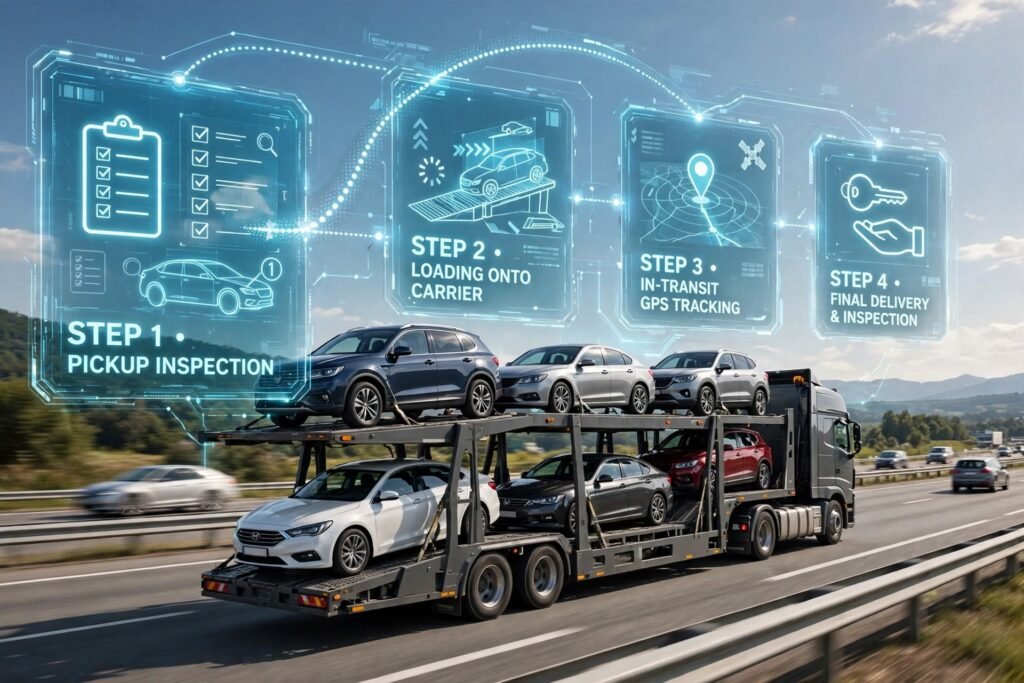
Booking a vehicle shipment is only the beginning of the transportation process. Once a carrier collects your car, several important steps take place before it reaches the destination. The vehicle must be inspected, secured, transported along an assigned route, and checked again during delivery.
For customers arranging long-distance moves, dealership purchases, seasonal relocations, or military transfers, understanding these stages makes the experience easier to manage. Transporting cars involves more than moving a vehicle from one address to another. It requires coordination between the customer, transportation provider, carrier, and delivery recipient.
Here is what typically happens after your vehicle leaves the pickup location.
The Journey Begins With a Condition Report
Before loading starts, the driver and vehicle owner or authorized representative inspect the car. This step creates a record of its visible condition before transportation.
The inspection generally covers:
- Existing scratches, dents, and paint damage.
- Cracked glass or damaged lights.
- Bumper and wheel condition.
- Exterior panels and visible accessories.
- The vehicle’s general condition.
These details are documented on the Bill of Lading, which serves as an important transportation record. Customers should also take their own photographs from multiple angles.
Why does this matter? If a concern appears at delivery, the original inspection report provides a reference for comparing the vehicle’s condition before and after the journey.
Loading Is a Carefully Coordinated Operation
Once the inspection is complete, the vehicle is positioned on the carrier. The exact loading procedure depends on the trailer design and vehicle type.
Professional drivers use suitable loading equipment and securement methods to keep vehicles stable during transportation. Ground clearance, vehicle dimensions, mechanical condition, and trailer configuration can influence how a car is loaded.
A standard running sedan is usually straightforward to position. However, a lowered sports car, oversized SUV, or non-running vehicle may require additional planning or specialized equipment.
Customers should disclose mechanical issues before pickup. A vehicle that cannot start, steer, or roll normally may need a winch or other loading arrangements.
What Happens While the Vehicle Is on the Road?
After loading, the carrier begins the journey toward the destination. The driver follows a planned route that considers road conditions, traffic, weather, delivery locations, and transportation schedules.
Long-distance shipments may involve several logistical considerations:
| Transportation factor | How it affects the journey |
| Route distance | Determines the overall travel requirements |
| Weather | May influence driving conditions and schedules |
| Traffic | Can affect progress through major cities |
| Carrier capacity | Influences pickup and delivery coordination |
| Road restrictions | May require adjustments to the planned route |
| Delivery access | Determines where the carrier can safely unload |
A vehicle traveling from California to Pennsylvania, for example, may pass through multiple states and encounter different road and weather conditions.
This is also the stage when communication becomes valuable. Customers should know whom to contact for shipment updates and what information is available about the vehicle’s progress.
Why Delivery May Not Happen at Your Exact Front Door
Door-to-door transportation is a popular choice, but it does not always mean a large carrier can enter every residential street.
Some neighborhoods have narrow roads, low-hanging branches, parking restrictions, or limited turning space. In these situations, the driver may arrange a nearby accessible meeting location.
Before delivery day, confirm:
- The recipient’s name and phone number.
- The expected delivery window.
- Whether the destination is accessible to a large carrier.
- An alternative meeting point if necessary.
- Any identification or release documents required.
Keeping your phone available and responding to scheduling calls can make the final handover easier.
The Final Inspection Is More Important Than You Think
When the carrier reaches the destination, the vehicle is unloaded and inspected again. This is not a step to rush through, even if you are eager to get behind the wheel.
Compare the vehicle’s condition with the original pickup report. Examine the body panels, bumpers, wheels, mirrors, glass, and other visible areas.
A sensible delivery routine includes:
- Photographing the vehicle before moving it away.
- Checking the exterior in good lighting.
- Comparing any visible concerns with the pickup photographs.
- Recording newly noticed damage on the delivery paperwork.
- Contacting the transportation provider promptly if a discrepancy appears.
Do not discard the Bill of Lading or shipment documents immediately after delivery. Keep copies for your records and follow the provider’s claims procedure if necessary.
Open or Enclosed: Does the Transportation Method Change the Process?
Both options involve inspection, loading, road transportation, and delivery, but they provide different levels of exposure protection.
- Open transport
Vehicles travel on an exposed trailer. This is a widely used and generally economical option for everyday cars, sedans, and SUVs.
- Enclosed transport
Vehicles travel inside a covered trailer, providing additional protection from weather and outside exposure. It is often considered for luxury, classic, exotic, and collectible vehicles.
The right option depends on your vehicle, budget, and protection preferences. Ask what handling arrangements and applicable coverage are included before confirming the shipment.
How Rapid Auto Shipping Helps Coordinate Vehicle Moves
Rapid Auto Shipping assists customers with vehicle transportation throughout the United States. Its services include open and enclosed transport, door-to-door options where available, expedited arrangements, and free instant quotes.
With more than 14 years of experience, the company helps customers coordinate transportation requirements and follow shipment progress through updates.
Whether you are relocating across the country, purchasing a vehicle from another state, or arranging seasonal transportation, provide accurate vehicle information and both ZIP codes when requesting a quote.
Visit Rapid Auto Shipping or call +1 (833) 233-4447 to discuss your transportation requirements.
A Better Understanding From Pickup to Handover
Knowing what happens between collection and delivery helps you prepare for each stage instead of wondering what comes next. Keep your documentation, communicate with the provider, and inspect the vehicle carefully at both ends. When transporting cars, a well-coordinated process and clear expectations make a long-distance vehicle move easier to navigate.
Frequently Asked Questions
- What happens after a car is picked up for transportation?
The driver completes the pickup inspection, loads and secures the vehicle, and transports it toward the destination. A final inspection takes place when the vehicle is delivered.
- Can I track my vehicle during transportation?
Shipment update options depend on the transportation provider and booking arrangement. Ask how progress updates are provided and which contact details to use for questions.
- What is a Bill of Lading in car transportation?
It is a transportation document that records shipment details and the vehicle’s condition during pickup and delivery. Keep a copy for your records.
- Should someone be present when the car is delivered?
You or an authorized representative should be available to receive the vehicle, complete the inspection, and handle the required paperwork.
- What can delay vehicle delivery?
Weather, traffic, road restrictions, carrier scheduling, and difficult delivery access can affect arrival times. Keep your schedule flexible and confirm the latest delivery estimate with the provider.