Starting a career in the pharmaceutical industry can feel challenging when you have little or no work experience. You may have completed your graduation and started looking for jobs, but you might not know which position is suitable for you. One career option worth exploring is a Medical Representative Job. It offers an opportunity to learn about pharmaceutical products, communicate with healthcare professionals, and develop practical sales and marketing skills.
Medical representatives, commonly called MRs, play an important role in pharmaceutical companies. They help share approved product information with doctors and other healthcare professionals while building professional relationships. The job involves more than selling products. It also requires product knowledge, regular field visits, time management, communication skills, and a responsible approach to pharmaceutical promotion.
For beginners, understanding the work before applying can make the job search easier. This guide explains how medical representative job mr job work, what skills are required, how freshers can prepare, and how a medical representative training institute may help them get ready for this career.

1. What Is a Medical Representative Job?
A Medical Representative Job is generally a field-based role in which an employee represents a pharmaceutical company and communicates approved information about its products to healthcare professionals.
Medical representatives may work with doctors, pharmacists, stockists, and distributors, depending on the company’s business model. Their main responsibilities include explaining product information, maintaining professional relationships, following a planned visit schedule, and working towards assigned business targets.
For example, a medical representative working for a pharmaceutical company may visit clinics and hospitals to discuss the company’s products with doctors. During these visits, the representative must respect the doctor’s time and provide accurate information supported by the company’s approved materials.
The role can suit people who enjoy meeting new people, learning about healthcare products, travelling within an assigned territory, and working in a target-oriented environment.
2. What Are the Main Responsibilities of an MR?
Before applying for an MR Job, it is important to understand what a typical working day may involve. Responsibilities differ between companies, but many medical representatives handle the following tasks.
- Doctor visits: Meet healthcare professionals according to an assigned schedule and company procedures.
- Product presentations: Share approved information about product composition, indications, features, and relevant precautions.
- Relationship management: Maintain professional and respectful communication with doctors and other relevant stakeholders.
- Sales activities: Work towards company targets and contribute to business development within the assigned territory.
- Market information: Report relevant feedback, competitor activity, and customer requirements to the sales team.
- Record keeping: Maintain visit reports, follow-up details, and other required records.
- Product learning: Attend company training sessions and stay updated on product information.
- Coordination: Work with managers, distributors, and other team members when required.
Medical representatives must follow company policies and applicable pharmaceutical marketing rules. They should never make unsupported claims or provide medical advice beyond their role.
3. Who Can Apply for Medical Representative Jobs?
Educational requirements depend on the employer and the type of products being promoted. Many pharmaceutical companies prefer graduates, while some positions specifically require qualifications in pharmacy, science, or life sciences.
Candidates with qualifications such as B.Sc., B.Pharm, biotechnology, or other relevant degrees may find suitable opportunities. However, the eligibility criteria are not identical across all companies.
Freshers can also apply for entry-level positions when the employer accepts candidates without previous experience. Some companies provide product and field training after selection, while others may prefer applicants with previous sales experience.
Before applying, check the job description for educational requirements, location, travel expectations, driving licence requirements, and other conditions.
If you are a fresher, do not assume that every vacancy requires experience. Instead, focus on openings that specifically welcome beginners and match your qualifications.
4. Important Skills for a Successful Medical Representative
A degree may help you qualify for a position, but your practical skills also influence how well you perform. Employers often look for candidates who are comfortable communicating, learning, and working independently.
Communication skills
Medical representatives regularly interact with healthcare professionals. You should be able to introduce yourself, explain information clearly, listen carefully, and answer questions professionally.
Product knowledge
You must learn the details of the products you represent. This includes understanding approved indications, composition, dosage forms, warnings, and other relevant information provided by the company.
Confidence and personality
Confidence helps when approaching new people, but it should be supported by preparation and respectful behaviour. You do not need to be an expert speaker from the beginning. Regular practice can help you improve.
Time management
Fieldwork often involves visiting several locations in one day. Planning your route, maintaining records, and completing follow-ups on time are important parts of the job.
Sales understanding
Many MR positions involve sales targets. Understanding customer needs, presenting product information accurately, and maintaining professional relationships can help you contribute to the company’s objectives.
Adaptability
A new job may involve unfamiliar situations, travel, and feedback from managers. Being open to learning can help freshers adjust to the working environment.
5. How Can Freshers Start Their Medical Representative Career?
If you are new to the pharmaceutical industry, begin by understanding the role and preparing for the application process. You do not need to learn everything at once. Focus on the skills and knowledge that employers are likely to assess.
Step 1: Understand the pharmaceutical industry. Learn about pharmaceutical companies, medicine categories, healthcare professionals, and the responsibilities of a medical representative.
Step 2: Check your eligibility. Review vacancies and identify positions that match your educational background and experience level.
Step 3: Prepare your resume. Include your education, communication skills, language abilities, internships, relevant projects, and any customer-facing experience.
Step 4: Improve your communication. Practise introducing yourself, explaining a topic in simple language, and answering common interview questions.
Step 5: Learn basic pharmaceutical terminology. Familiarise yourself with common dosage forms, generic and brand names, and the importance of accurate product information.
Step 6: Apply for suitable vacancies. Use company career pages, reliable job portals, and professional networks to find openings.
Step 7: Prepare for interviews. Research the employer, understand the job description, and be ready to discuss why you want to enter pharmaceutical sales.
Following these steps can help you approach the job search with greater confidence and a clearer understanding of employer expectations.
6. How a Medical Representative Training Institute Can Help
Freshers who have never worked in pharmaceutical sales may benefit from structured guidance. A medical representative training institute can help candidates understand the job, practise essential skills, and become more familiar with professional expectations.
Depending on its course structure, an institute may provide training in:
- Pharmaceutical industry fundamentals.
- Medical representative roles and responsibilities.
- Basic product knowledge and terminology.
- Communication and personality development.
- Professional presentation techniques.
- Sales fundamentals and territory planning.
- Resume writing and interview preparation.
- Workplace etiquette and reporting practices.
Practical training can be especially useful for someone who feels nervous about speaking with professionals or attending interviews. Role-play exercises and mock interviews can help candidates practise how to introduce themselves, respond to questions, and communicate clearly.
Before enrolling, check the syllabus, trainer experience, practical sessions, course duration, fees, and placement-support terms. Ask for clear information about what the institute provides and whether any employment assistance depends on specific conditions.
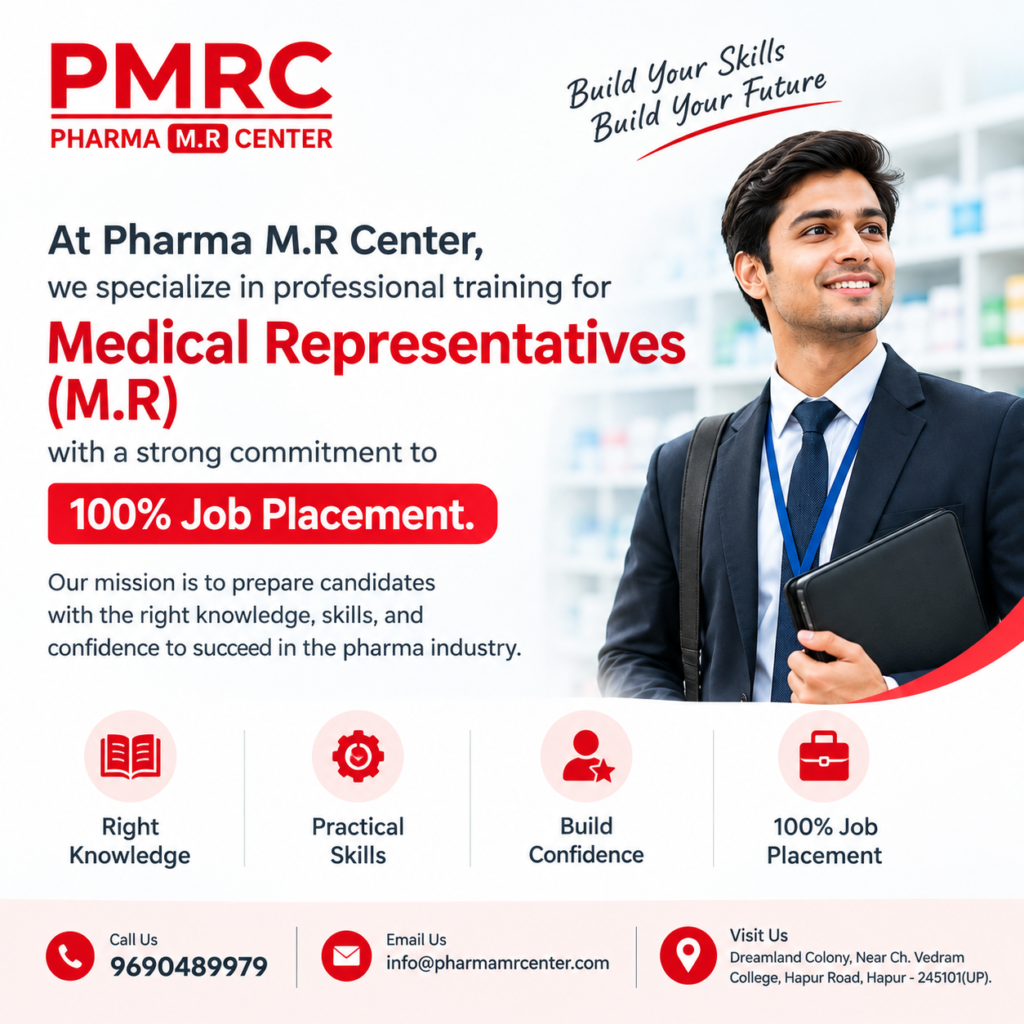
Pharma M.R Center focuses on preparing aspiring candidates for careers in the pharmaceutical industry. Beginners can explore its training options to see whether the available learning support matches their goals.
Training can improve preparation, but it does not guarantee a job. Selection still depends on the employer’s requirements, interview performance, qualifications, and available vacancies.
7. How to Prepare for a Medical Representative Job Interview
An interview helps employers understand your communication skills, attitude, and willingness to learn. As a fresher, you may not have work experience to discuss, so focus on your preparation and understanding of the role.
Common questions include:
Why do you want to become a medical representative?
Explain your interest in the pharmaceutical industry and your willingness to learn about products, communication, and professional sales activities.
What do you know about an MR Job?
Describe the role of a medical representative, including product presentations, healthcare professional visits, reporting, and sales responsibilities.
How would you handle rejection?
Explain that you would remain polite, learn from the experience, follow up only when appropriate, and continue your work professionally.
Are you comfortable with fieldwork?
Answer honestly. Many medical representative positions involve travel, regular visits, and managing a territory.
How would you explain a pharmaceutical product?
Mention that you would use approved company information, explain relevant details clearly, and avoid making claims that are not supported by the available evidence.
Practising these questions in advance can help you give clear answers without sounding memorised.
8. Where Can You Find Medical Representative Jobs in India?
There are several ways to search for pharmaceutical sales opportunities. You can visit pharmaceutical company career pages, use established job portals, connect with recruiters, and check professional networks.
Useful search terms include:
- Medical Representative Job for Freshers
- Medical Representative Job MR Job
- Entry-Level Medical Representative Jobs
- Pharmaceutical Sales Jobs for Graduates
- Medical Representative Jobs Without Experience
Read each vacancy carefully before applying. Check the company’s name, job location, qualification requirements, salary structure, incentives, travel expectations, and work responsibilities.
Be cautious about recruiters who promise guaranteed employment in exchange for large payments. Verify the employer and written offer details before paying fees or sharing sensitive information.
9. Career Growth and Future Opportunities
A Medical Representative Job can provide practical experience in pharmaceutical sales, communication, product learning, and territory management. As you gain experience, you may become eligible for senior medical representative roles or opportunities in sales supervision and management.
Depending on your performance, qualifications, and available openings, possible career paths may include senior MR, area sales management, regional sales management, or other pharmaceutical sales and marketing roles.
Progress usually takes consistent effort. Learning products properly, maintaining accurate reports, meeting professional standards, and building respectful relationships can support long-term development.
It is also important to understand the working conditions before accepting a position. Ask about field travel, reporting expectations, targets, training, and the salary and incentive structure so that you can make an informed decision.
Conclusion
Medical representative jobs offer a possible entry point into the pharmaceutical industry for graduates who enjoy communication, fieldwork, and learning about healthcare products. A successful start depends on understanding the job responsibilities, meeting the employer’s eligibility criteria, developing practical skills, and preparing carefully for interviews.
If you are considering a Medical Representative Job, begin by checking suitable vacancies and improving your product knowledge and communication. A medical representative training institute may help you build confidence and understand workplace expectations before applying.
Whether you are searching for your first MR Job or planning to move into pharmaceutical sales, a practical approach, willingness to learn, and professional conduct can help you prepare for the opportunities available in this field.