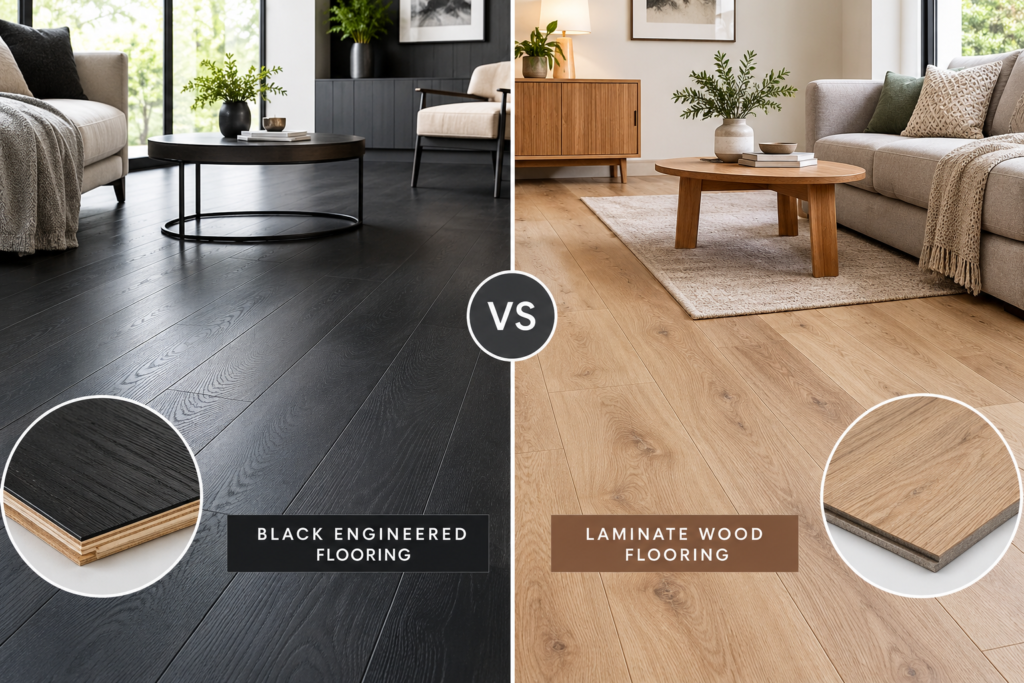
Choosing the right flooring really can shift the feel of your home, from comfort to day-to-day practicality. For UK homeowners planning a renovation, flooring has to balance looks with durability, maintenance, and, yes, the budget too. In the popular shortlist, black engineered flooring and laminate wood flooring bring different strengths, so each one tends to fit certain rooms and lifestyles. If you want something a bit more characterful, engineered parquet flooring is also worth a look, mainly because the pattern can make a space feel less generic and more alive.
So, knowing what separates them matters, and it makes choosing easier later on. Basically, you want the right type for how you actually live, not just what looks nice in a showroom.
What Is Black Engineered Flooring?
Blending the rich, dark look of real wood with an engineered construction approach, black engineered flooring has a genuine wood veneer or wear layer placed on top of multiple timber or wood-based layers. This setup helps it stay more stable than solid wood, especially with changes in humidity.
That deep black colour gives you a bold base for modern interiors. It tends to shine in open-plan living areas, sleek apartments, and larger rooms where the flooring can balance the rest of the design.
Key Benefits of Black Engineered Flooring
- Premium appearance: Dark-toned flooring gives a refined and current atmosphere.
- Natural character: You get authentic grain patterns and texture because there is a real wood surf
- Design versatility: Black pairs easily with neutral walls, metallic accents, and natural materials like stone or linen.
- Potential longevity: With proper care, good engineered wood flooring stays strong for years.
That said, there are small trade-offs. Dark finishes can highlight dust, pet hair, and even light scuffs more clearly, depending on how glossy or matte the surface is. Also, if a room has limited natural light, then black engineered flooring can sometimes make the space feel tighter, especially when it’s also paired with dark walls and heavier furniture.
What Is Laminate Wood Flooring?
A multi-layer product made to mimic the look of natural timber is laminate wood flooring, but it’s not actually the same thing. Most of the time, it includes a decorative image layer, then a protective wear layer, and underneath that there’s a core board, which is basically the main structure.
Nowadays, modern laminate flooring shows up in a lot of shades, wood effects, plank sizes, and finishes. That variety makes it a pretty practical option for people who want an attractive floor without paying for a genuine wood surface.
Key Benefits of Laminate Wood Flooring
- Budget-friendly: Laminate is usually cheaper to buy than engineered timber.
- Wide design selection: You can find oak, walnut, ash, grey wood, and dark finishes, plus plenty more.
- Easy maintenance: Normal cleaning is mostly sweeping or vacuuming, and then a lightly damp mop when needed.
- Scratch resistance: A lot of products have protective wear layers, meant to handle everyday household activity.
The main limitation is that laminate doesn’t include a real wood wear layer. If it gets deeply damaged, it typically cannot be sanded down and refinished the way some engineered wood floors can be. Also, whether it works in moisture-prone rooms depends on the particular product and the installation method, so that part isn’t one-size-fits-all.
Black Engineered Flooring vs Laminate Wood Flooring: What Are the Main Differences?
Both flooring types can look really good inside, but the real materials—how they feel, how you care for them day to day, and what they’re worth later on—those bits are not the same. Some people forget that, but it matters.
| Specification | Black Engineered Flooring | Laminate Wood Flooring |
| Surface | Usually a real wood veneer | Printed decorative layer |
| Appearance | Natural timber grain, a texture that you can notice | Realistic wood-effect patterns that look real at first glance
|
| Initial cost | Generally higher, no surprise there | Generally lower, typically budget-friendly |
| Maintenance | Needs gentle cleaning, and you follow finish-specific care | Routine cleaning is simpler and more direct |
| Repair options | Some types can be sanded and refinished depending on the wear layer | Usually can’t be sanded and refinished
|
| Design style | Premium, natural, contemporary vibes | Versatile, practical, and lots of variation
|
So yeah, the best pick comes down to what you care about most. Engineered wood might be the better fit for homeowners who want that authentic timber feel, while laminate is a strong option if affordability and easy upkeep are the priority, even when you want it to still look sharp.
How Does Engineered Parquet Flooring Compare?
Basically, engineered parquet flooring is made so it mixes the engineered timber construction with those decorative geometric patterns. Instead of only thinking about colour, or even plank width, parquet puts the layout right in the middle of the interior design itself, like it actually matters.
You might pick a herringbone pattern for a classic vibe, while chevron layouts can look more streamlined and neatly balanced. And depending on the finish, parquet flooring can work well in living rooms, dining areas, hallways, and other interior spaces that feel right for it.
Compared with standard straight planks, engineered parquet flooring can become a bigger design statement, though there’s a catch. Installation may call for more planning, extra precision, and more hands-on labour, which usually pushes the total project cost higher.
Also, when you compare parquet with laminate, remember parquet is more like a pattern description, not one single material. Engineered wood parquet and laminate parquet-effect flooring have different surface constructions, and the repair options aren’t the same either.
Which Flooring Works Best for Different UK Homes?
For Modern Apartments and Open-Plan Spaces
A striking, coordinated effect of black engineered flooring can be seen in modern apartments. Team it with white walls, pale upholstery, and soft warm lighting so the darker surface doesn’t feel too heavy.
In smaller flats, it’s worth checking the room’s natural light before going for a very dark finish. A lighter wall tone plus uncluttered furnishings can keep things airy, even if the space is a bit tight.
For Busy Family Homes
For households that are always on the move, laminate wood flooring might be a sensible pick. A lot of options include tough-wear layers and a hassle-free cleaning routine. It can fit really well in hallways, living rooms, and bedrooms if you choose the right product level for the expected foot traffic.
Before you buy, check the manufacturer’s abrasion rating, warranty coverage, and any moisture guidance. If you’ve got pets or kids, consider a surface or finish that hides everyday scuffs, smudges, or small signs of life.
For Traditional and Period Properties
Many UK period homes include standout features like fireplaces, high ceilings, and original mouldings. Engineered timber often complements these details while giving a more consistent construction than solid wood, especially where temperature or humidity can swing.
If you want something with more character, engineered parquet flooring is a strong alternative. Herringbone and chevron styles add visual energy, and they can look at home in traditional terraces as well as modern refurbishments.
What Should You Consider Before Buying Flooring?
Here are the usual practical things people overlook, but that end up mattering later.
- Budget: Look at the total cost, not only the planks. So include underlay where it’s needed, any subfloor preparation, fitting, trims, and even future upkeep or maintenance.
- Room conditions: Take a proper look at moisture levels, temperature swings, and natural light. Also, check how solid the subfloor actually is, because every product expects you to follow its own installation guidance – no shortcuts.
- Lifestyle: Think about daily life, rather than the perfect magazine moment. Foot traffic, pets, kids, and how often you’ll be cleaning – these things change what flooring makes sense.
- Interior design: Match the wood flooring colour and the pattern with your furniture, wall colours, room size, and any existing architectural details. Otherwise, it can feel a little off.
- Installation requirements: Confirm whether the floor needs an expansion gap, a specific underlay, or professional fitting. Engineered wood flooring plus laminate can come with different rules, even when they look similar.
Final Verdict: Which Flooring Should You Choose?
For homeowners who want the natural character of timber and a darker, more refined look, Black engineered flooring is a solid pick. If you want something more budget-friendly, laminate wood flooring gives lots of design options, and it’s generally easier for everyday care. Then again, engineered parquet flooring works well if you’re trying to make a statement with more distinctive patterns.
There isn’t one best flooring option for every UK home. Compare product specs, test sample finishes in your own lighting, and factor in installation costs before you decide. A good floor should tie together your interior and still handle the real practical needs of your household, even on the busiest days.